How Do Rockets Move in Space Without Air?
Rocket motion from action and reaction
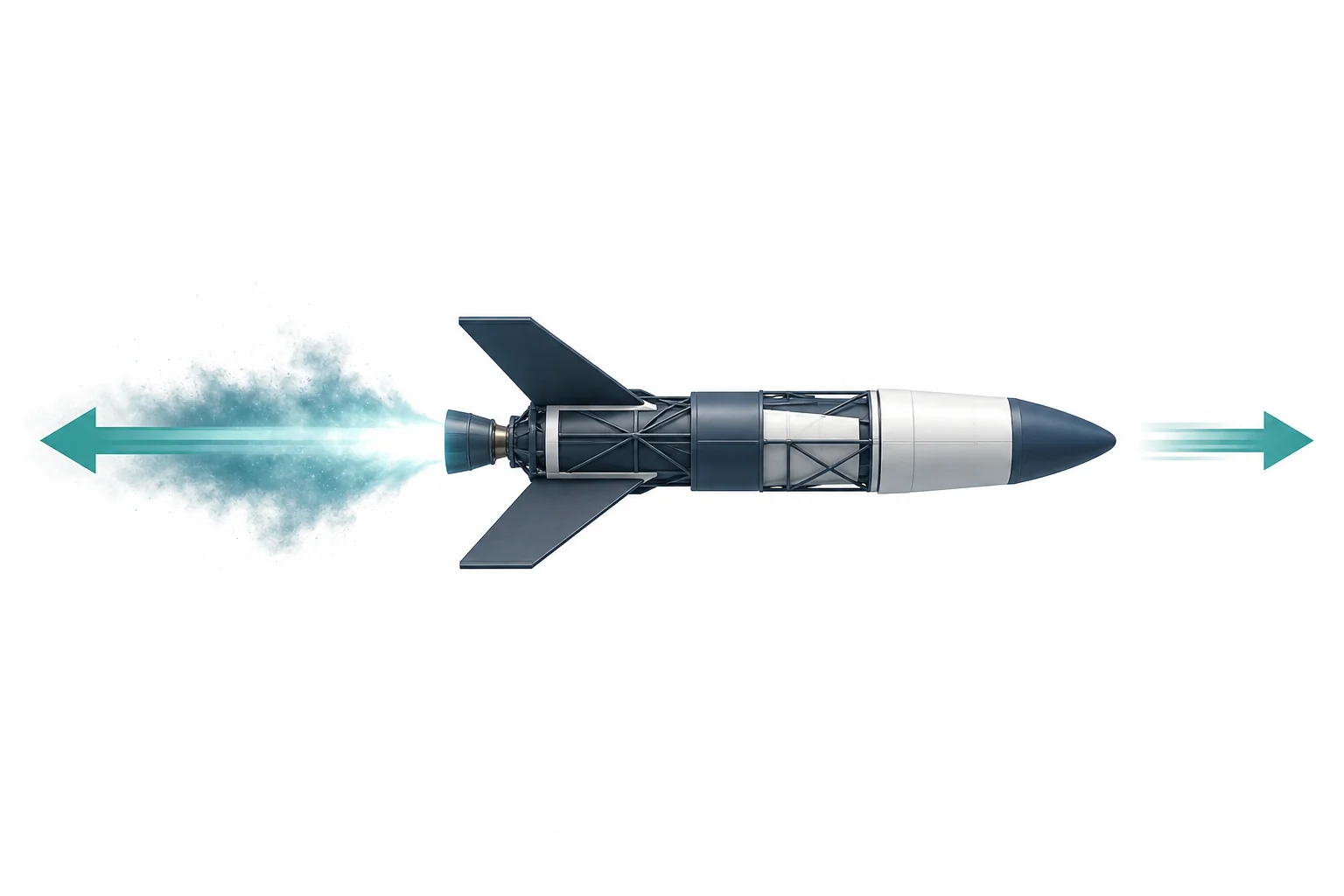
A rocket moves in space by pushing gas out the back. The gas pushes the rocket forward with an equal push in the opposite direction. This works even when there is no air around the rocket.
Rockets do not need air to push against. That sounds strange at first because many everyday motions depend on contact with something outside the object. A swimmer pushes water. A runner pushes the ground. A fan pushes air. A rocket carries its own material to push. Inside the engine, fuel and oxygen react and make fast moving hot gas. The engine sends that gas out the back. The gas and the rocket push on each other at the same time. The gas goes one way, and the rocket speeds up the other way. This is Newton's third law in action. It also connects to conservation of momentum, which means the motion of the rocket and exhaust must balance as a system. In space, there is no air drag like there is near Earth, so a small push can change motion for a long time.
The rocket does not push on air
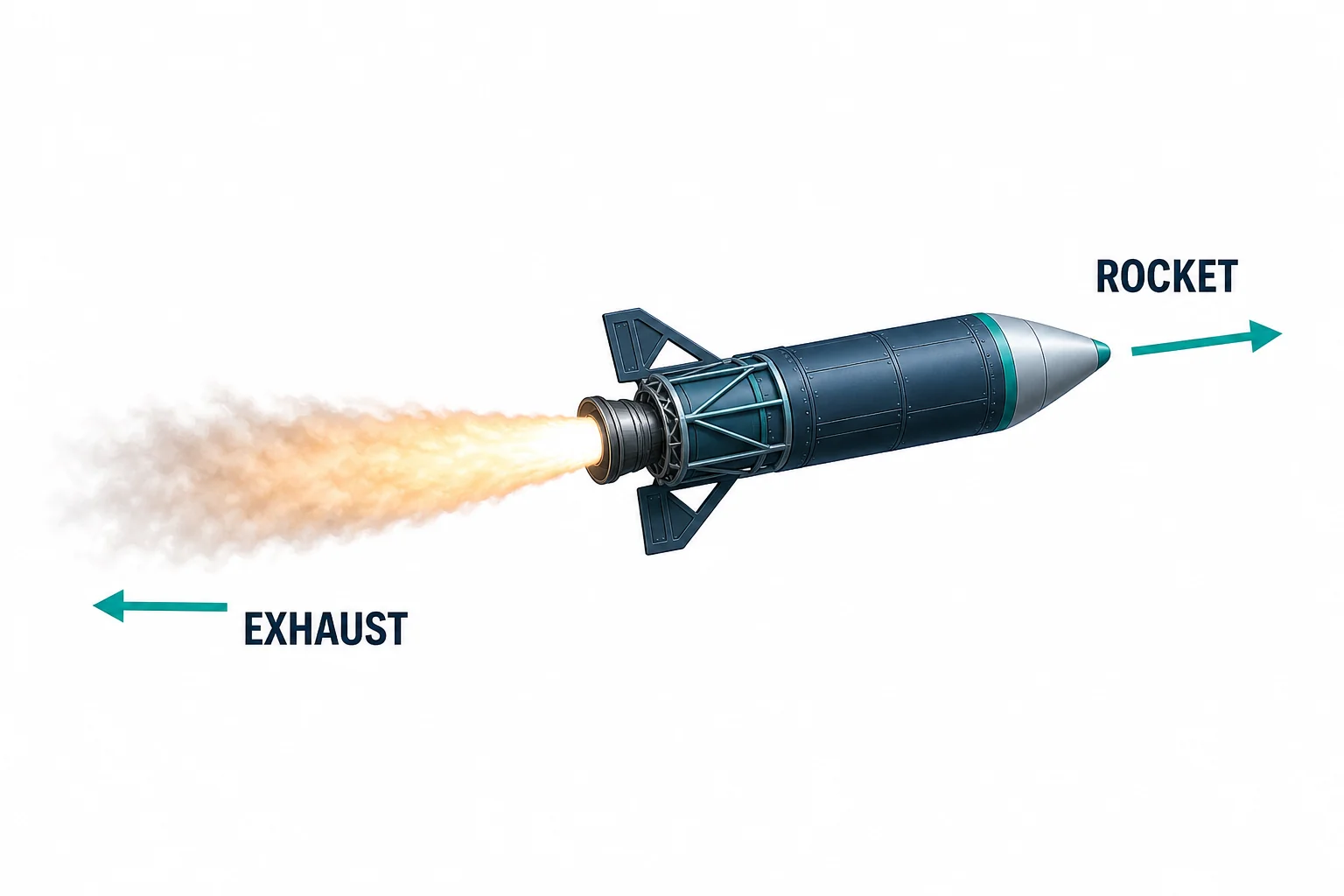
A rocket pushes on its own exhaust, not on the air.
Action and reaction happen together
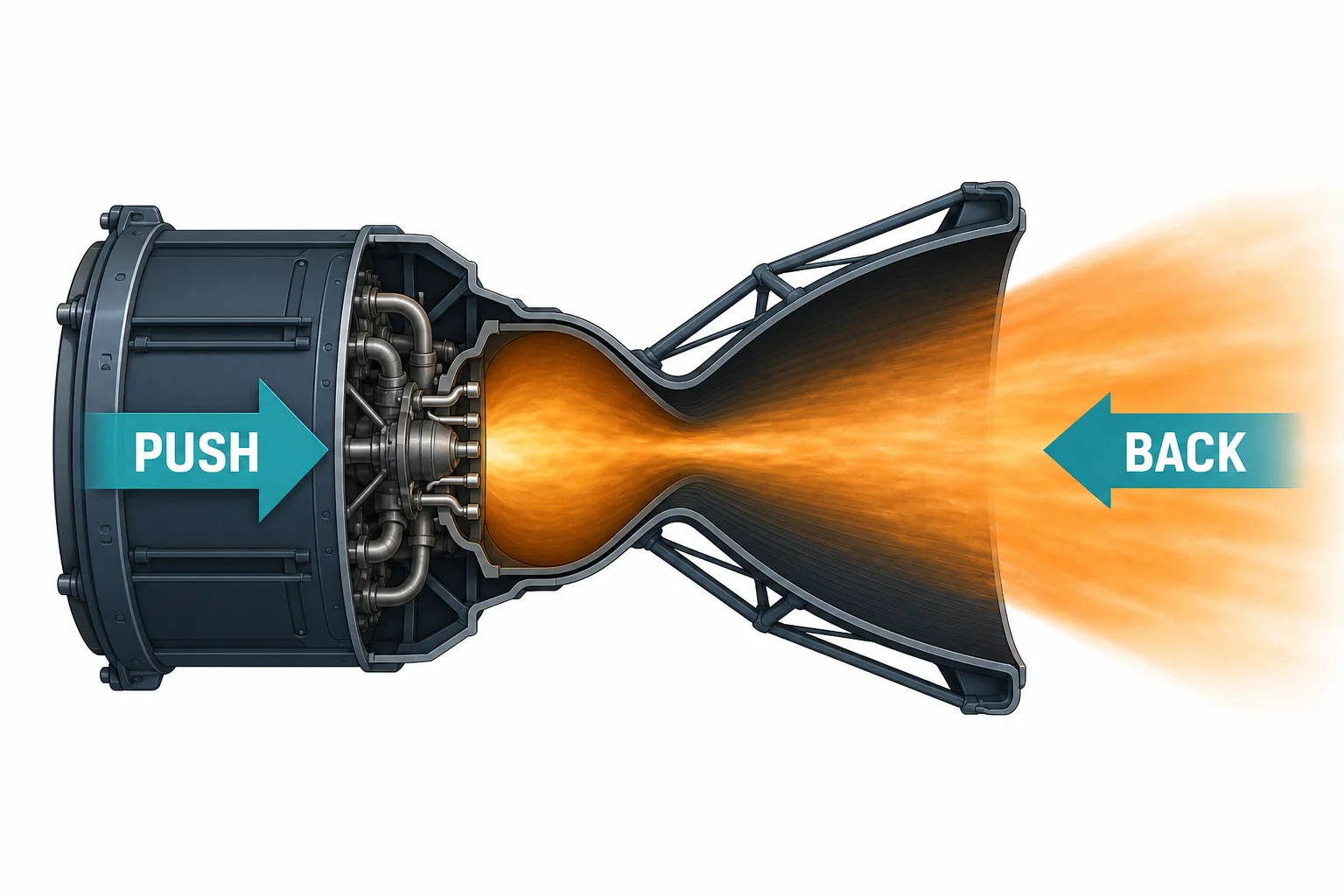
Equal and opposite forces act on different objects.
Momentum must balance
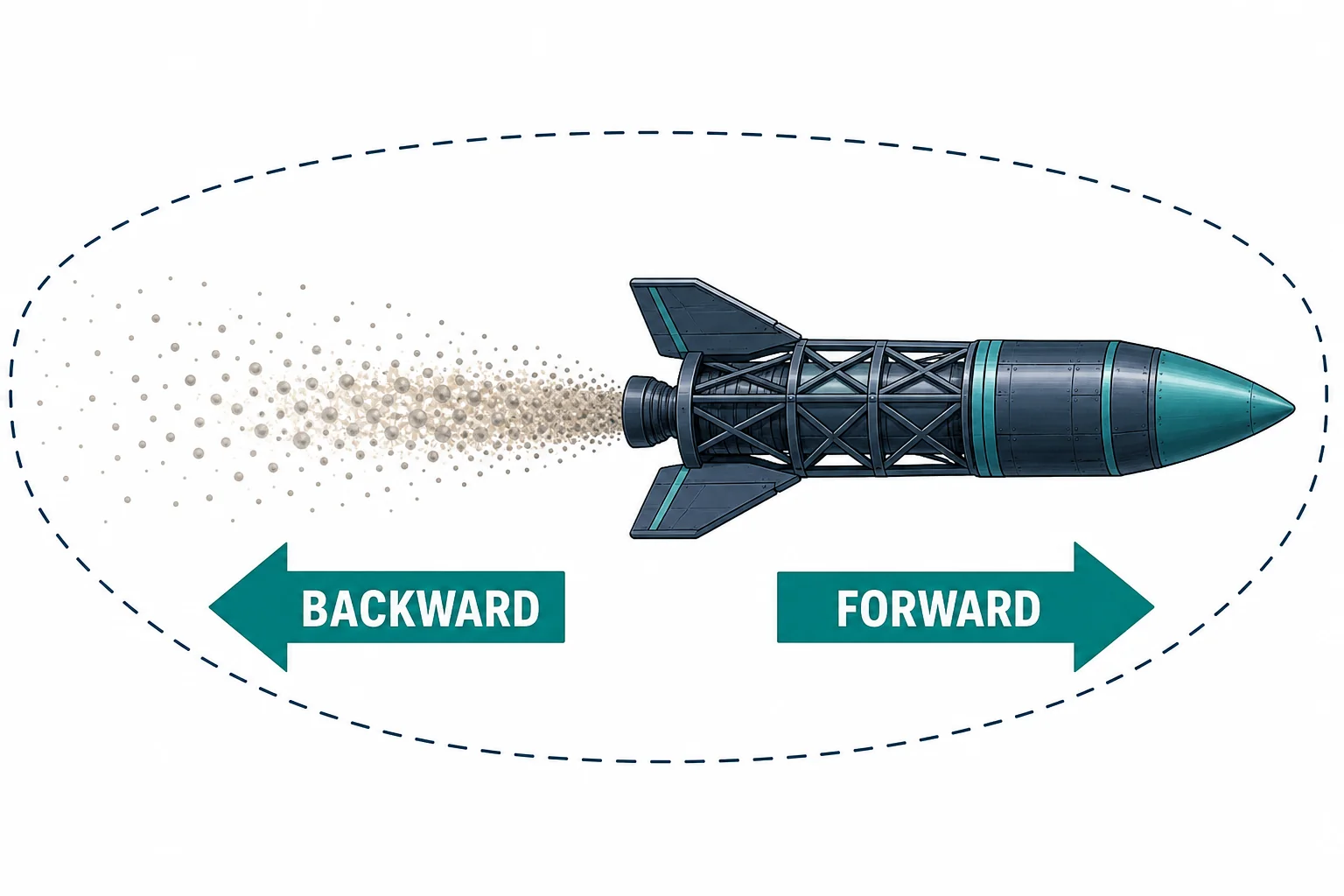
The exhaust goes one way, so the rocket must change motion the other way.
Why space makes motion easier to keep
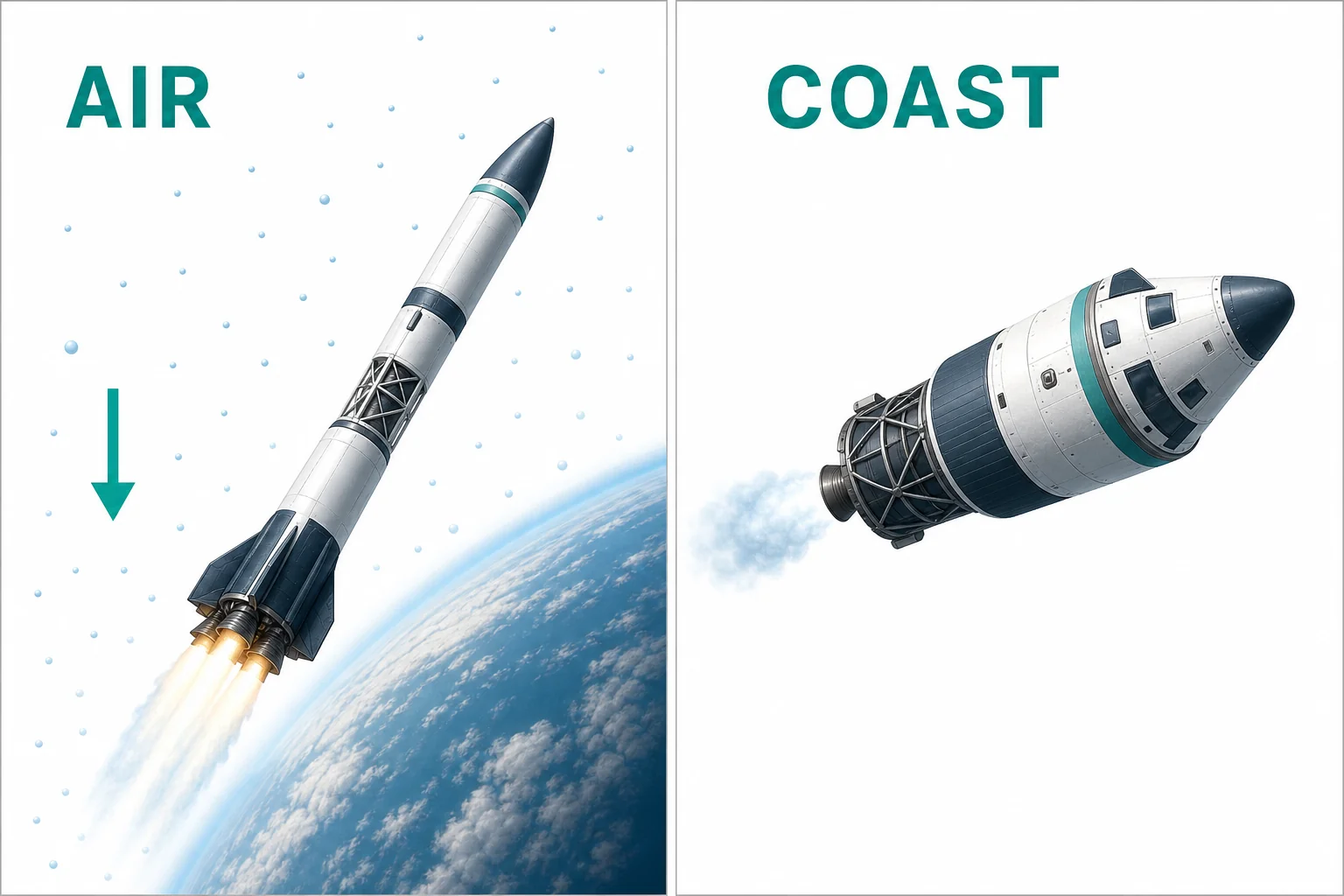
In space, engines change motion. They do not need to run to keep motion.
Tiny thrusters can turn a spacecraft
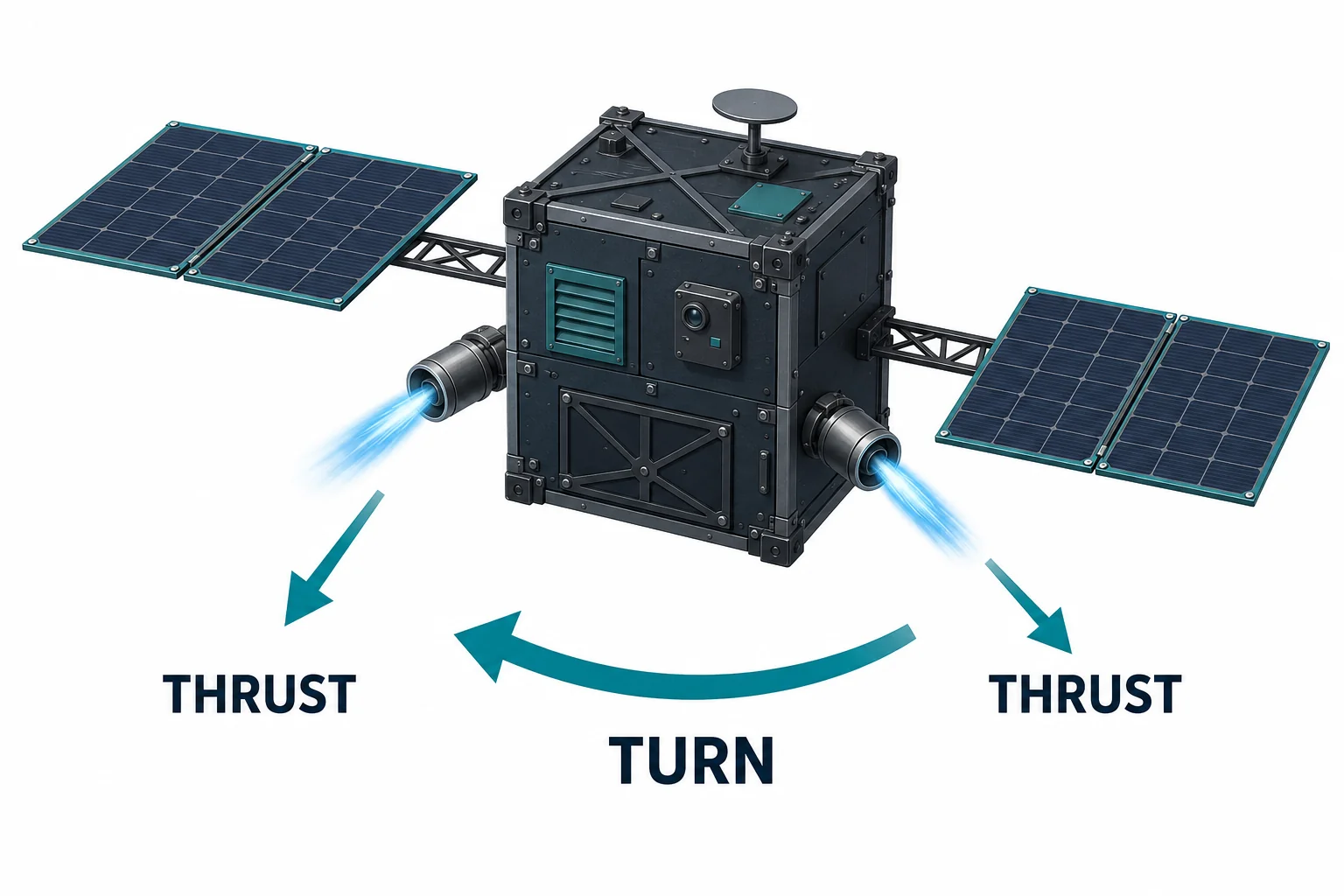
Steering in space uses the same action and reaction as launch.
Vocabulary
- Force
- A push or pull that can change an object's motion.
- Newton's third law
- For every force between two objects, there is an equal force in the opposite direction on the other object.
- Momentum
- A measure of motion that depends on an object's mass and speed.
- Conservation of momentum
- The total momentum of a system stays the same unless an outside force acts on it.
- Exhaust
- Gas that is pushed out of a rocket engine or thruster.
- Thrust
- The forward push on a rocket or spacecraft caused by ejecting exhaust backward.
In the Classroom
Balloon rocket line
20 minutes | Grades 6-8
Tape a straw to a balloon and thread the straw onto a string. Students release the balloon and identify the direction of the escaping air and the direction of the balloon's motion.
Skateboard throw model
15 minutes | Grades 6-8
Use a low-friction cart or rolling chair with careful safety rules. A student or teacher pushes a medicine ball away and observes the opposite motion of the cart.
Momentum arrow diagrams
25 minutes | Grades 6-8
Students draw before and after diagrams for a rocket firing in space. They use arrows to compare the momentum of the exhaust and the rocket.
Key Takeaways
- • Rockets do not need air to move in space.
- • A rocket moves forward by pushing exhaust gas backward.
- • Newton's third law explains the equal and opposite force pair.
- • Conservation of momentum explains why the rocket and exhaust move in opposite directions.
- • In space, engines change motion, while coasting can continue without engine thrust.