Why Can You Hear Voices Through a Closed Door?
Sound can make a door vibrate
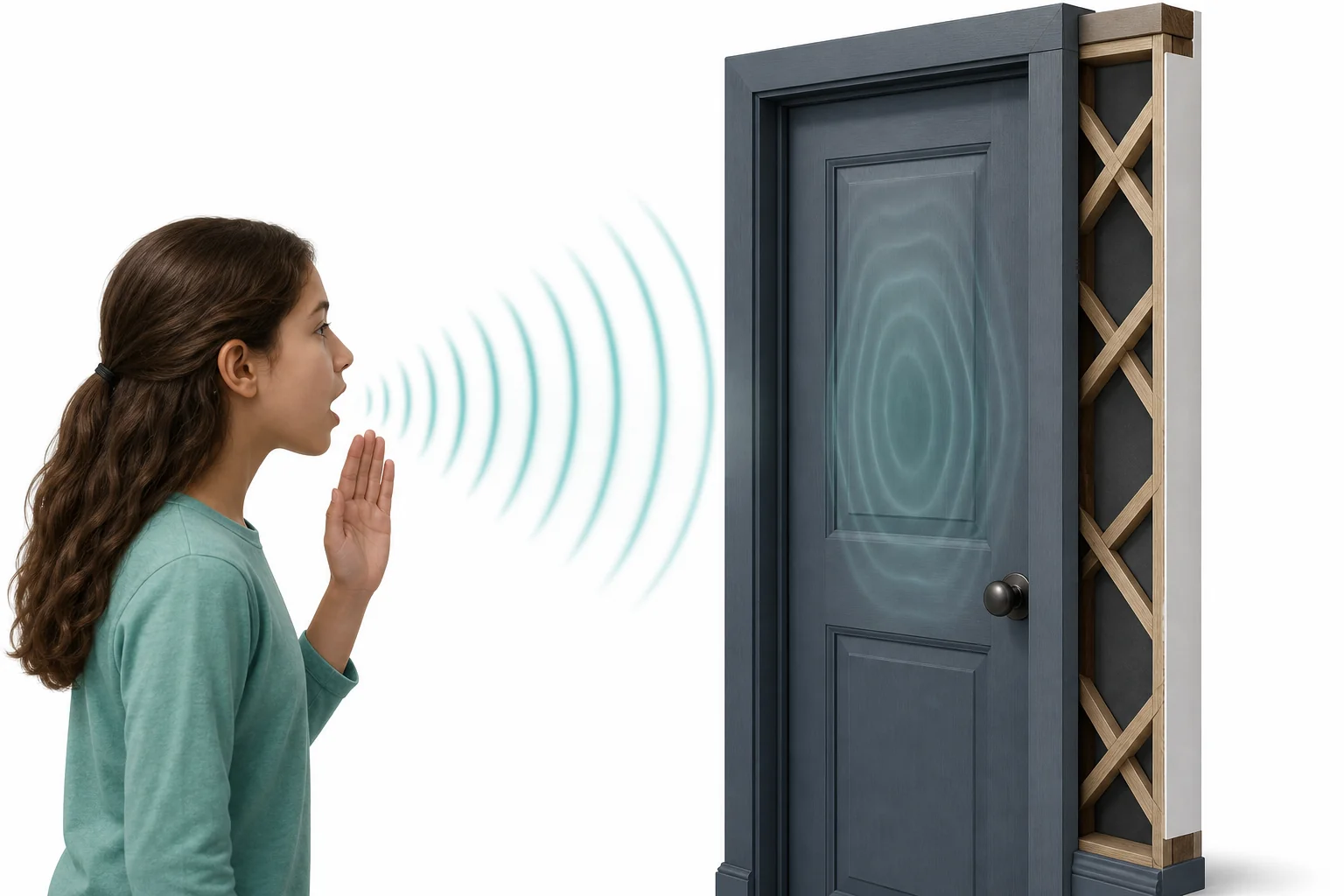
A voice makes the air shake. Those shakes can make a closed door shake too. The door passes some of the sound along, so you hear a quieter and less clear voice.
A closed door feels like a wall between rooms. Light may not pass through it, but a voice often does. That happens because sound is not a thing that flies through the air like a ball. Sound is a pattern of tiny pushes and pulls. When someone talks, their vocal cords make nearby air vibrate. Those vibrations spread outward. When they reach a door, they push on the door again and again. The door can move a tiny amount, too small to see. Its motion can push the air on the other side. That new air motion reaches your ears as sound. The voice is usually quieter because some energy is reflected, some is absorbed, and some passes through. This is a useful example of NGSS 4-PS4-1, where students learn that waves carry energy and can move through different materials.
Voices make air move
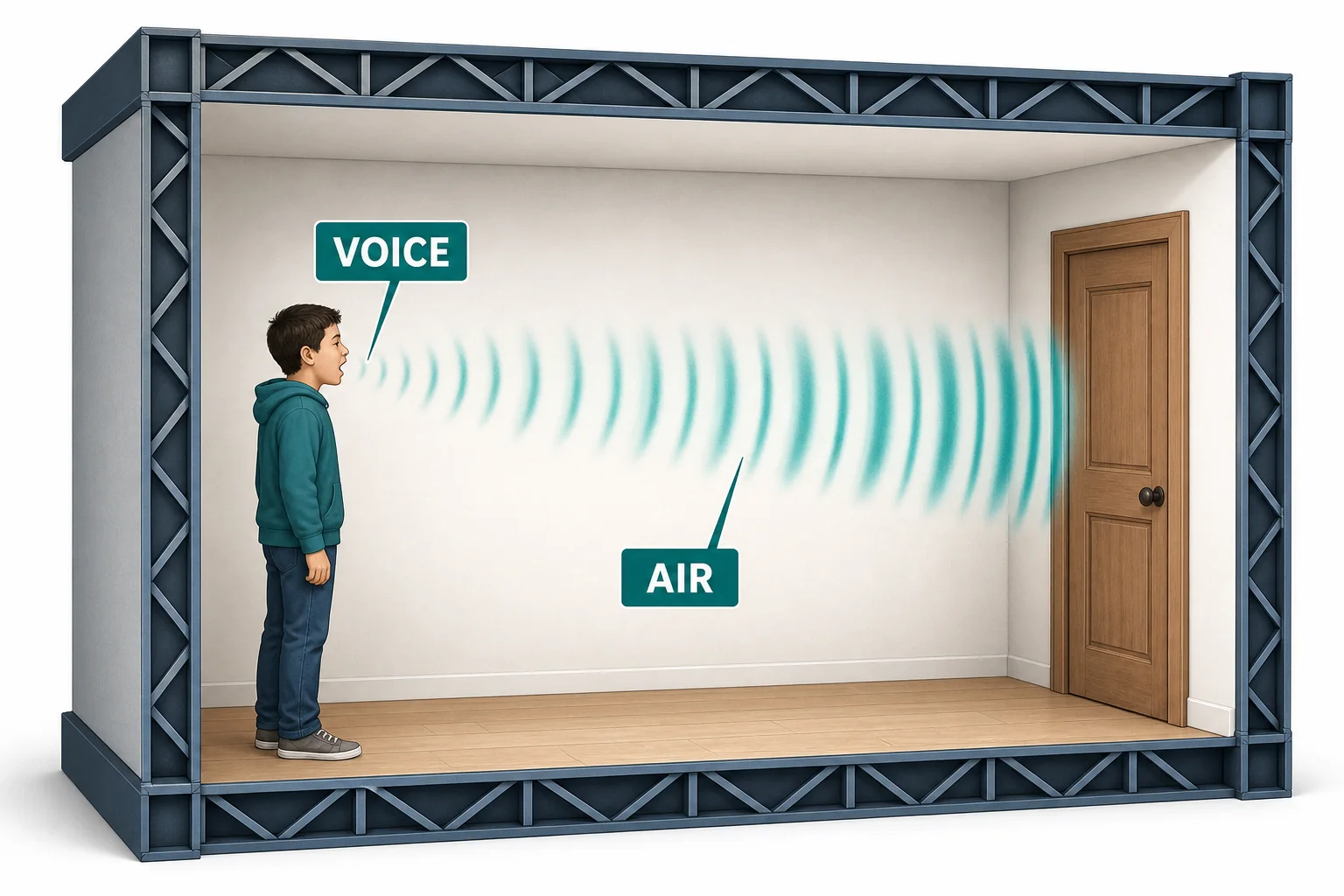
Sound begins as tiny back-and-forth motion.
The door vibrates
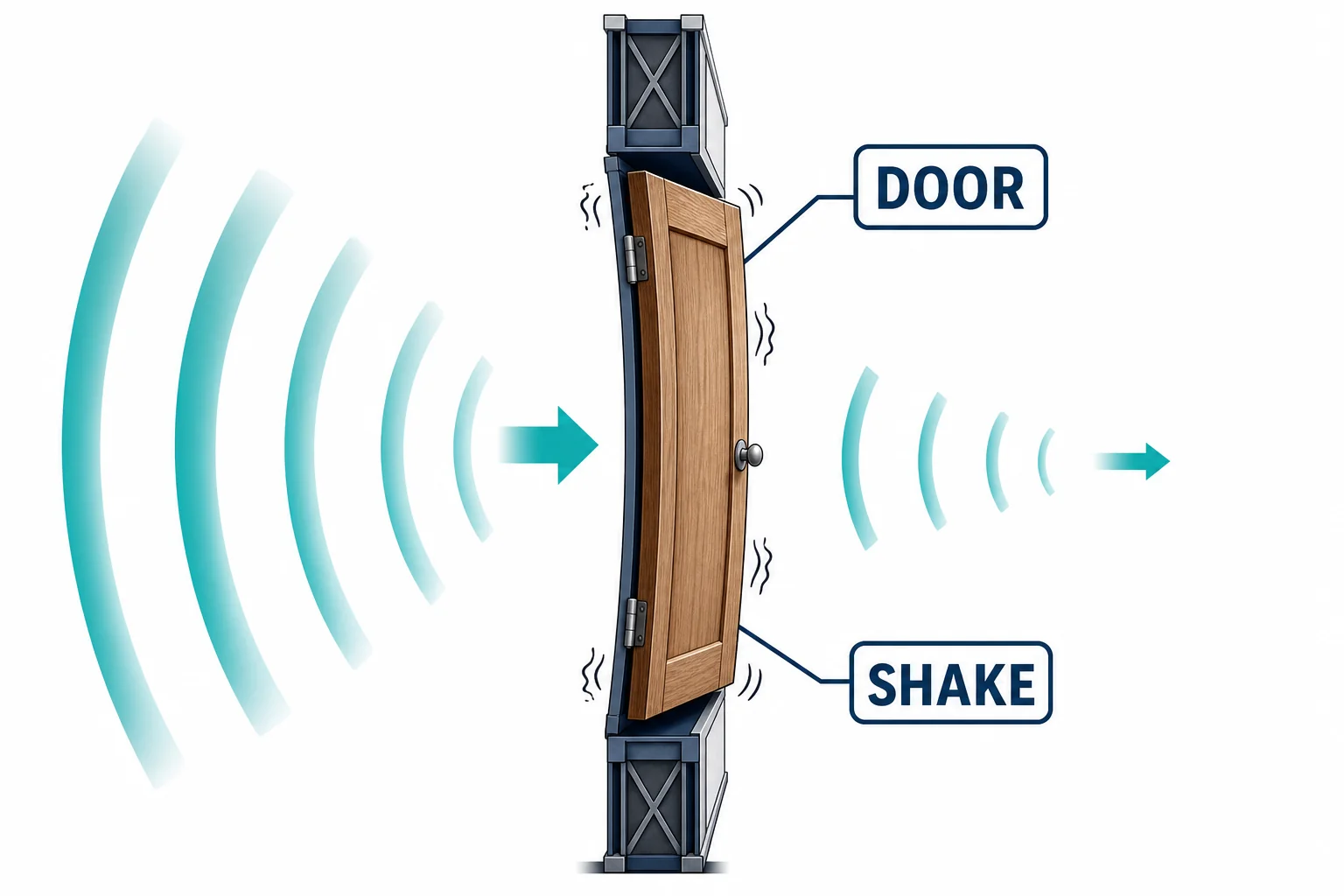
A solid can carry sound when it vibrates.
Some sound is lost
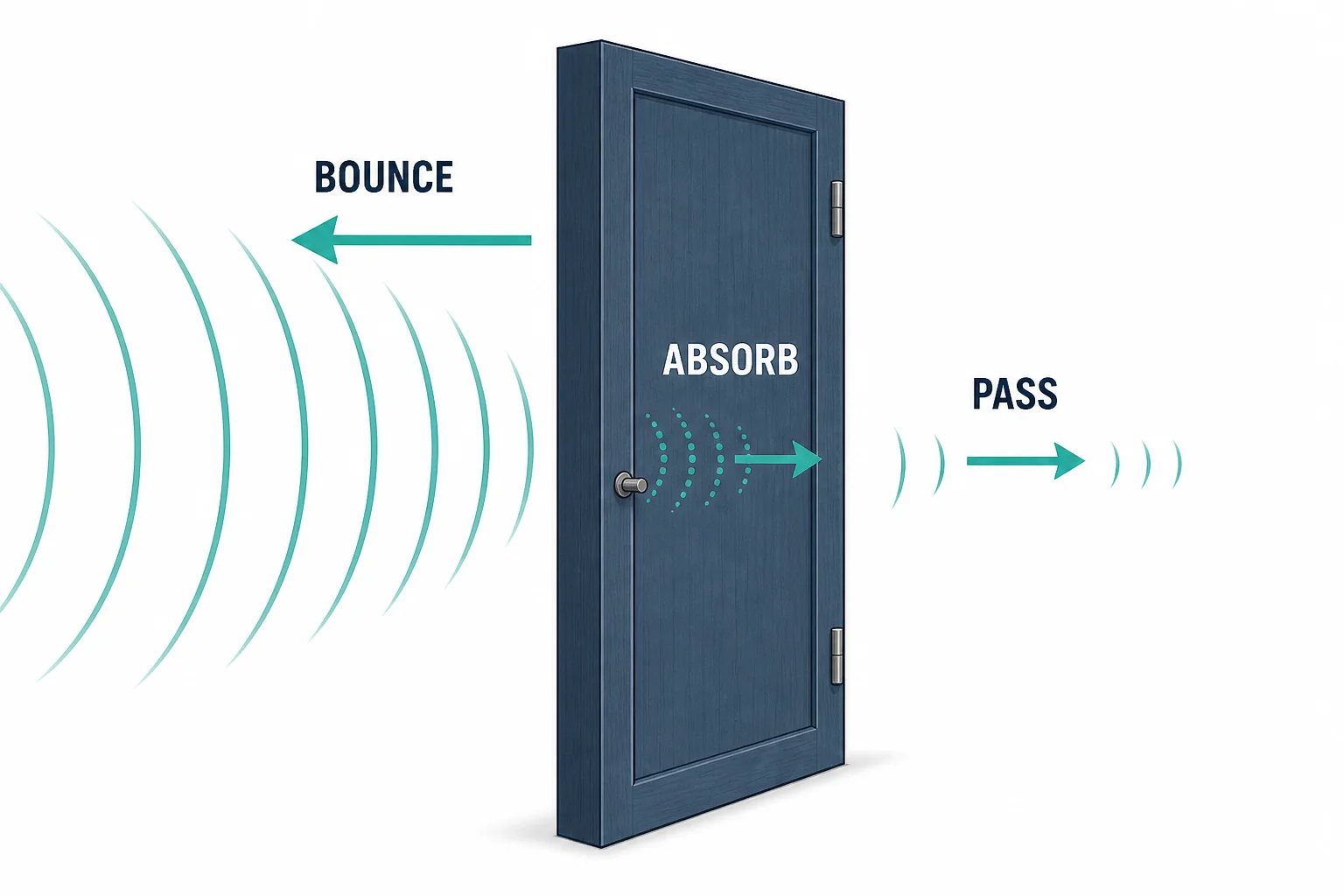
Only part of the sound energy gets through.
Low sounds travel better
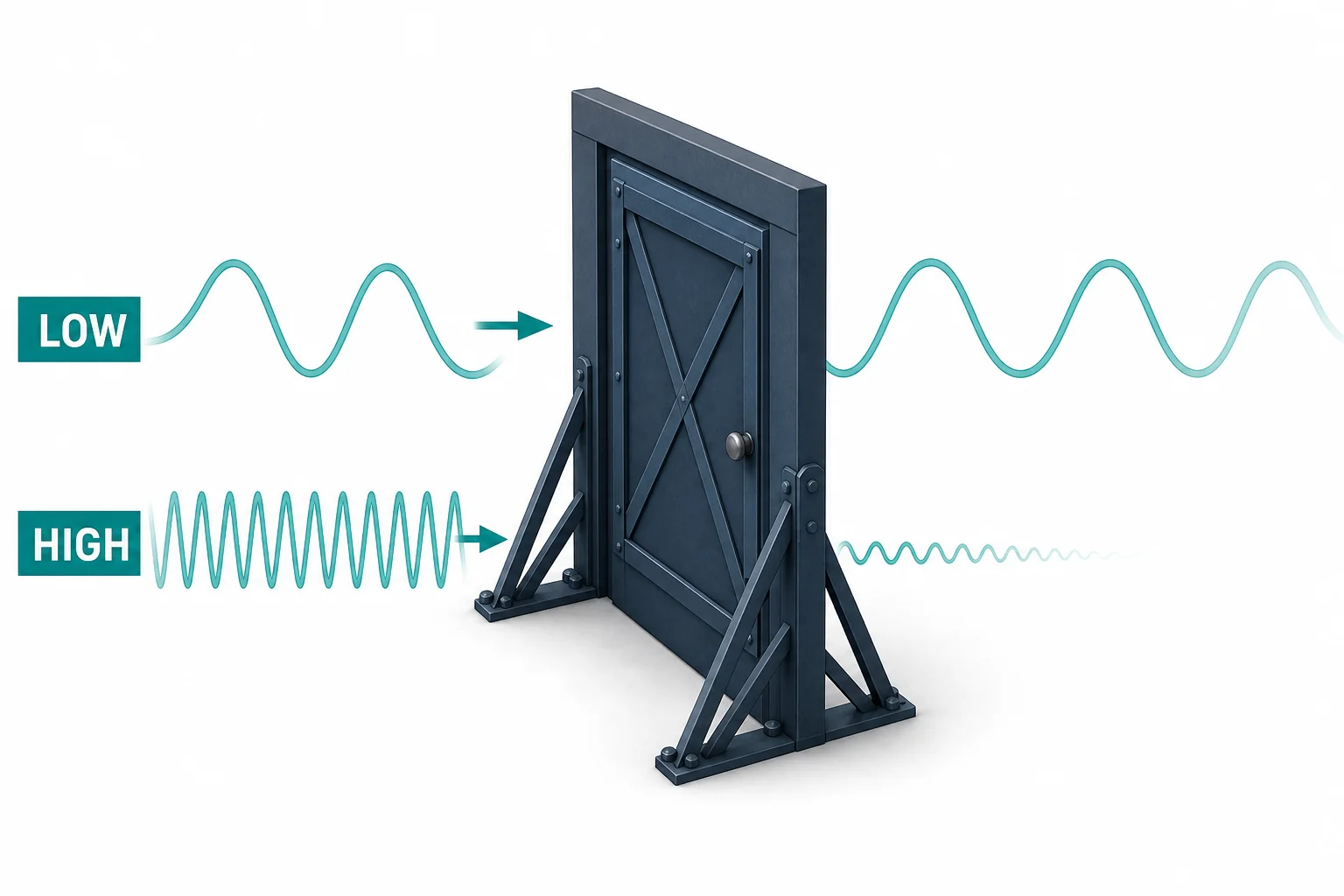
Muffled speech is missing many high sound details.
Materials matter
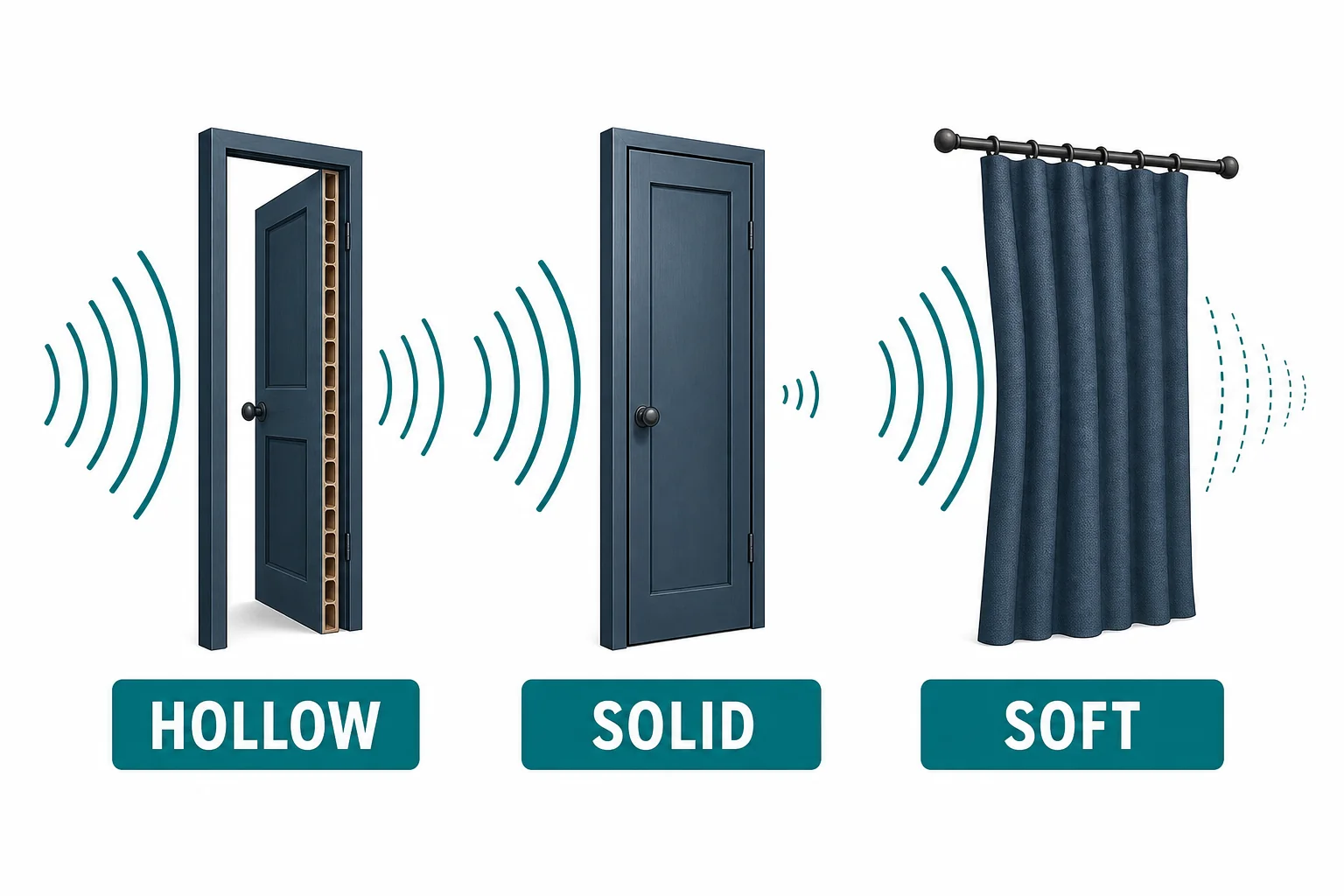
A material changes sound by vibrating, reflecting, and absorbing energy.
Vocabulary
- Sound
- A vibration that travels through matter and can be detected by the ear.
- Vibration
- A back-and-forth motion that can start or carry a sound wave.
- Mechanical wave
- A wave that needs matter, such as air, water, wood, or metal, to travel.
- Absorb
- To take in some of a wave's energy instead of passing it all along.
- Frequency
- How fast something vibrates each second. Higher frequency sounds usually have higher pitch.
In the Classroom
Door listening test
15 minutes | Grades 3-5
Have one student speak or play a steady sound on one side of a closed classroom door while others listen from the other side. Compare what changes when the listener moves near the bottom gap, the middle of the door, and farther away.
Material sound blockers
25 minutes | Grades 3-5
Place a small speaker or ticking timer inside a box. Students test cardboard, a book, fabric, and foam as covers, then rank how much each material reduces the sound.
High and low sound check
20 minutes | Grades 4-5
Play a low tone and a high tone at the same safe volume behind a barrier such as a folder or thin door. Students record which tone is easier to hear and connect the result to muffled voices.
Key Takeaways
- • A voice makes air vibrate, and those vibrations spread as sound.
- • A closed door can vibrate when sound hits it.
- • The vibrating door can make air on the other side vibrate.
- • Some sound is reflected or absorbed, so the voice becomes quieter.
- • High parts of speech are often blocked more, which makes voices sound muffled.