Sign in to save

Bookmark this page so you can find it later.

Sign in to save

Bookmark this page so you can find it later.

Physics middle-school May 21, 2026

Why Does a Seatbelt Save Your Life?

How a belt changes a crash
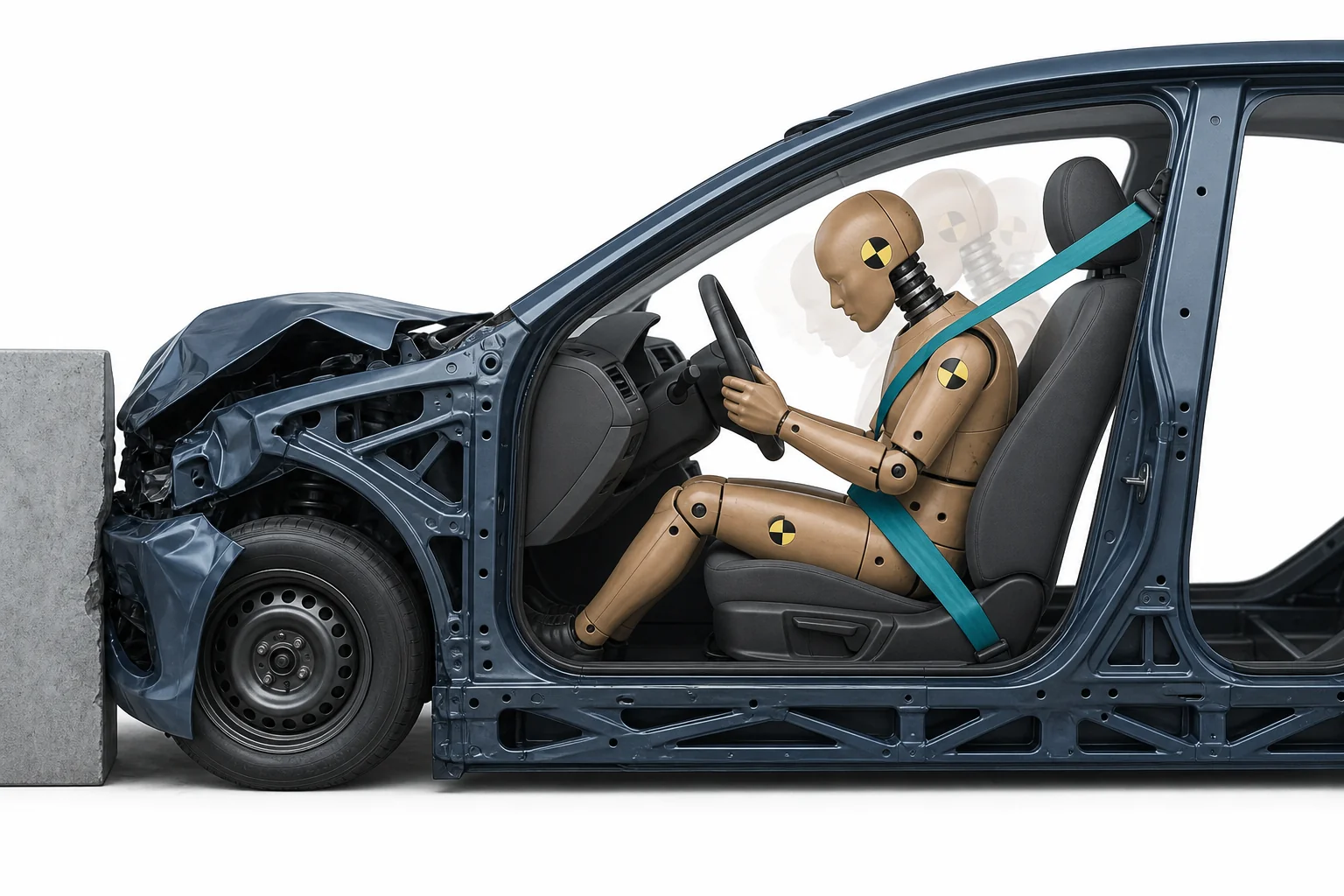
A car passenger wearing a seatbelt while arrows show the car stopping and the passenger being held back safely.

A seatbelt saves your life by stopping your body with the car instead of letting it fly forward. It gives your body a little more time to stop, so the push on you is smaller. It also spreads that push across stronger parts of your body.

Big Idea. NGSS MS-PS2-2 connects changes in motion to forces, which helps explain why seatbelts reduce injury in a crash.

A car crash is over fast, but the physics starts before the crash. When a car moves, everything inside it is moving too. That includes backpacks, phones, and people. If the car suddenly stops, loose objects keep moving forward. Your body does the same unless something stops it. A seatbelt is designed to be that something. It does not make a crash harmless. It changes how your body slows down. That change matters because force depends on how quickly motion changes. A very fast stop can mean a very large force. A seatbelt stretches slightly, locks, and holds your body against the seat. Airbags and crumple zones help too, but the belt is the main connection between you and the vehicle. Middle school physics gives us a clear way to see why this works. Newton's first law, inertia, and impulse all point to the same idea. Safer crashes are crashes where people stop more gradually.

Your body keeps moving
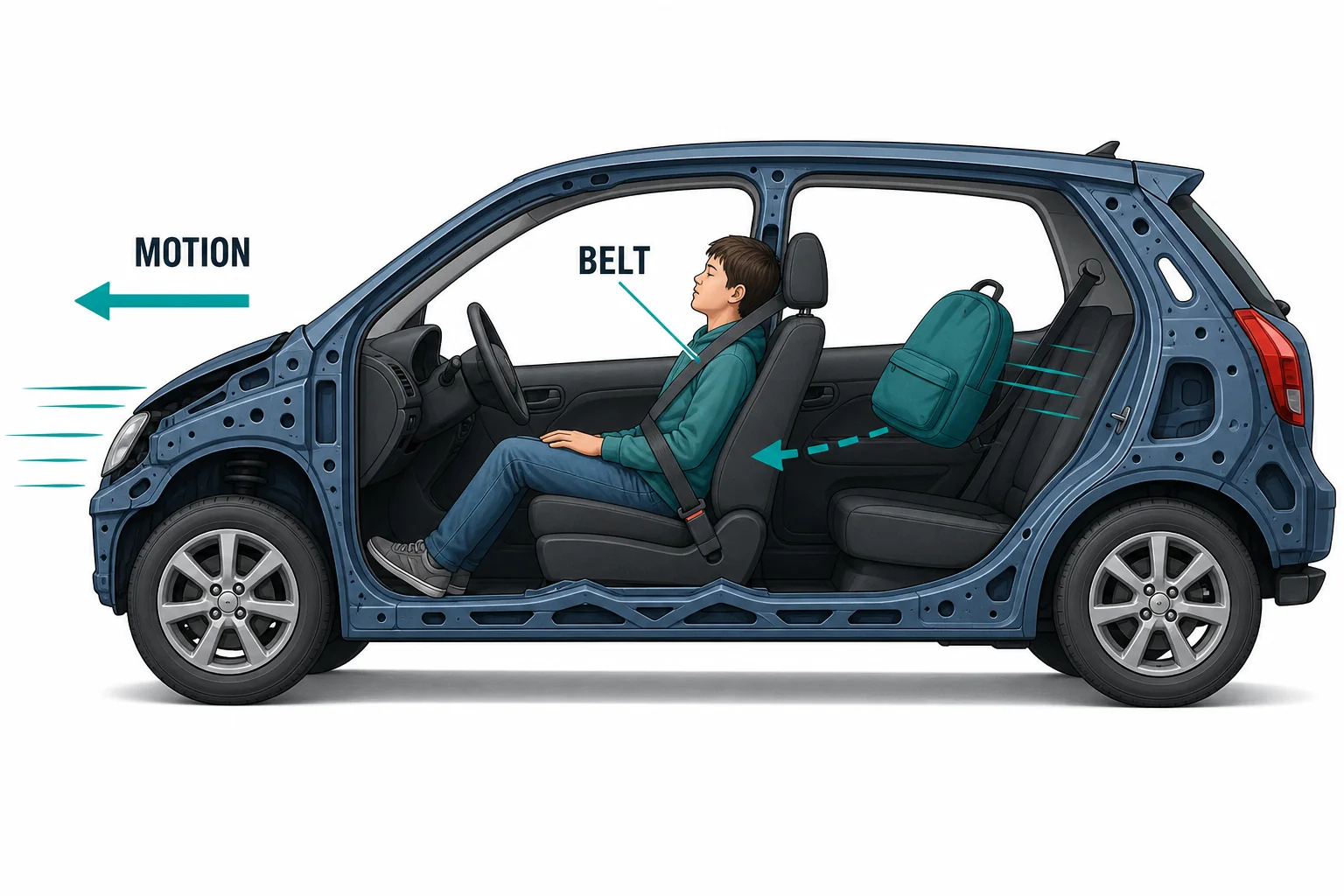
A side view of a car stopping while a belted passenger is held in place and a loose backpack keeps moving forward.
Objects keep moving unless a force stops them.
Newton's first law says that an object in motion keeps moving in a straight line unless a force changes its motion. In a moving car, your body has the same forward motion as the car. If the car hits a wall, the car slows down quickly. Without a seatbelt, your body does not stop at the same moment. It keeps moving forward until something else stops it. That something might be the dashboard, windshield, or front seat. Those surfaces stop your body in a very short time, which can create a large force. A seatbelt gives your body a safer stopping force. It acts before you hit the inside of the car. This is why the belt must fit across your shoulder and hips. Those parts can handle force better than the head, neck, or belly.

The belt supplies the stopping force before the dashboard does.

Inertia in a crash
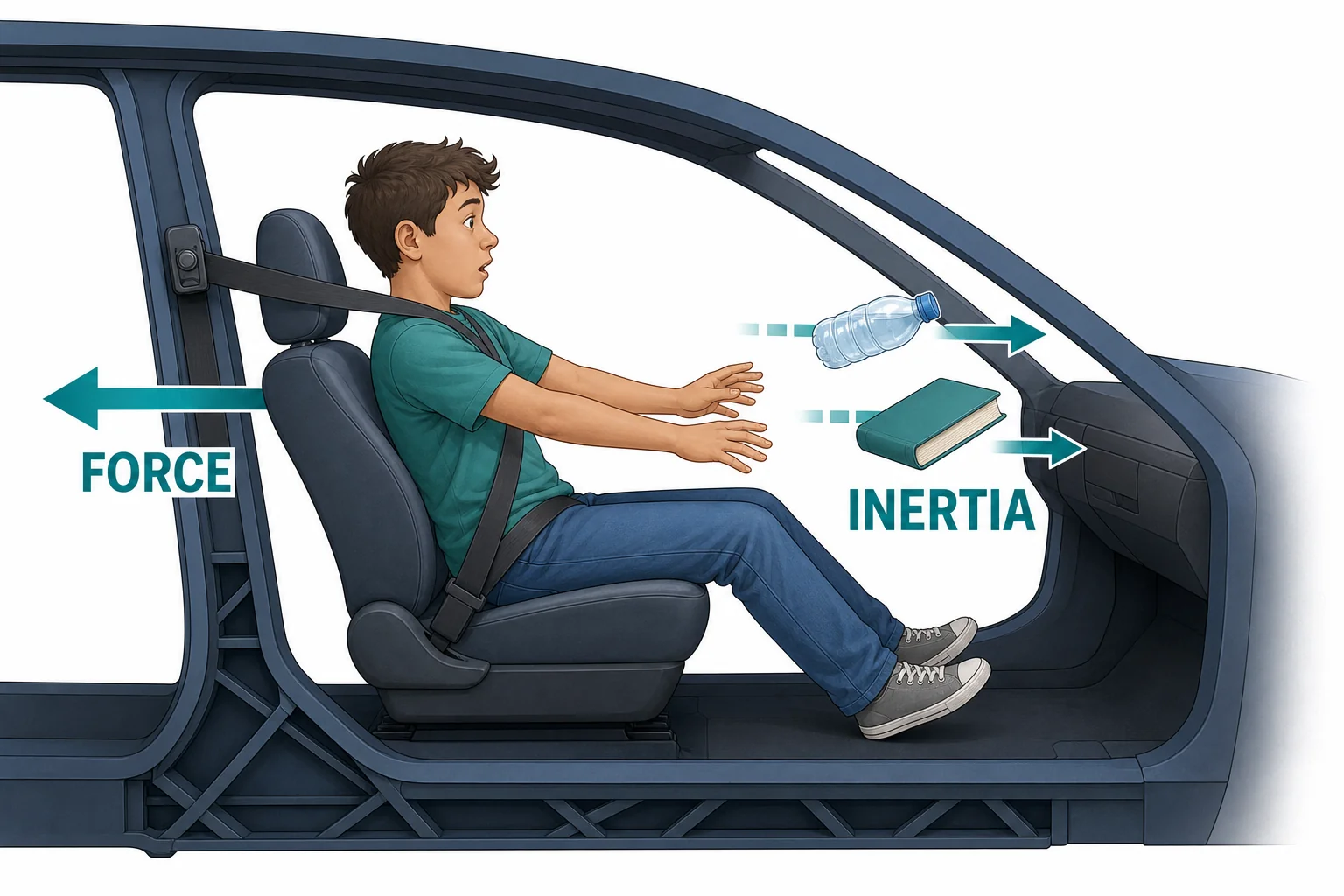
A simplified car interior showing a belted passenger, a loose water bottle, and a book with forward arrows during a sudden stop.
Everything in the car has inertia.
Inertia is the tendency of matter to resist a change in motion. More mass means more inertia. A person, a water bottle, and a book all have inertia in a moving car. During a sudden stop, each one tends to keep moving forward. That is why loose objects can become dangerous in a crash. They are not trying to move forward. They are simply continuing the motion they already had. Seatbelts work because they connect a passenger to the car. When the car slows, the belt slows the passenger too. The passenger's motion changes because the belt pulls backward on the body. The car also pushes on the seat, and the seat pushes on the passenger. A crash is really a set of interactions. Forces between objects change motion.

A seatbelt changes your motion because it applies a force.

More time means less force
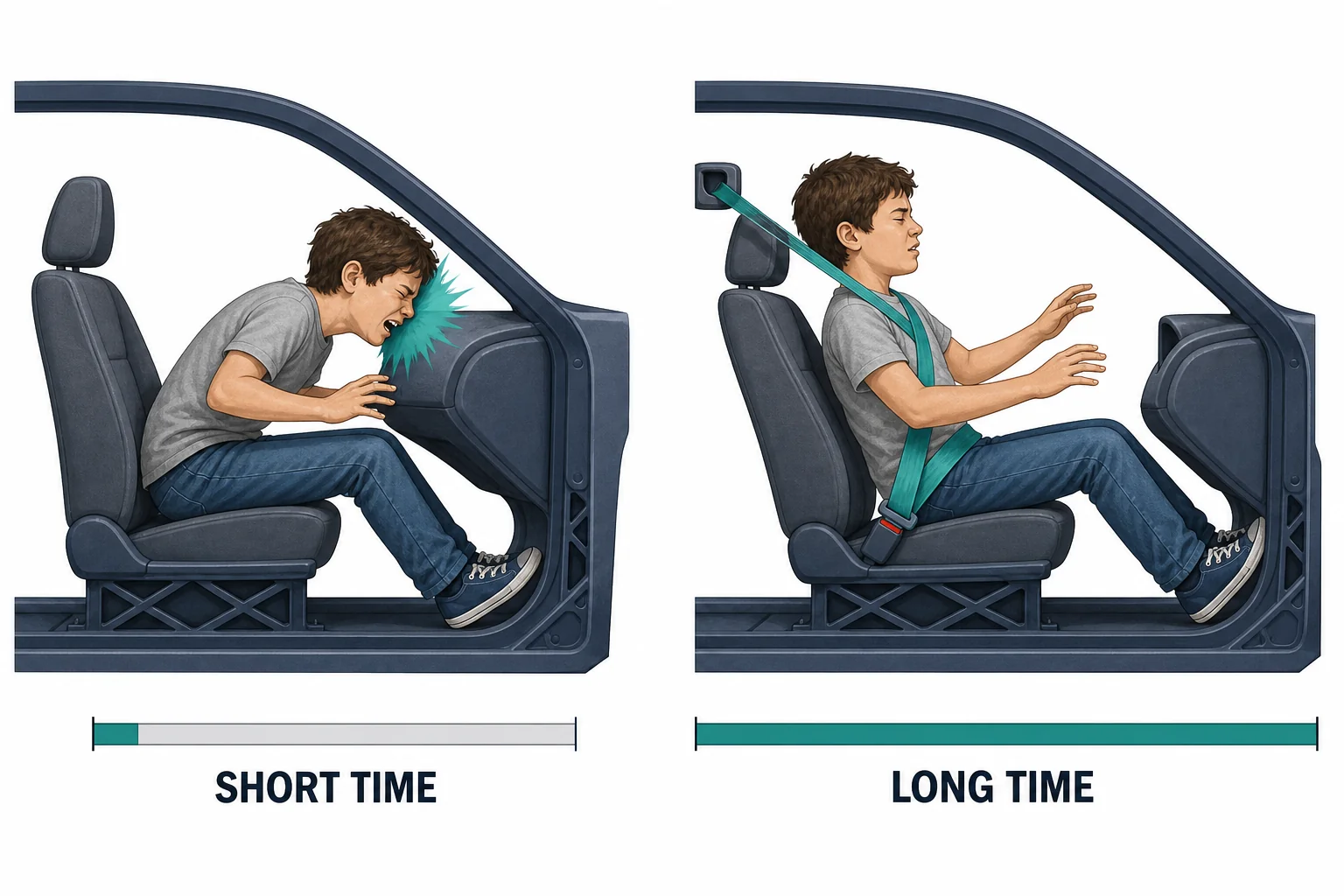
Two simple crash stopping diagrams comparing a short stopping time without a belt and a longer stopping time with a belt.
Increasing stopping time lowers the average force.
A key idea in crash safety is stopping time. Your body must go from moving to stopped. That change has to happen somehow. If it happens in a tiny fraction of a second, the force can be huge. If it happens over a longer time, the average force is smaller. A seatbelt helps increase stopping time. It does this by stretching slightly and by allowing your body to slow with the car's safety systems. The same idea shows up in sports and playgrounds. A padded mat gives a jumper more time to stop than a hard floor. The change in speed may be the same, but the stopping time is different. In physics, impulse connects force and time. For the same change in motion, a longer time means a smaller average force.

The seatbelt does not remove motion. It changes how quickly motion stops.

Where the force goes
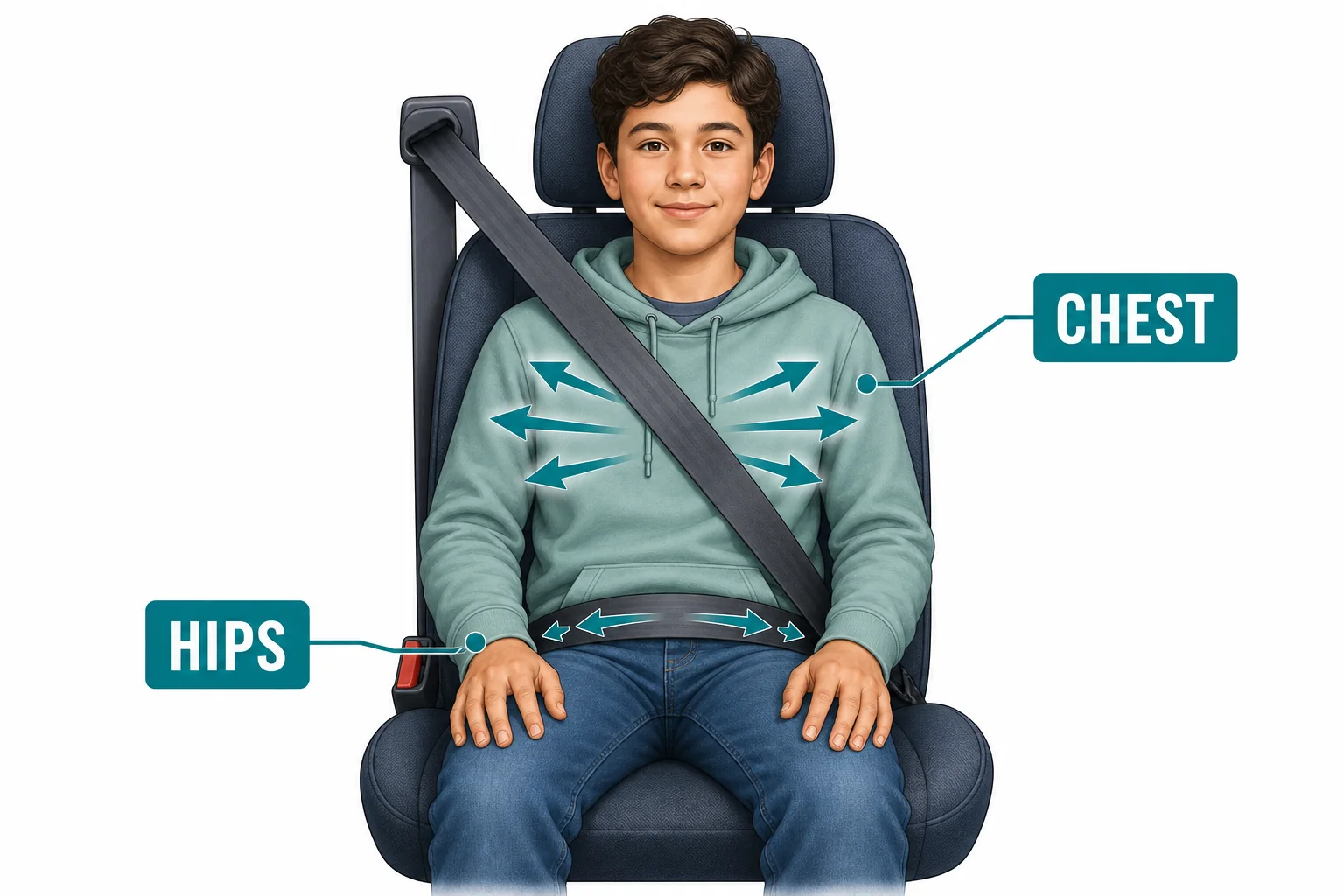
A front view of a student-sized passenger showing correct lap belt and shoulder belt positions across the hips and chest.
Correct fit helps the belt spread force safely.
A seatbelt is shaped to spread force across stronger parts of the body. The lap belt should sit low across the hips, not across the stomach. The shoulder belt should cross the middle of the chest and shoulder, not the neck or face. In a crash, the belt pulls on bones and large areas of the body. That is safer than a sharp force on one small area. Good belt fit matters for every passenger. Younger students may need a booster seat because the car's belt was designed for taller bodies. A booster raises the rider so the belt lies in the correct places. The goal is not just to be buckled. The goal is to be buckled in a way that lets the belt do its job.

A safe belt path uses strong body parts.

Cars help the belt
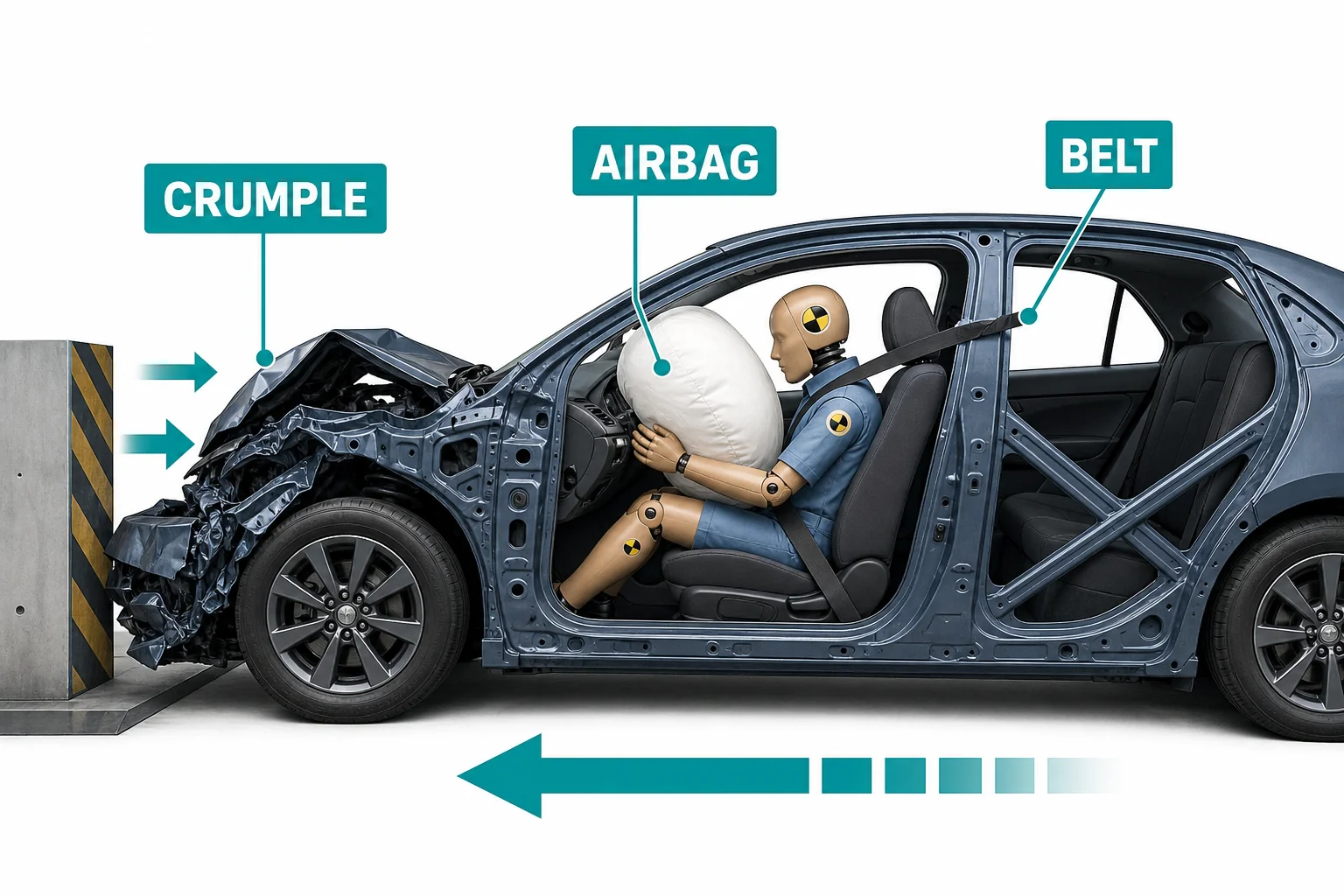
A cutaway car crash safety diagram showing a seatbelt, airbag, crumple zone, and protected passenger space.
Crash safety systems work together.
Modern cars are built so several safety systems work together. The seatbelt holds the passenger in the right position. The airbag gives the head and chest another surface to slow against. The crumple zone at the front of the car bends and crushes to absorb energy. That damage to the car is useful because it helps lengthen the stopping time for the passenger space. The passenger cabin is built to stay more rigid. Safety engineers test these ideas with crash-test dummies and sensors. The data show how forces change during a crash. The belt is still central because it keeps the body from moving too far forward. Without it, an airbag alone cannot protect a passenger as well.

The seatbelt keeps the passenger where the other safety systems can help.

Vocabulary

Inertia
The tendency of an object to keep its motion unless a force changes it.
Force
A push or pull that can change an object's motion.
Impulse
The effect of a force acting over time to change motion.
Stopping time
The time it takes for a moving object or person to come to rest.
Crumple zone
A part of a vehicle designed to bend in a crash and increase stopping time.

In the Classroom

Toy car passenger test

25 minutes | Grades 6-8

Students place a small clay figure in a toy car and roll it into a soft barrier. They compare what happens with no belt, a rubber band belt, and a paper strap belt.

Egg drop stopping time

35 minutes | Grades 6-8

Teams design two landing pads for a plastic egg, one hard and one padded. They use the results to explain how increasing stopping time can reduce force.

Force and time graph talk

20 minutes | Grades 7-8

Students compare two simple force versus time graphs with the same total change in motion. They identify which graph shows a safer stop and explain why in one paragraph.

Key Takeaways

  • A moving passenger keeps moving forward when a car stops suddenly.
  • A seatbelt applies a force that changes the passenger's motion.
  • Increasing stopping time lowers the average force on the body.
  • Correct belt fit spreads force across the hips, chest, and shoulder.
  • Seatbelts work with airbags and crumple zones, but the belt is the main restraint.