Understanding Constitutional Amendment Process Simulator
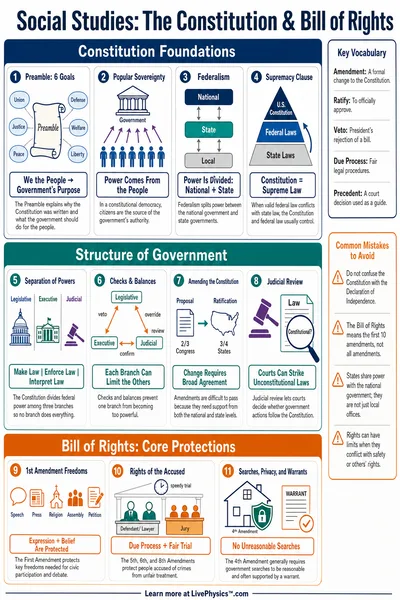
An amendment begins as a specific written change, not just a popular idea. In the usual route, the House and Senate must each approve the same wording.
The President has no formal part in this process, so a presidential veto cannot block a constitutional amendment. A second proposal route involves state legislatures asking for a national convention, but this route has never been used to produce an amendment.
After a proposal clears its first stage, Congress decides which state body will consider it. Most amendments go to state legislatures, whose members vote under their own state procedures. Congress can instead require special state conventions chosen for one purpose.
Governors may support or oppose an amendment publicly, but they do not cast the state’s formal ratification vote. Each state counts as one decision regardless of population.
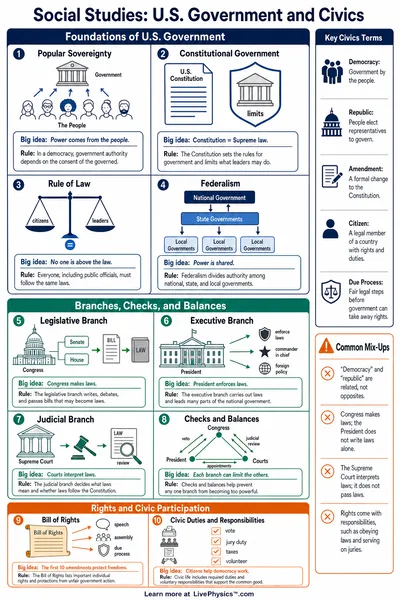
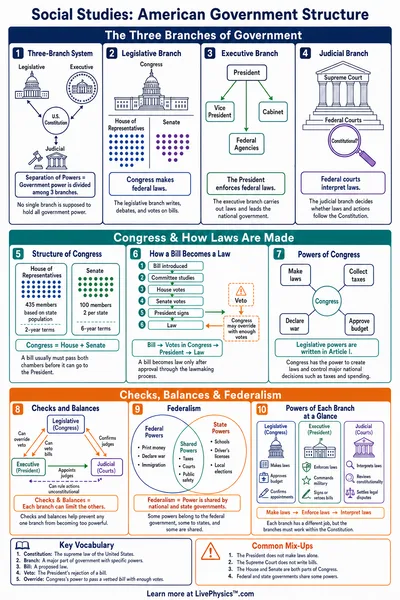
The high threshold reflects federalism, the idea that national power is shared with the states. A change must gain support across many regions, political groups, and state governments.
This makes temporary anger or a narrow election victory less likely to alter the Constitution. It can also make changes difficult when public opinion is strong but support is concentrated in only part of the country.
Timing can matter as much as vote totals. Congress often places a deadline in the proposing resolution, usually giving states several years to act. The Equal Rights Amendment gained many approvals but did not reach the required total before its deadline.
In contrast, the Twenty Seventh Amendment had no deadline and was ratified more than two centuries after Congress proposed it. These examples show that amendment history is shaped by changing politics, legal arguments, and persistence.
When using a simulator, separate support in each institution from support in opinion polls. A proposal can be popular with voters yet fail because enough representatives, senators, or state lawmakers do not approve it.
Watch whether the same exact text is being voted on, because a changed version must begin the process again. Pay attention to deadlines, the chosen ratification method, and the difference between a proposal being introduced and a proposal becoming part of the Constitution.