Measurement Lab for Kids
Practice measuring length, volume, and mass with interactive tools. Read a ruler in inches and centimeters, measure liquids in a graduated cylinder, and balance objects on a scale with gram weights. All computation runs in your browser.
Use the ruler to measure how long each object is.
Measure with a Ruler
Try a preset
Reference Guide
Measuring Length
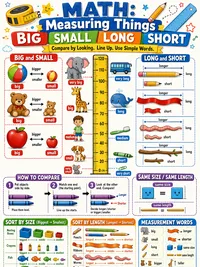
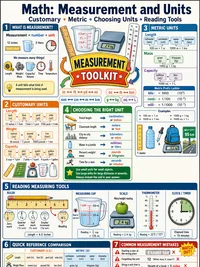
A ruler has two sides. One side shows inches and the other shows centimeters.
- Always start measuring from 0, not from the edge of the ruler
- Line up the left end of the object with the 0 mark
- Read the number where the right end of the object stops
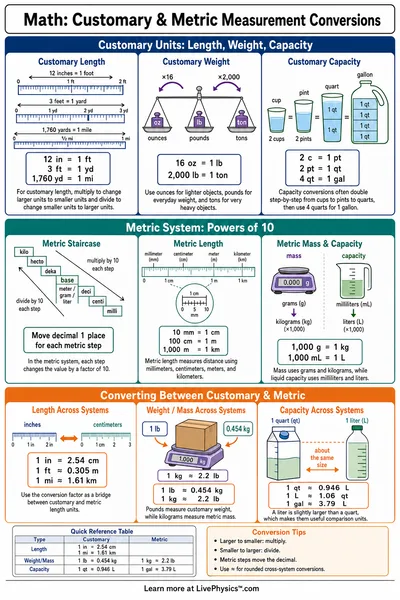
- 1 inch = 2.54 centimeters
Centimeters are smaller than inches, so you need more of them to measure the same object.
Liquid Volume
Liquid volume is measured in milliliters (mL) or cups. A graduated cylinder has marks on the side to help you read the volume.
- Place the cylinder on a flat surface
- Look at the liquid from the side, at eye level
- Read at the bottom of the curved surface (called the meniscus)
- 1 cup = about 237 mL
Mass and Weight
Mass tells you how much matter is in an object. Scientists measure mass in grams (g) and kilograms (kg).
- A balance scale compares one object to known weights
- When both sides are level, the object equals the weights
- 1 kilogram = 1,000 grams
- A paper clip is about 1 gram
Comparing Units
Different countries use different units. Here are some handy comparisons to remember.
- 1 foot is about 30 cm
- 1 kilogram is about 2.2 pounds
- 1 liter is about 4 cups
- 1 meter is a little longer than 1 yard
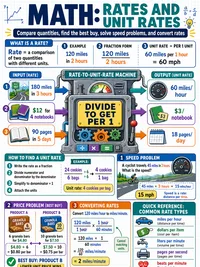
When comparing, convert both measurements to the same unit first, then compare the numbers.