Spinners, Dice & Probability Lab
Spin a spinner or roll a die, track every outcome, and compare your experimental results to the theoretical probability. With more trials, do experimental results get closer to 1/6?
Guided ExperimentSpinners, Dice & Probability
If you roll a die 30 times, predict how many times each face (1-6) will appear. Is it always exactly 5?
Write your hypothesis in the Lab Report panel, then click Next.
Controls
Outcome Counts
0 trialsData Table
(0 rows)| # | Mode | Total Trials | Outcome | Count | Exp. Prob. | Theo. Prob. |
|---|
Reference Guide
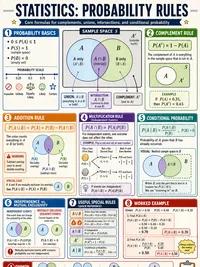
Theoretical Probability
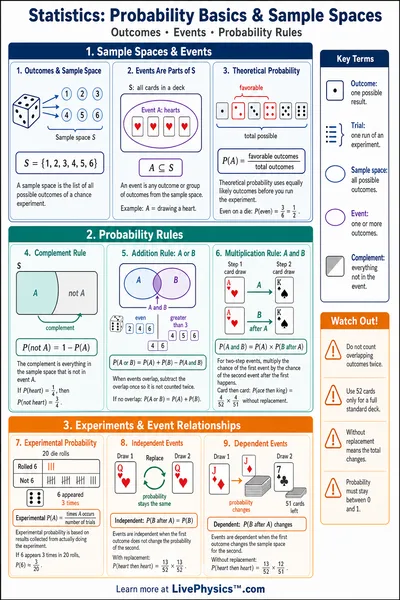
Theoretical probability describes what should happen based on mathematics. For a fair die or spinner with 6 equal sections, each outcome has the same chance.
Formula. Probability = favorable outcomes / total possible outcomes.
For a fair die or spinner. Each face or section has probability 1/6, which equals approximately 16.7%.
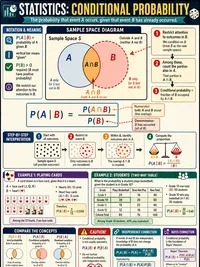
Experimental Probability
Experimental probability describes what actually happens when you run trials. You count outcomes and divide by the total number of trials.
Formula. Experimental probability = count for that outcome / total trials.
Example. If outcome 3 appears 7 times in 30 rolls, its experimental probability is 7/30, which equals about 23.3%.
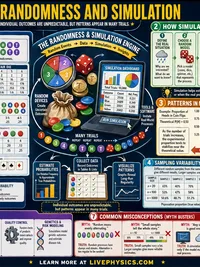
The Law of Large Numbers
With a small number of trials, experimental probabilities can be very different from theoretical. One outcome might appear twice as often as another purely by chance.
As the number of trials grows, experimental probabilities get closer and closer to the theoretical value. This pattern is called the Law of Large Numbers.
Try rolling 10 times, then 50 times, then 100 times and watch how the bar chart changes.
Fractions and Percents
Probabilities can be written as fractions, decimals, or percents. They all mean the same thing.
Theoretical. 1/6 = 0.1667 = 16.7%.
Experimental fraction. count / total trials. Divide the top by the bottom to get the decimal, then multiply by 100 to get the percent.
Key insight. A percent makes it easy to compare your results to the 16.7% theoretical target regardless of how many total trials you ran.