Spinners, Dice and Probability
Spin the wheel or roll a die, then watch your results pile up in a tally chart. Learn what "more likely" and "less likely" really mean by running your own experiments.
Tally Chart(0 total)
What Is Probability?
What Is Probability?
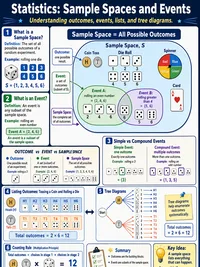
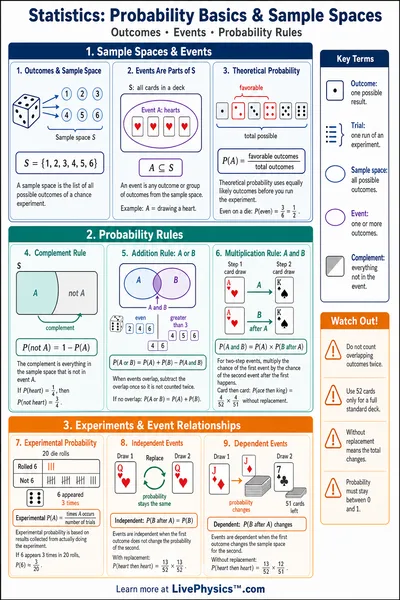
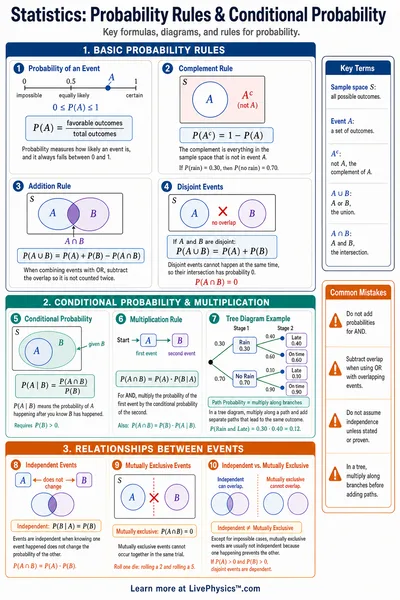
Probability tells you how likely something is to happen. We write it as a fraction, like 1/4, or as a percent, like 25%.
If a spinner has 4 equal sections and you want red, your chance is 1 out of 4. That is a probability of 1/4.
The higher the number, the more likely the event. A probability of 1 means it always happens. A probability of 0 means it never happens.
More Likely and Less Likely
When one color covers a bigger part of the spinner, it is more likely to be landed on than the other colors.
When a color covers a smaller part, it is less likely to come up. Try the 2:1 or 3:1 weight presets to see the difference.
Use the "Run 10" button to collect data quickly, then look at the tally chart to see which outcome came up most often.
Equally Likely Outcomes
When all sections on a spinner are the same size, every color has the same chance. We call these equally likely outcomes.
A standard 6-sided die is a good example. Each number (1 through 6) has exactly 1 chance out of 6, so all outcomes are equally likely.
After many rolls, each face should come up close to 1/6 of the time, which is about 17%. Try 60 rolls and check your tally!
Collecting and Reading Data
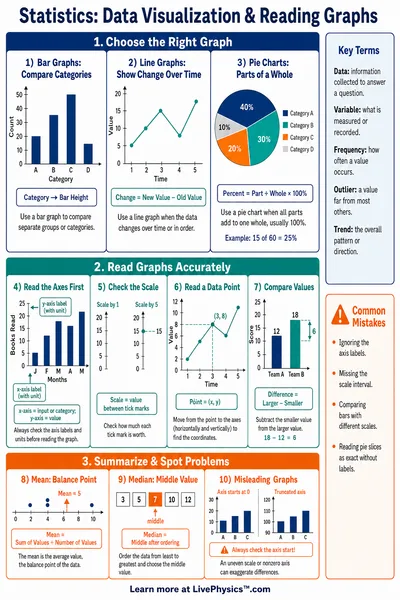
A tally chart records how many times each outcome happened. Each bar in the chart shows the count for one color or number.
The tally also shows each count as a fraction of the total, like 3/10. This is called the experimental probability because it comes from your real data.
Compare your experimental probability to the theoretical probability (the fraction you would expect). The more trials you do, the closer they get!