How Earthquakes Travel Through Rock
Waves that reveal Earth’s inside
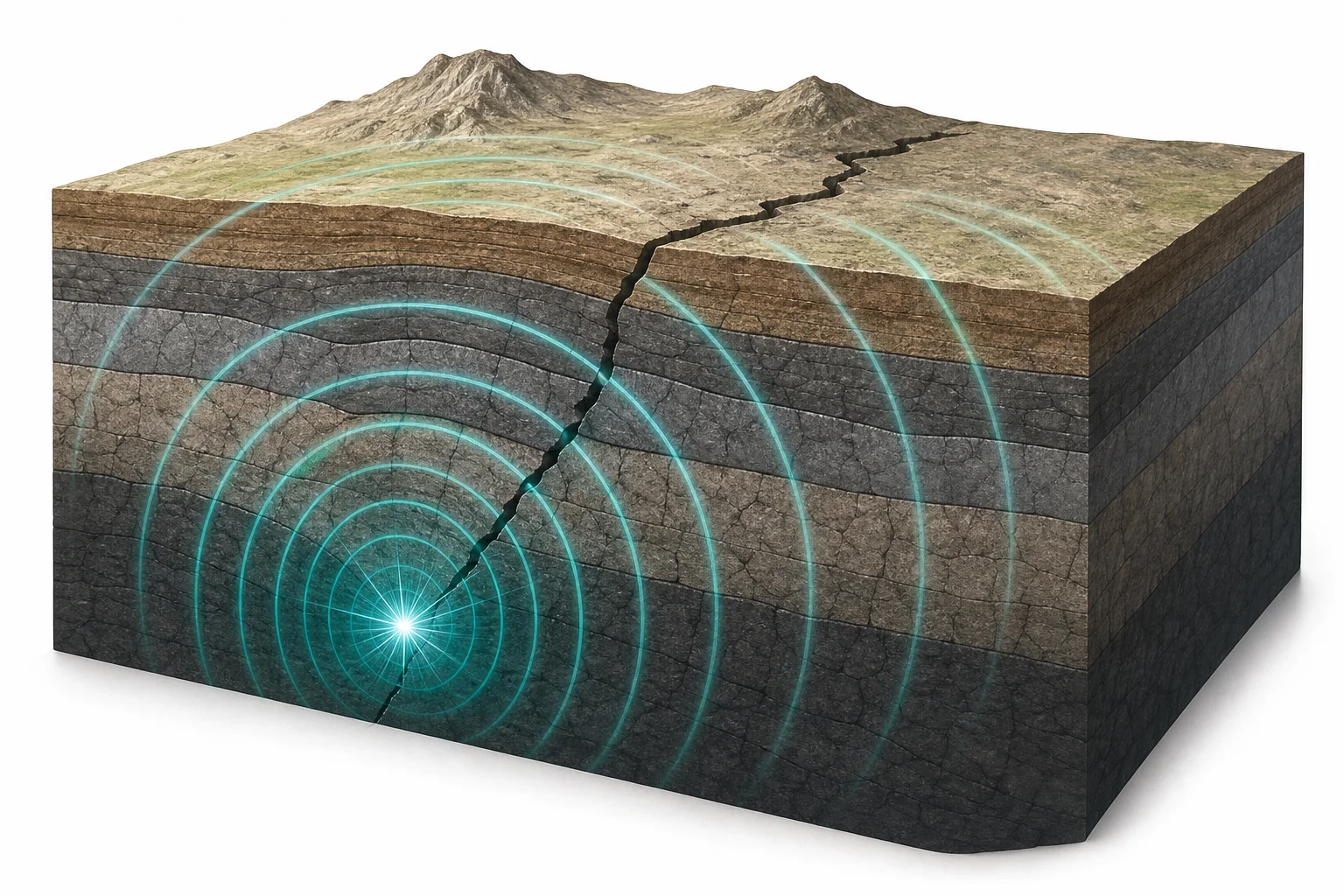
An earthquake starts when rock breaks and slips along a fault. That sudden motion sends energy through the ground as waves. Some waves squeeze rock back and forth, while others shake it side to side.
During an earthquake, the ground can shake many miles from the break in the rock. That happens because the break does not move the whole planet at once. It releases energy that travels outward through rock. Scientists use instruments called seismometers to record that motion. The records show that not all earthquake waves act the same way. Some waves move fast and can pass through solids and liquids. Other waves move slower and only travel through solids. This difference helps scientists locate earthquakes and study Earth’s hidden layers. It also explains why shaking can feel different from place to place. Rock type, distance, and wave speed all matter. In middle-school Earth science, this question connects a real event to evidence, models, and hazard planning. Earthquake waves are not just shaking. They are clues moving through rock.
A sudden slip starts the waves
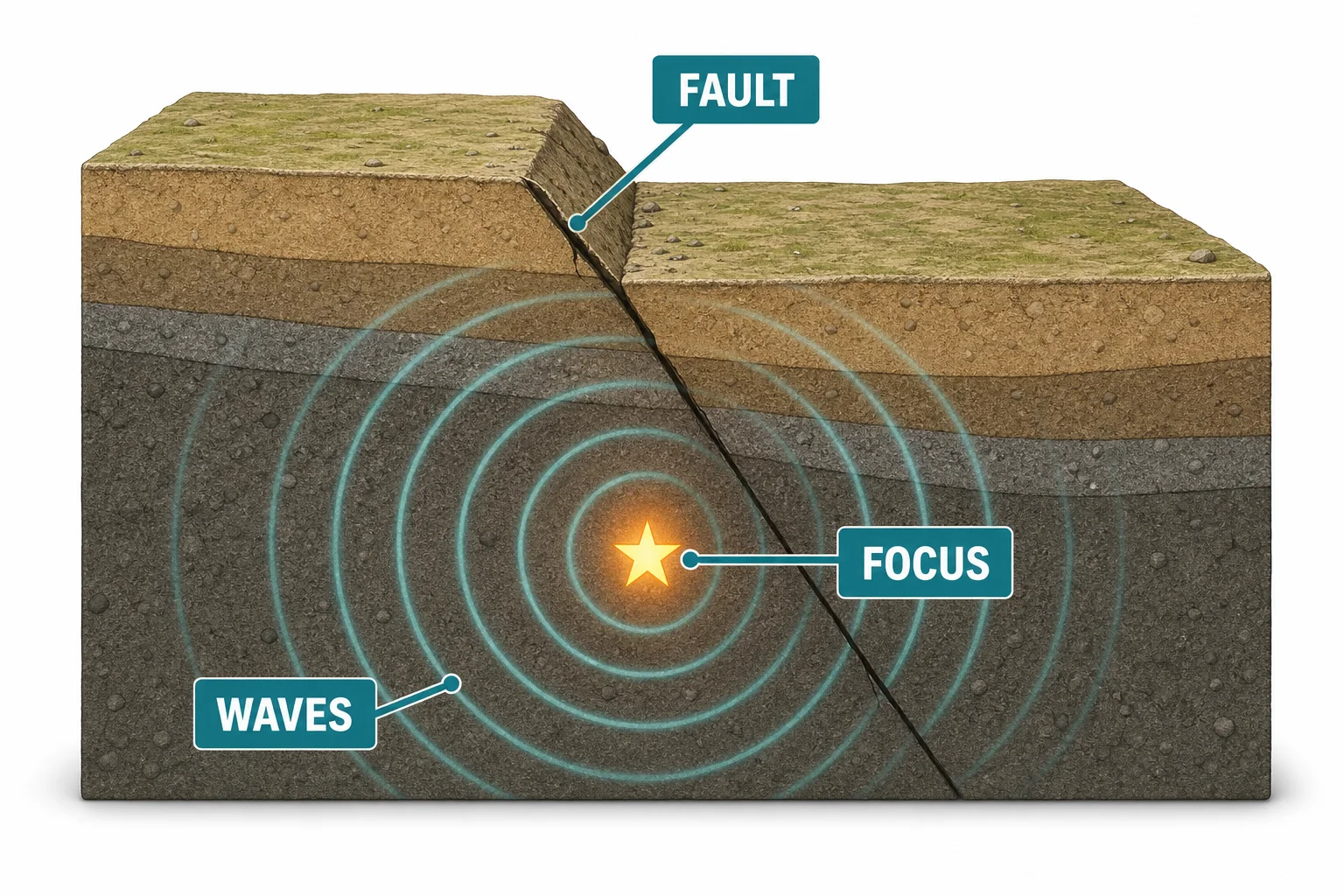
An earthquake wave begins when stored energy is released by moving rock.
P-waves squeeze and stretch
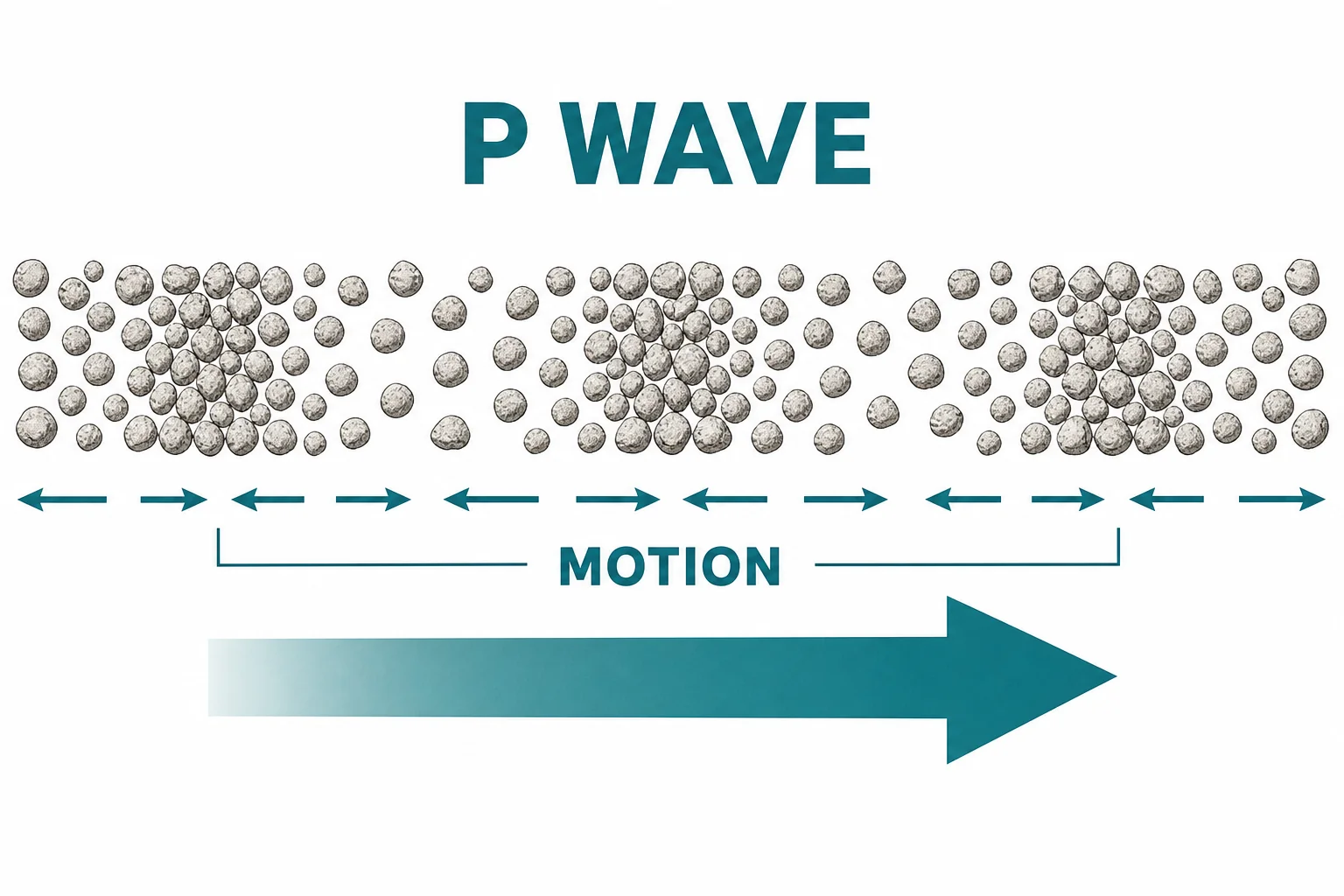
P-waves arrive first because they usually travel fastest through Earth.
S-waves shake side to side
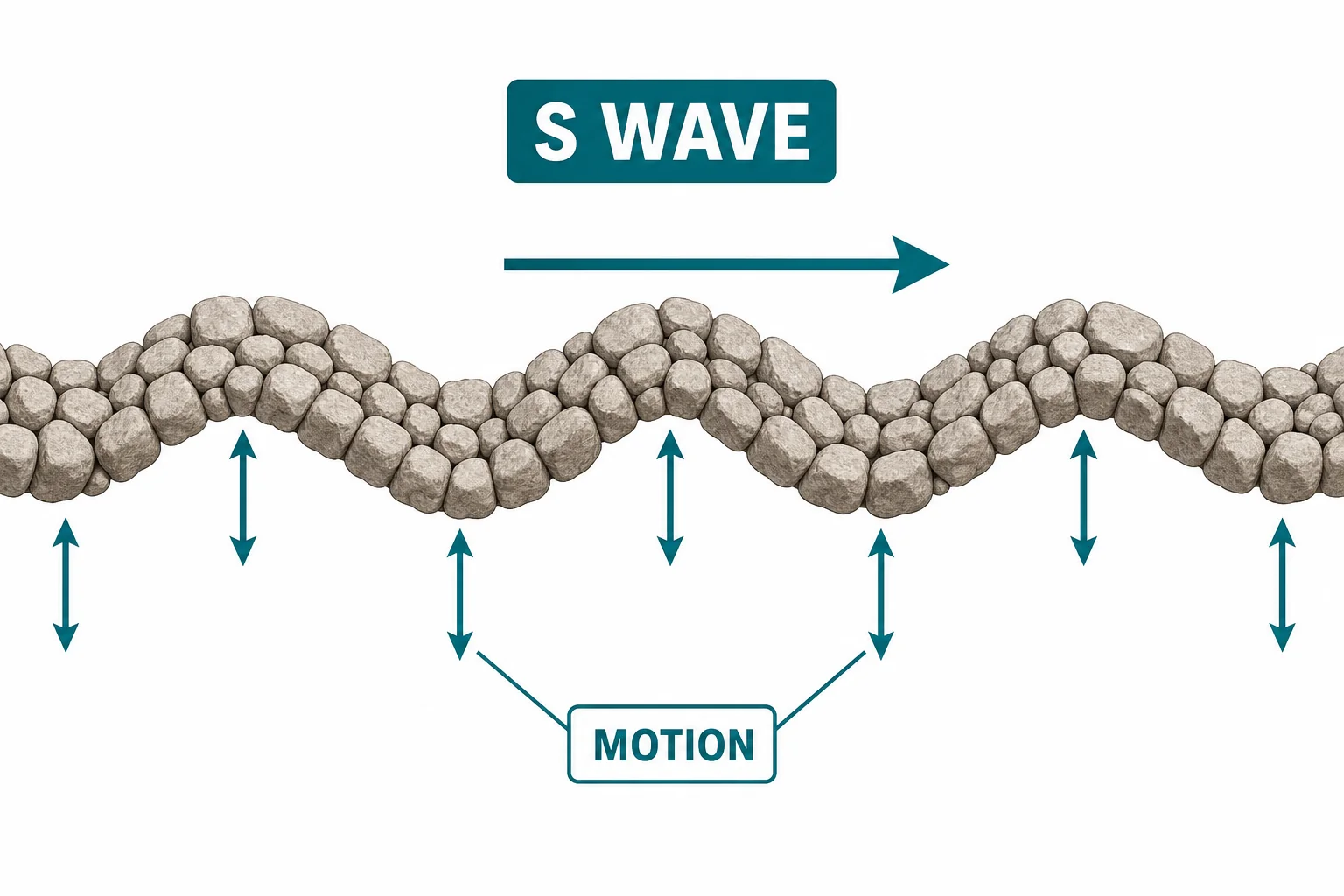
S-waves cannot pass through liquid, so they reveal what Earth is made of.
Arrival times locate the quake
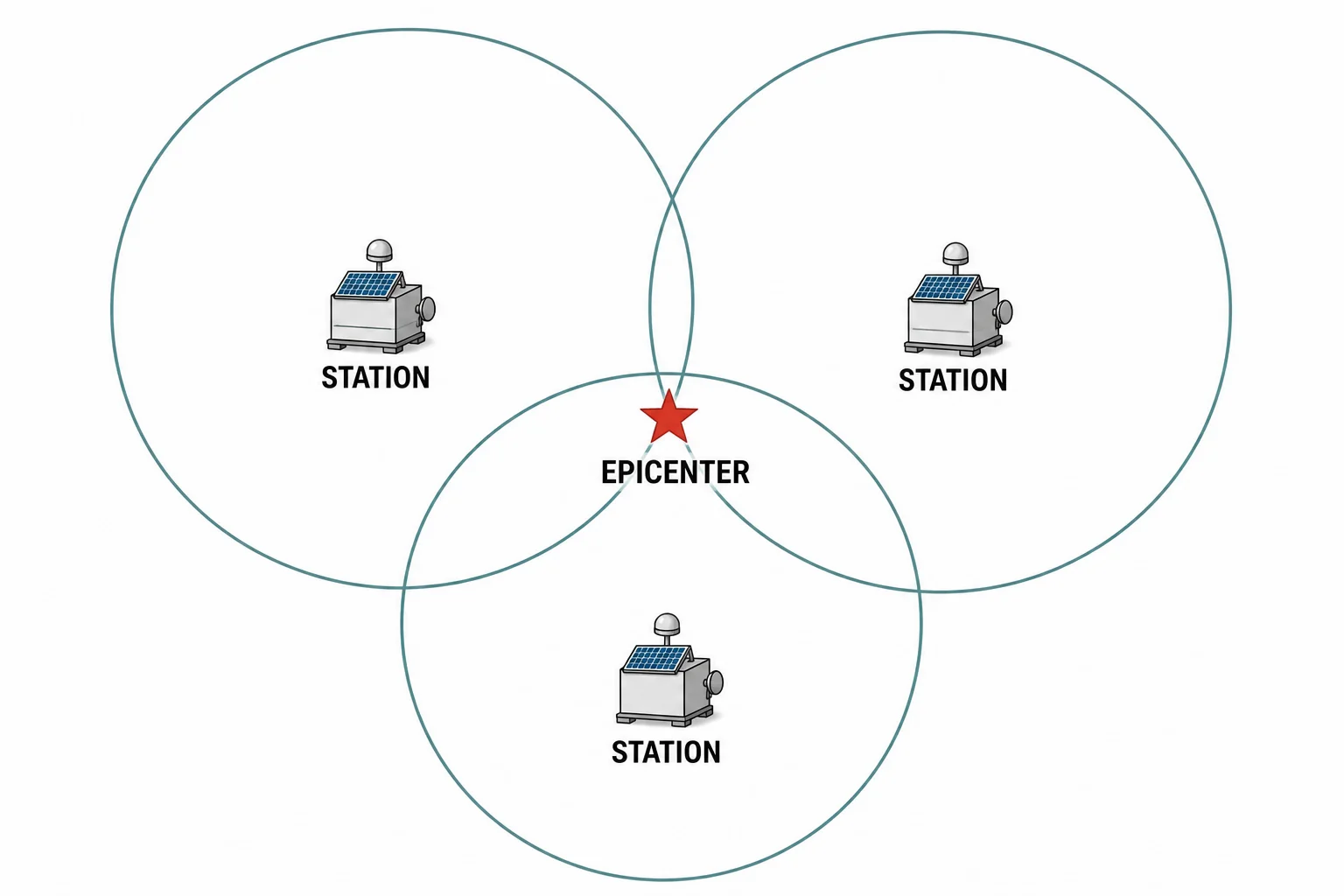
The P-wave and S-wave time gap helps measure distance to an earthquake.
Rock changes the shaking
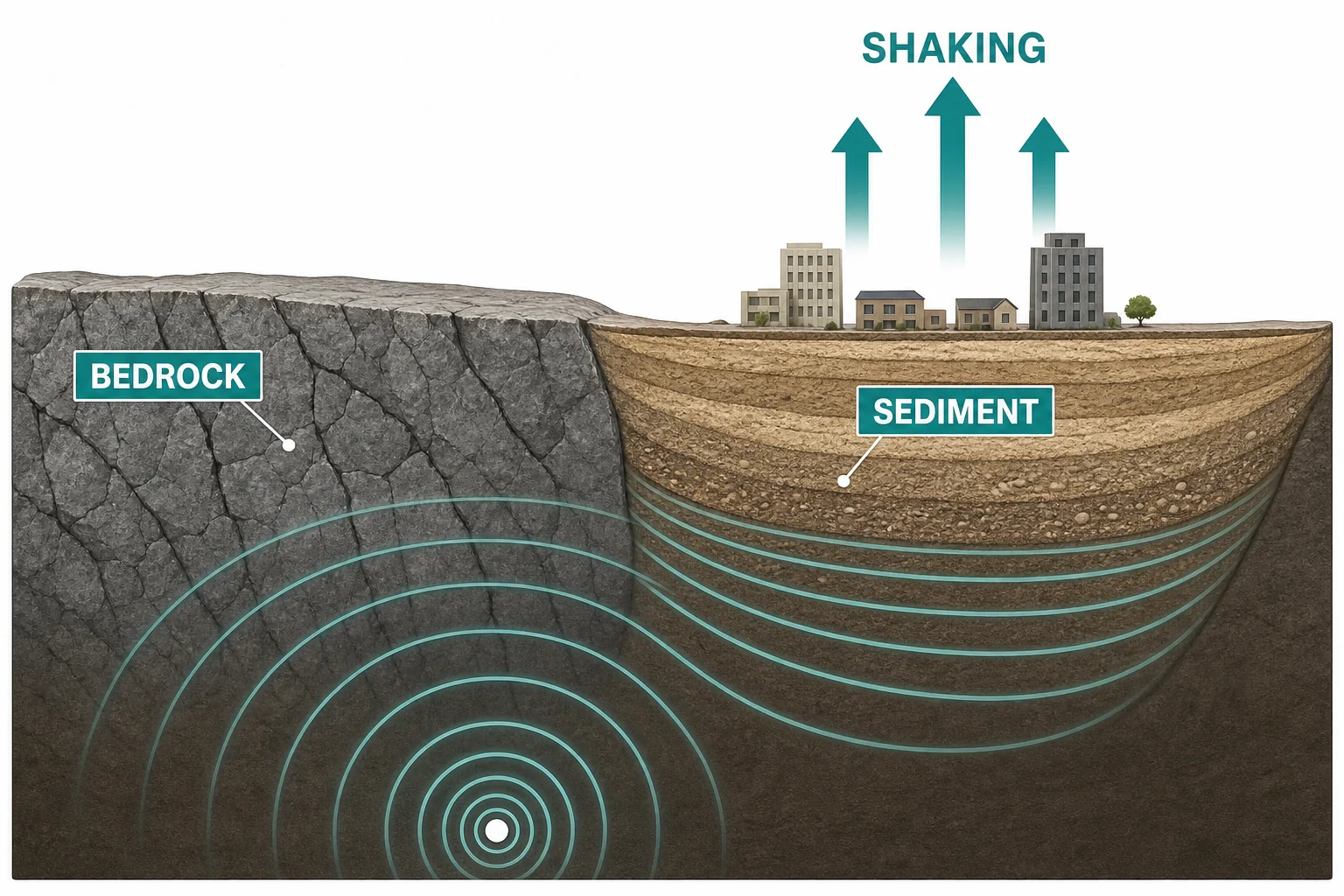
The same earthquake can feel different because waves interact with local ground.
Vocabulary
- Fault
- A crack or zone in rock where blocks can move past each other.
- Focus
- The point inside Earth where an earthquake begins.
- Epicenter
- The point on Earth’s surface directly above the focus.
- P-wave
- A fast earthquake wave that squeezes and stretches material in the direction it travels.
- S-wave
- A slower earthquake wave that shakes material across the direction it travels and cannot move through liquid.
- Seismometer
- An instrument that records ground motion from earthquakes and other vibrations.
In the Classroom
Slinky wave model
20 minutes | Grades 6-8
Students use a slinky to model P-waves by pushing and pulling along its length. They model S-waves by moving one end side to side, then compare particle motion and wave direction.
Find the epicenter
35 minutes | Grades 6-8
Give students three paper seismograms with different P-wave and S-wave arrival gaps. Students convert each gap to distance using a simple travel-time chart, then draw circles on a map to locate the epicenter.
Ground material shake test
30 minutes | Grades 6-8
Students place small block models on trays of sand, gravel, and firm clay. They tap each tray the same way and compare how the blocks move on different materials.
Key Takeaways
- • Earthquakes release energy when rock suddenly slips along a fault.
- • P-waves travel fastest and squeeze material in the direction they move.
- • S-waves arrive later, shake material side to side, and cannot pass through liquid.
- • Seismologists use P-wave and S-wave arrival times to estimate earthquake location.
- • Rock type and local ground conditions affect how strong shaking feels at the surface.