Budget-Constrained Design Optimizer
Design a racing bicycle by allocating a $1,000 budget across five components. Explore how trade-offs between speed, safety, durability, comfort, and weight affect total performance.
Budget
Component Selection
Performance Profile
Overall Score
Dimension Scores
Upgrade Suggestion
Upgrading your Drivetrain from tier 2 to tier 3 gives the best performance gain (+2.8 points) for the remaining budget.
Total Budget
$1,000
Spent
$420
Remaining
$580
Design Concepts
Trade-off Analysis
No component can excel in every dimension at once. A carbon fiber frame maximizes speed and low weight, but costs far more than steel. A hydraulic disc brake system improves safety and comfort dramatically, but leaves less budget for the drivetrain.
- Spending more on wheels boosts speed but reduces budget for safety components
- Premium drivetrains improve speed and weight but cost 10x more than basic ones
- Each design goal requires conscious sacrifices elsewhere
Pareto Efficiency
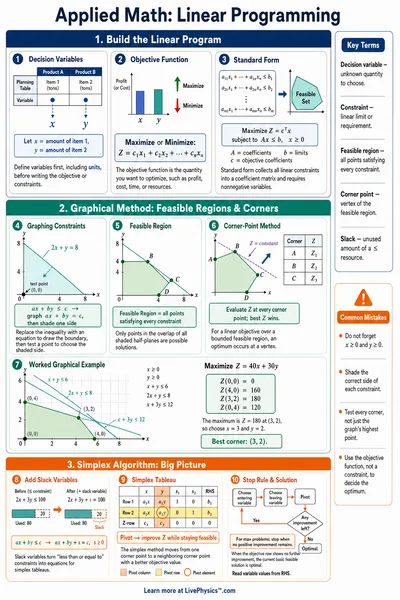
A configuration is Pareto optimal when no possible upgrade improves performance without exceeding the budget. The tool highlights this state, you cannot get a better score without spending more money.
- The upgrade suggestion shows the single best next step
- Pareto frontier configurations represent the boundary of what is achievable
- Real engineering decisions live on this frontier
Real Engineering Design
Engineers use constrained optimization in every product from smartphones to aircraft. Budget, weight limits, safety standards, and manufacturing costs all function as constraints. The goal is to find the best design within those hard limits.
- Aerospace engineers optimize for weight and safety under strict cost constraints
- Consumer product teams balance performance and manufacturing cost
- Civil engineers choose materials that meet structural requirements at minimum cost
How to Use This Tool
Reading the Radar Chart
The five-axis spider chart shows your bicycle's performance profile across speed, safety, durability, comfort, and weight. A larger filled area means better overall performance. An unbalanced shape reveals which dimensions are being sacrificed for others.
Interpreting the Score
The overall score is a weighted average, speed counts 30%, safety 25%, durability 20%, comfort 15%, and weight 10%. This weighting reflects a competitive rider's priorities. A different rider (commuter vs. racer) might weight safety or comfort higher.
Tier System
Each component has five quality tiers from basic to premium. Higher tiers generally cost more and perform better, but not always in every dimension. For example, Carbon Tubular wheels (tier 5) have exceptional speed but lower safety than Hydraulic Disc brakes.
Optimization Hints
The hint panel evaluates every possible single-component upgrade and identifies which one gives the highest score gain per dollar spent. Use it as a greedy algorithm guide and observe how the suggestion changes as you modify your build.