Historical Causation Chain Builder
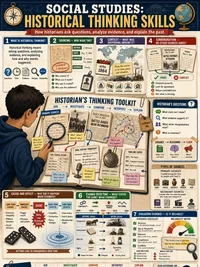
Historians explain change by tracing how one thing leads to another. Pick a scenario, assign each event to its causal role, and build the chain that runs from long-term causes to lasting consequences.
Choose a scenario
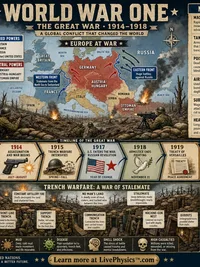
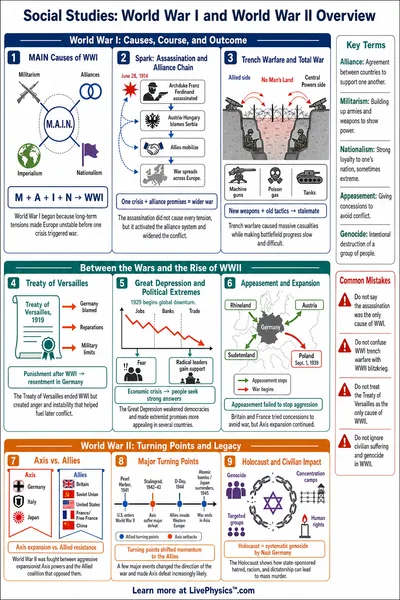
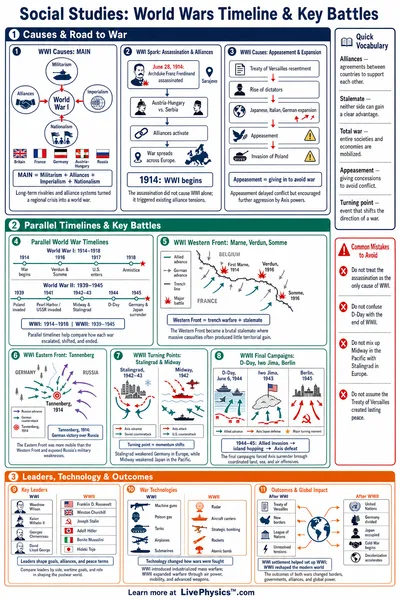
A war that began in 1914 grew out of long-standing rivalries in Europe and a single sudden spark. Sort each event into its causal role.
Assign a causal role to each event
Rising nationalism stirred competition among nations and ethnic groups.
Several old empires collapsed in the years that followed.
The Treaty of Versailles redrew borders and reshaped Europe.
European powers built up large armies and competed in an arms race.
World War I begins.
Nations mobilized their armies and the war spread across Europe.
The assassination of Archduke Franz Ferdinand in 1914.
A tangled system of alliances divided Europe into rival blocs.
Cause and effect chain
Events flow from long-term causes through the trigger to the central event, then on to its consequences. The chain updates as you assign roles.
No events yet
No events yet
No events yet
No events yet
No events yet
Thinking in Causes and Effects
What causation means in history
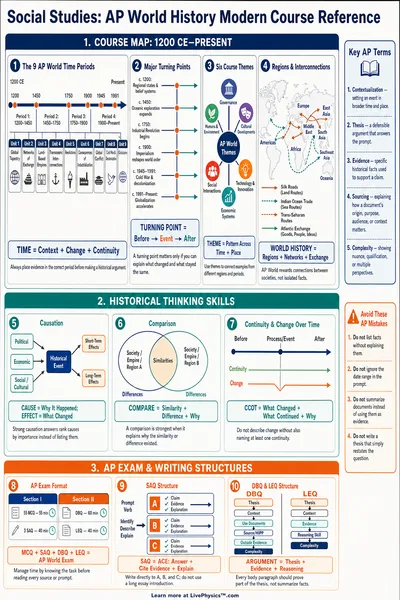
Causation is the link between an event and the things that led to it and the things that followed. Strong historical thinking keeps these links in order rather than treating events as isolated.
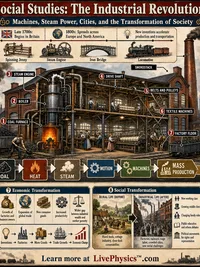
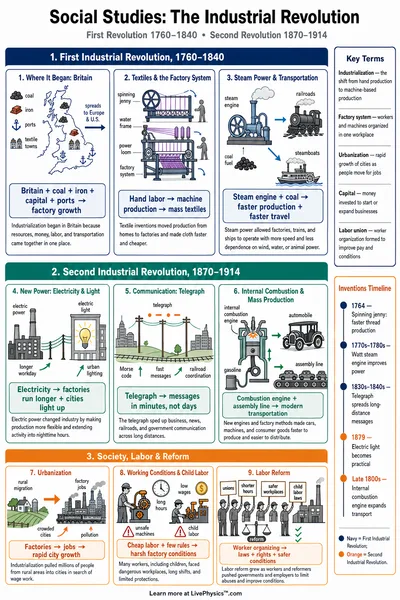
Example. The Industrial Revolution did not begin out of nowhere. New farming methods and plentiful coal set the stage long before the first factories appeared.
Long-term cause versus immediate trigger
A long-term cause is an underlying condition that builds up over years. A trigger is the short-term spark that finally sets events in motion. Both matter, but they act on very different timescales.
Example. Rival alliances and an arms race were long-term causes of World War I, while the assassination of Archduke Franz Ferdinand in 1914 was the trigger.
Short-term versus long-term consequences
A short-term consequence is the immediate aftermath of an event. A long-term consequence unfolds over years and often reshapes society in ways people did not expect at the time.
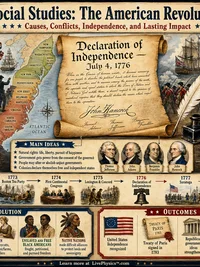
Example. The Declaration of Independence was a short-term consequence of the American Revolution, while the United States Constitution was a long-term consequence.
How to use this tool
Choose a scenario, then click a role for each event. The events appear in a mixed order, so you have to reason about timing and influence rather than reading them off in sequence.
- Each scenario has exactly one central event.
- The chain view updates live as you assign roles.
- Use Check chain to see your accuracy and the correct roles.