Figurative Language Lab
Read a passage, click each sentence, and tag the figurative language device you spot. Record your findings in the data table and write up your analysis.
Controls
Genre Nature Poetry · 7 sentences
Progress
Morning in the Forest
Nature Poetry- 1.
- 2.
- 3.
- 4.
- 5.
- 6.
- 7.
Select a sentence from the passage to tag it.
Data Table
(0 rows)| # | Sentence # | Figurative Language Type | Quoted Text | Effect on Reader |
|---|
Reference Guide
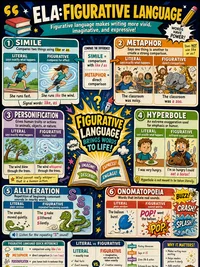
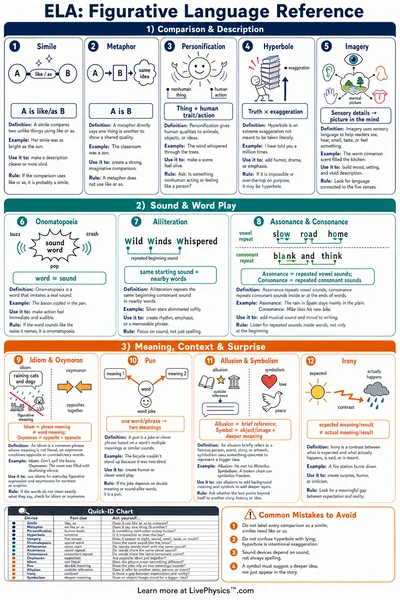
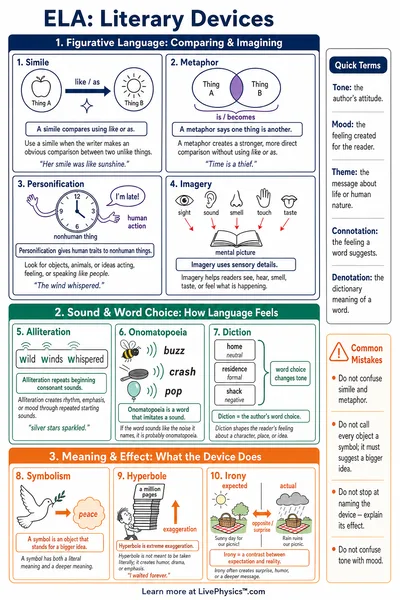
Types of Figurative Language
Simile. A direct comparison using "like" or "as." The oak stretched like a weary giant.
Metaphor. A direct comparison without "like" or "as." The forest is a cathedral.
Personification. Giving human qualities to non-human things. The wind whispered secrets.
Hyperbole. Deliberate exaggeration for effect. I have walked a million miles.
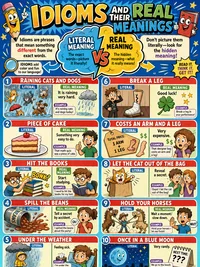
Idiom. A fixed phrase whose meaning differs from the literal words. Her boots were glued to the pedal.
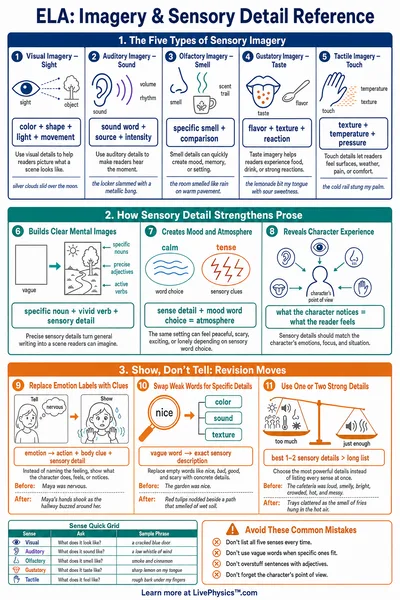
Imagery. Vivid sensory language that paints a picture. Fingers of gold touching the mossy floor.
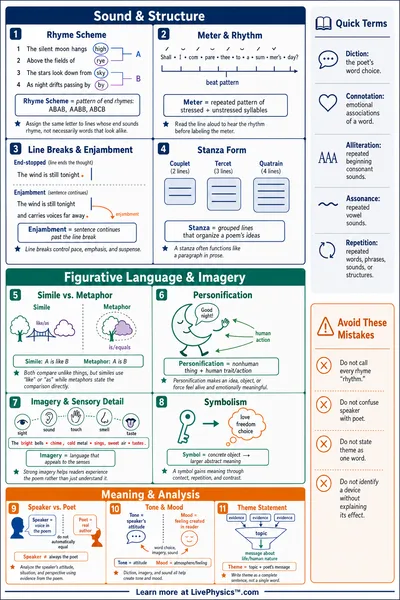
Simile vs Metaphor
Both devices make a comparison between two unlike things to create a vivid image. The difference is in how directly the comparison is made.
Simile uses "like" or "as" as a signal word, keeping some distance, "Her voice was like music."
Metaphor states the comparison as if it were literally true, "Her voice was music."
Metaphors tend to feel bolder and more immediate. Similes feel more descriptive and comparative. Neither is stronger -- the choice depends on the writer's intent.
Sound Devices
Alliteration is the repetition of the same initial consonant sound in nearby words. "Silver sun sank slowly" is a strong example. It creates rhythm and draws attention to a phrase.
Onomatopoeia uses words whose sound imitates the thing they describe. "The brook babbled and gurgled" -- those words sound like flowing water. Other examples include crack, hiss, buzz, thud, and whoosh.
Sound devices appeal to the reader's sense of hearing and make writing feel more musical and engaging when read aloud.
How Figurative Language Creates Meaning
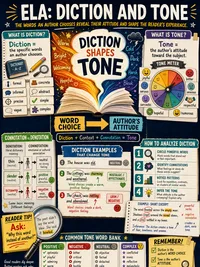
Writers choose figurative language to do things literal language cannot. A few key effects to look for in your analysis
- Setting tone -- metaphors can make a scene feel threatening, gentle, or magical.
- Showing character -- hyperbole reveals emotion; idioms reveal cultural voice.
- Slowing the reader down -- vivid imagery forces the reader to pause and picture.
- Creating connection -- personification makes the reader empathise with objects.
When you record your findings, always ask, what feeling or idea does this device add that the plain words alone would not?