Spanish Verb Conjugation Trainer
Pick a verb and a tense, then type the conjugated form for the pronoun shown. Use the accent buttons to add á, é, í, ó, ú, or ñ, check your answer, and build a streak. Everything runs in your browser.
Practice settings
Regular verbs, present tense only, with ending hints.
Learn mode practices the present tense only.
Reference Guide
Regular conjugation
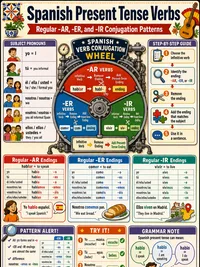
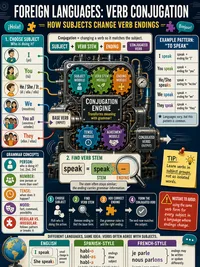
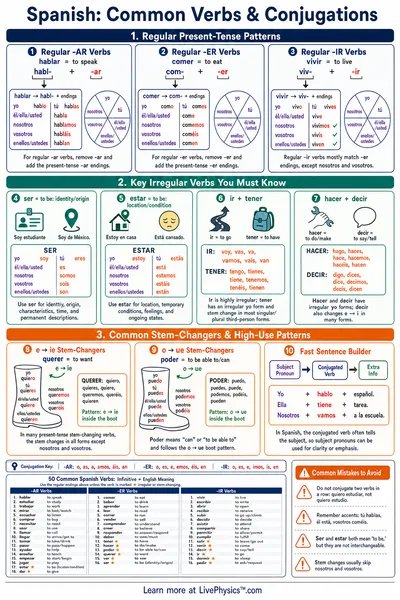
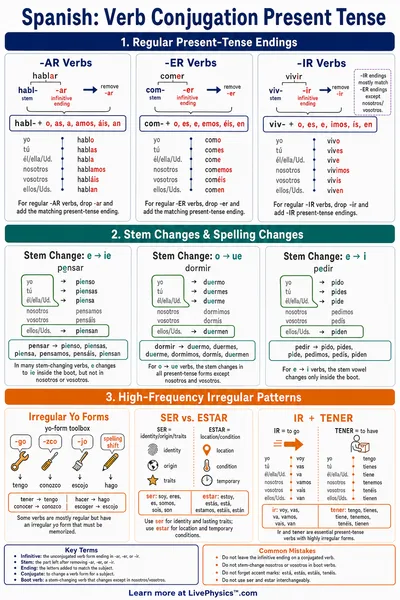
Spanish verbs end in -ar, -er, or -ir. To conjugate a regular verb, drop the ending from the infinitive and add the ending for the person and tense. For example, hablar becomes habl- plus -o for yo, giving hablo.
Present tense endings
- -ar. -o, -as, -a, -amos, -áis, -an.
- -er. -o, -es, -e, -emos, -éis, -en.
- -ir. -o, -es, -e, -imos, -ís, -en.
The future tense is special. You keep the whole infinitive and add -é, -ás, -á, -emos, -éis, -án, so hablar becomes hablaré.
The four tenses
- Presente. Actions happening now or that happen regularly. Yo hablo means I speak or I am speaking.
- Pretérito. Completed actions in the past. Yo hablé means I spoke.
- Imperfecto. Ongoing or repeated past actions. Yo hablaba means I used to speak or I was speaking.
- Futuro. Actions that will happen. Yo hablaré means I will speak.
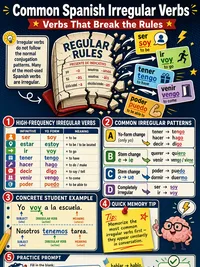
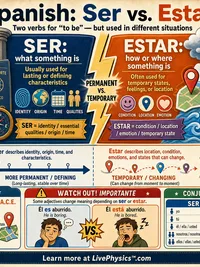
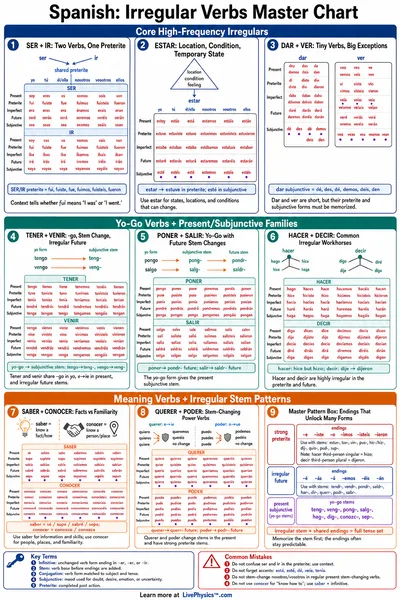
Common verbs like ser, estar, ir, tener, and hacer are irregular, so their forms must be memorized. Turn on Challenge mode to practice them.