Practice interpreting exoplanet transit light curves, calculating transit depth, estimating planet size, and identifying patterns in brightness data.
Read each problem carefully. Use units when needed, show calculations clearly, and explain your reasoning in complete sentences.
Finding planets by measuring tiny changes in starlight
Astronomy - Grade 9-12
- 1
A star has a normal brightness of 1.000 in relative flux. During a transit, its brightness drops to 0.990. What is the transit depth as a percent?
- 2
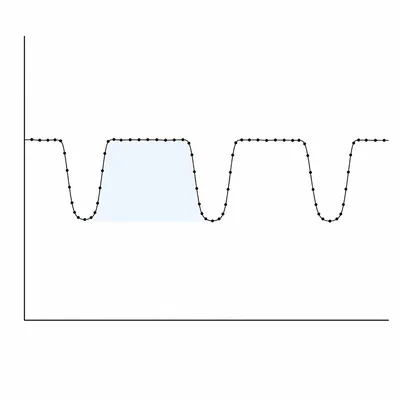
A light curve shows a repeating dip in brightness every 12 days. What does the 12-day interval most likely represent?
- 3
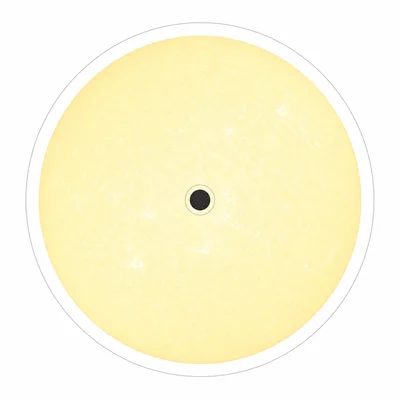
A planet blocks 0.25% of its star's light during transit. Using the relationship transit depth = (planet radius / star radius)^2, find the planet radius as a fraction of the star radius.
- 4
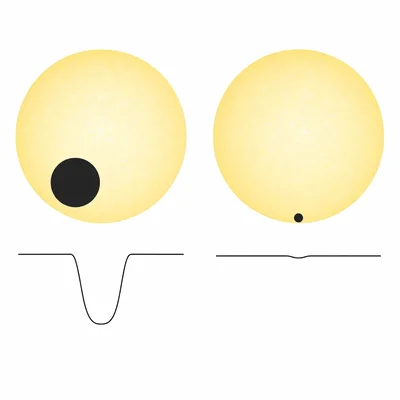
Two planets orbit stars of the same size. Planet A causes a 1% dip in brightness, while Planet B causes a 0.01% dip. Which planet has the larger radius, and how can you tell?
- 5
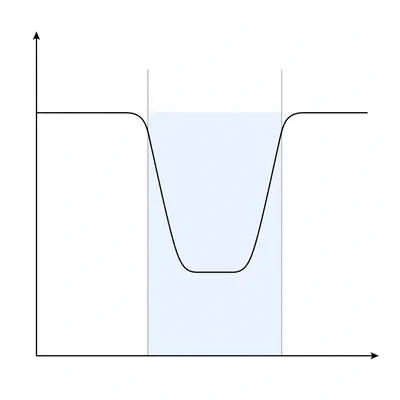
A transit begins at hour 5 and ends at hour 9 on a light curve. What is the transit duration?
- 6
A star has a radius of 700,000 km. An exoplanet has a radius equal to 0.10 times the star's radius. What is the planet's radius in kilometers?
- 7
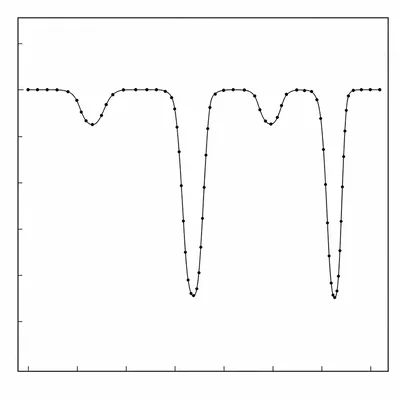
A light curve has a shallow dip, then a deeper dip, and the pattern repeats. What is one possible explanation for this pattern?
- 8
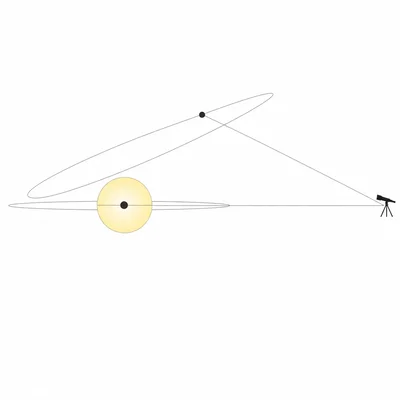
Explain why the transit method only finds some exoplanets, not all exoplanets around distant stars.
- 9
A planet causes a transit depth of 4%. What is the planet radius as a fraction of the star radius?
- 10
A student says, "A deeper transit always means a planet is closer to its star." Explain why this statement is not correct.
- 11
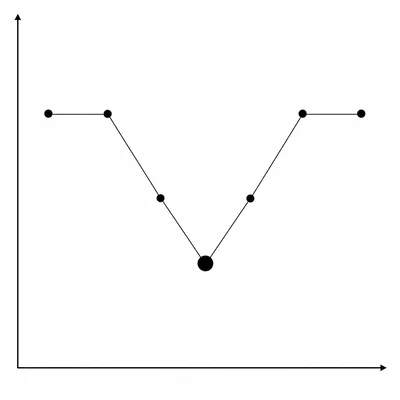
A star's brightness measurements are: 1.000, 1.000, 0.997, 0.994, 0.997, 1.000, 1.000. At what point in this sequence is the planet most centered in front of the star?
- 12
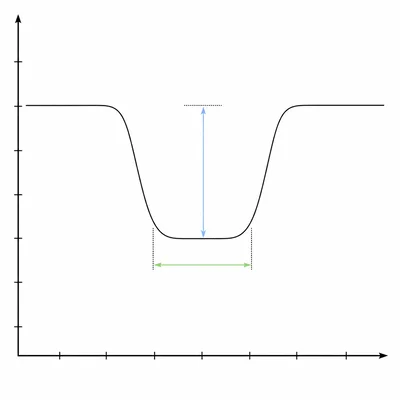
Describe two features of a light curve that astronomers can use to learn about an exoplanet.
- 13
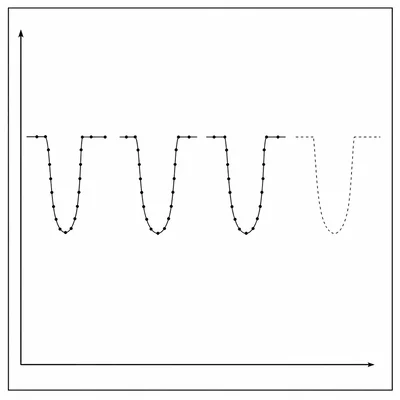
A transit dip occurs at day 3, day 18, and day 33. What is the planet's orbital period, and when would you predict the next transit?
- 14
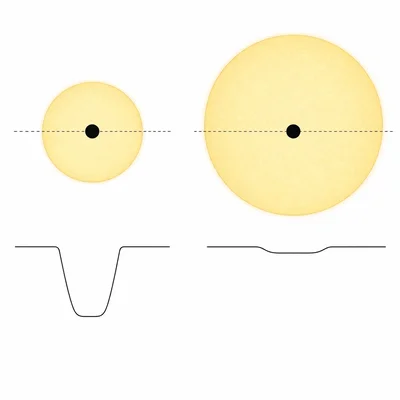
A small star and a large star are transited by identical planets. Which star will show a larger percent drop in brightness, and why?
- 15
A light curve shows one unusually low data point, but no repeated dips in later observations. Give one reason astronomers should be cautious before claiming they found an exoplanet.