Explore how hydrogen, helium, carbon, oxygen, iron, and heavier elements form in stars, supernovae, and neutron star mergers.
Read each problem carefully. Use complete sentences for explanations and show calculations when needed.
How stars build elements through fusion and explosive events
Astronomy - Grade 9-12
- 1
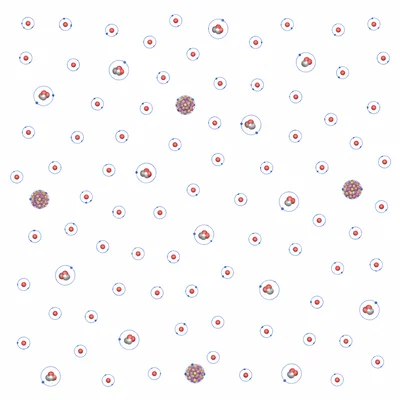
Explain why hydrogen and helium are the most common elements in the universe, while many heavier elements are much less common.
- 2
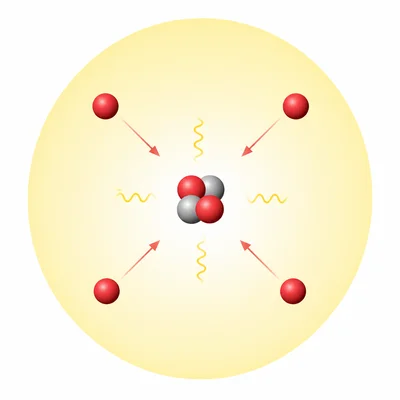
In the core of a main-sequence star like the Sun, what is the main nuclear process, and what element is produced from hydrogen?
- 3
Four hydrogen nuclei have a total mass of 4.0313 atomic mass units, while one helium-4 nucleus has a mass of 4.0026 atomic mass units. The missing mass is converted into energy. Calculate the missing mass in atomic mass units.
- 4
Use the missing mass from the previous problem, 0.0287 u, and the conversion 1 u = 931.5 MeV/c^2 to estimate the energy released. Round to the nearest tenth of a MeV.
- 5
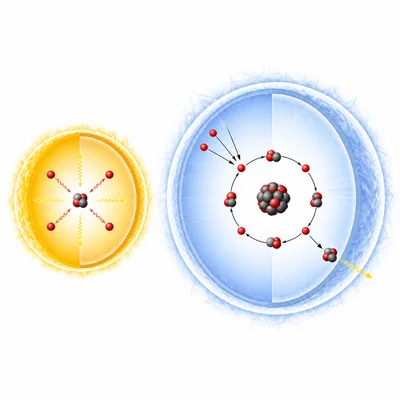
Compare the proton-proton chain and the CNO cycle. Include the type of stars where each process is most important.
- 6
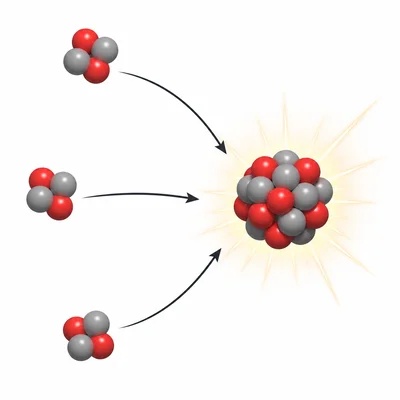
A star has used up much of the hydrogen in its core and begins fusing helium. What is the triple-alpha process, and what element does it produce?
- 7
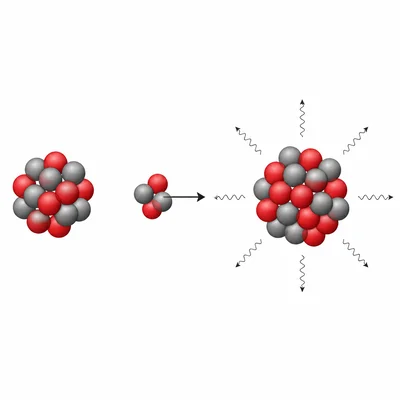
Describe how oxygen can form inside a star after carbon has been made.
- 8
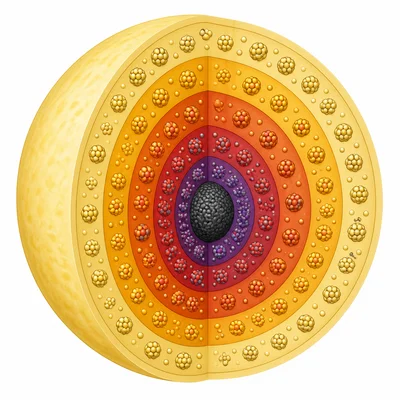
Massive stars develop layers sometimes described as an onion-like structure. Explain what this means in terms of fusion and elements.
- 9
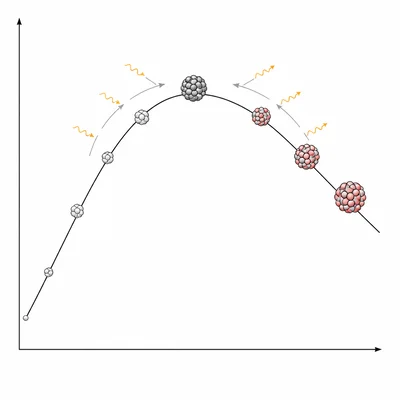
Why does fusion release energy for elements lighter than iron, but not for elements heavier than iron?
- 10

A massive star forms an iron core near the end of its life. Explain why the formation of an iron core can lead to core collapse.
- 11
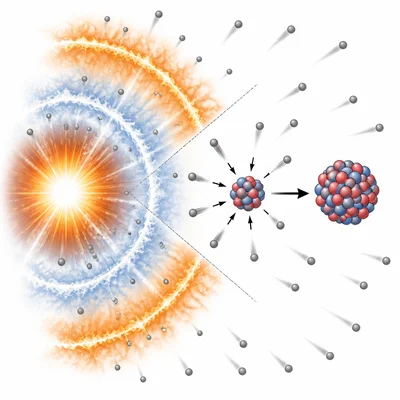
Identify one way elements heavier than iron can form during a supernova explosion.
- 12
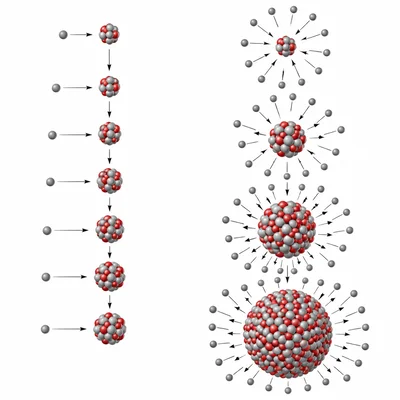
What is the difference between the s-process and the r-process in nucleosynthesis?
- 13
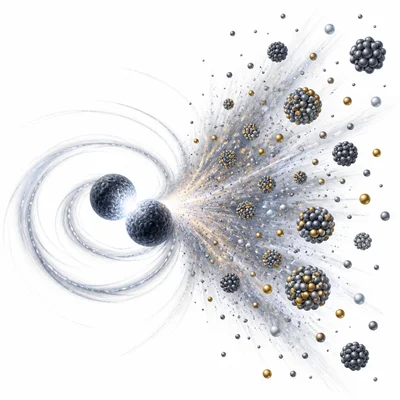
Neutron star mergers are linked to the production of heavy elements such as gold and platinum. Explain why these events are good sites for making very heavy elements.
- 14
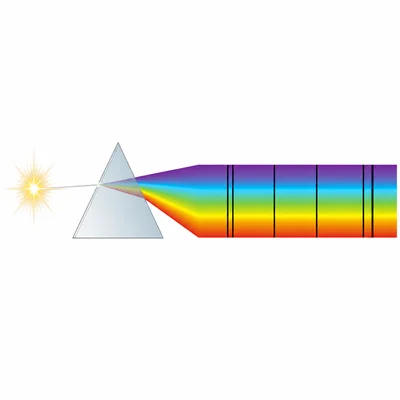
Astronomers observe absorption lines for calcium, iron, and other elements in the spectrum of a star. How does this evidence help show that stars contain elements made by nucleosynthesis?
- 15
Summarize the origin of the atoms in your body by connecting at least three sources: the Big Bang, ordinary stars, and explosive or merger events.