Practice explaining the Big Bang model, interpreting cosmological evidence, and using simple calculations involving expansion, redshift, and cosmic history.
Read each problem carefully. Show your reasoning and calculations in the space provided.
Exploring evidence for an expanding universe
Astronomy - Grade 9-12
- 1
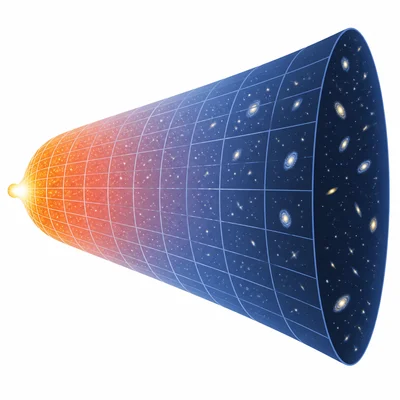
In your own words, describe what the Big Bang model says about the early universe. Include at least two important features of the model.
- 2
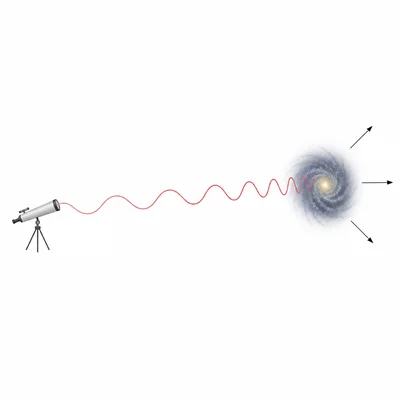
A galaxy has a measured redshift, meaning its spectral lines are shifted toward longer wavelengths. Explain what this tells astronomers about the galaxy's motion and how it supports the idea of an expanding universe.
- 3
Use Hubble's law, v = H0d, to find the recessional velocity of a galaxy that is 200 megaparsecs away. Use H0 = 70 kilometers per second per megaparsec.
- 4
A distant galaxy is moving away at 21,000 kilometers per second. Using H0 = 70 kilometers per second per megaparsec, estimate its distance in megaparsecs.
- 5
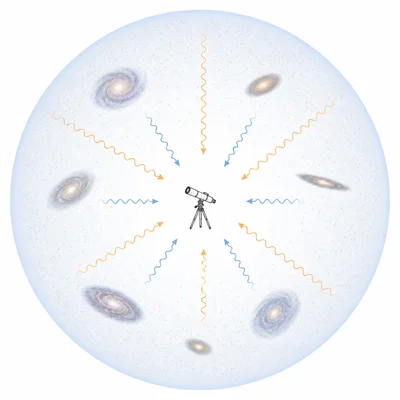
The cosmic microwave background is often described as leftover radiation from the early universe. Explain why this radiation is important evidence for the Big Bang model.
- 6
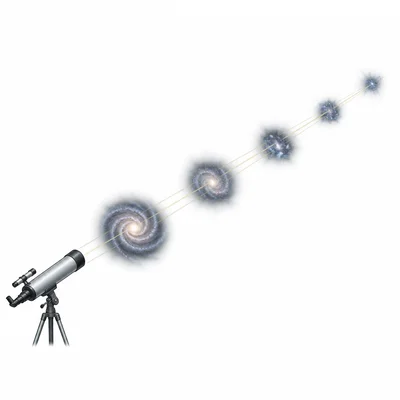
Explain why astronomers say they are looking back in time when they observe very distant galaxies.
- 7

A spectral line that normally has a wavelength of 500 nanometers is observed from a galaxy at 550 nanometers. Calculate the redshift using z = (observed wavelength - rest wavelength) divided by rest wavelength.
- 8
List three major pieces of evidence that support the Big Bang model and briefly explain each one.
- 9
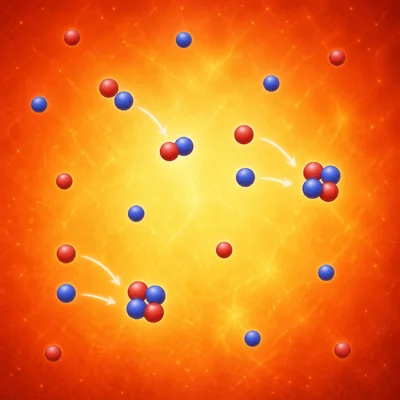
During the first few minutes after the Big Bang, the universe was hot enough for nuclear reactions to form light elements. Name two elements formed in large amounts during this period and explain why heavier elements were not formed in large amounts then.
- 10

A student says, "The Big Bang was an explosion into empty space." Explain why this statement is not accurate.
- 11
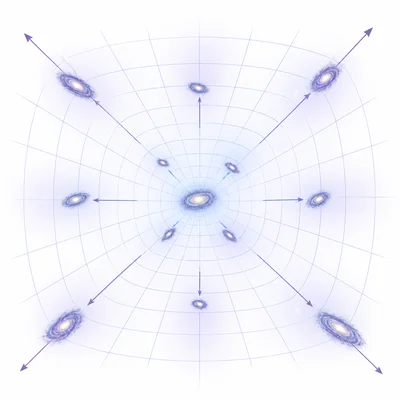
Cosmologists have found that the expansion of the universe is speeding up. What is the name commonly given to the unknown cause of this accelerated expansion, and what does it appear to do?
- 12
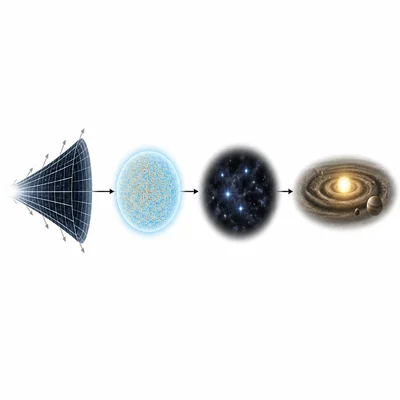
Put these events in the correct order from earliest to latest: formation of the first stars, cosmic microwave background released, rapid early expansion, formation of the solar system.