Habitats & Adaptations Lab
Select an animal, read its key adaptations, then move it to different habitats to see how well it could survive. Record your findings and discover why adaptations matter.
Guided ExperimentHabitats and Adaptations Investigation
Pick one animal. If that animal was moved to a completely different habitat, do you think it would survive well or poorly? Write your prediction.
Write your hypothesis in the Lab Report panel, then click Next.
Controls
Select an animal, explore its adaptations, then test it in different habitats to see its survival score.
Choose an Animal
Polar Bear
Native habitat Arctic
Key Adaptations
- 1Thick white fur for warmth and camouflage
- 2Large paws for swimming
- 3Fat layer for insulation
Native habitat score
All adaptations work perfectly in Arctic.
Test a Habitat
What happens if the Polar Bear moves to a different habitat?
Survival score
5/5
Perfect match! All adaptations help here.
This is the native habitat. Perfect survival conditions.
Records Polar Bear in Arctic (5/5)
How Does Polar Bear Do in Each Habitat?
* native habitat
Reference Guide
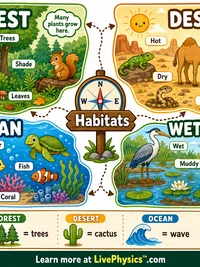
What Is a Habitat?
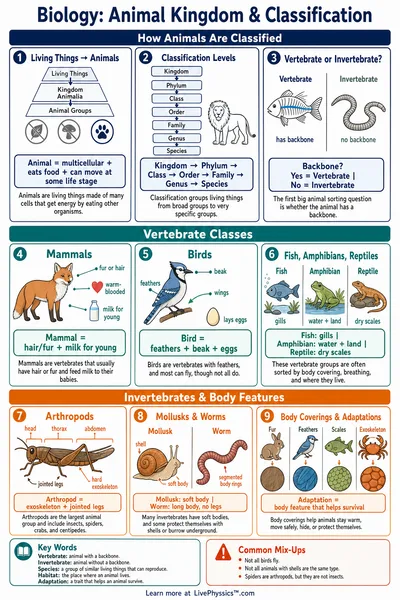
A habitat is the natural home of an animal. It provides everything the animal needs to survive, food, water, shelter, and space to raise young.
- Arctic. Freezing temperatures, ice, snow, and long dark winters.
- Ocean. Saltwater, strong currents, and wide open water.
- Desert. Very hot days, cold nights, and very little water.
- Forest. Trees, shade, abundant rain, and a wide variety of food.
Adaptations for Survival
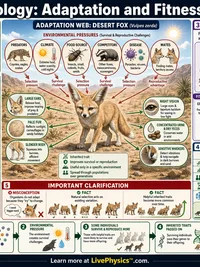
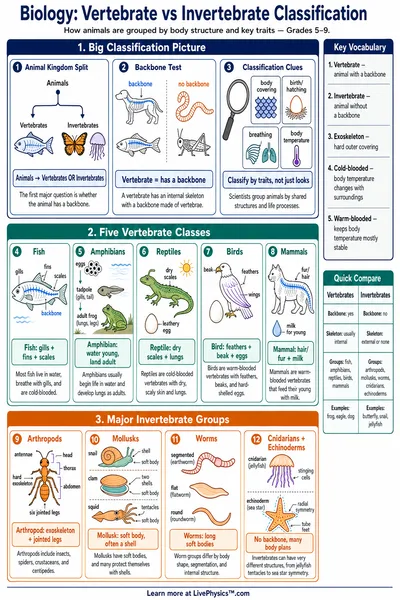
An adaptation is a body feature or behavior that helps an animal survive in its habitat. Adaptations develop slowly over many generations.
Structural adaptations are physical features, thick fur, streamlined bodies, wide hooves. Behavioral adaptations are actions, migrating south, huddling for warmth, hunting at night.
When Habitats Change
When a habitat changes due to climate shifts, human activity, or natural events, animals that were perfectly adapted may struggle to survive.
Animals that can adjust their behavior or diet sometimes cope better with change. Others must migrate to find a suitable habitat. Some cannot adapt and face decline.
- NGSS 3-LS4-3, adaptations and survival advantages
- NGSS 3-LS4-4, environmental change and its effects on organisms
Animal and Habitat Pairs
- 🐻❄️ Polar Bear. Arctic. Thick fur and fat keep it warm in temperatures that would be deadly for most animals.
- 🐪 Camel. Desert. Its hump stores fat for energy and its wide hooves spread its weight on soft sand.
- 🐬 Dolphin. Ocean. Its streamlined body and blowhole make it perfectly built for life at sea.
- 🦊 Red Fox. Forest. Its varied diet and sharp hearing let it thrive even as seasons change.