Practice explaining the quantum mechanical model of the atom, including orbitals, energy levels, quantum numbers, and electron configurations.
Read each problem carefully. Show your work or explain your reasoning in the space provided.
Orbitals, quantum numbers, and electron configurations
Chemistry - Grade 9-12
- 1
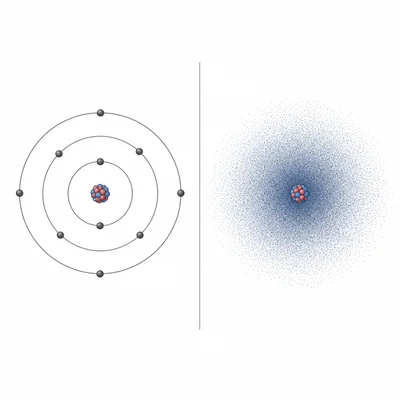
Describe how the quantum mechanical model of the atom is different from the Bohr model of the atom.
- 2

In the quantum mechanical model, what is an orbital?
- 3

Explain why the word probability is important when describing the location of an electron.
- 4
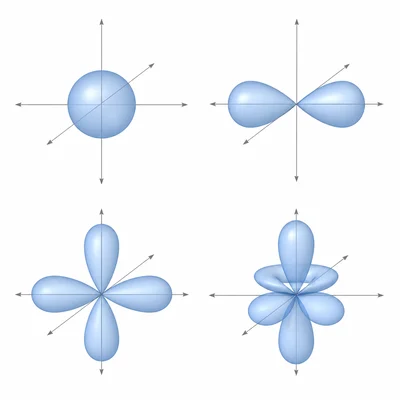
Identify the four types of atomic orbitals commonly used in high school chemistry and give the maximum number of electrons each sublevel can hold.
- 5
A student says, "An electron in a 3p orbital is in the third main energy level." Explain whether the student is correct.
- 6
For the orbital label 4d, identify the principal energy level and the sublevel.
- 7
Complete the electron configuration for carbon, which has 6 electrons.
- 8
Write the electron configuration for sodium, which has 11 electrons.
- 9
Use the Aufbau principle to explain why the 4s sublevel is filled before the 3d sublevel in many electron configurations.
- 10
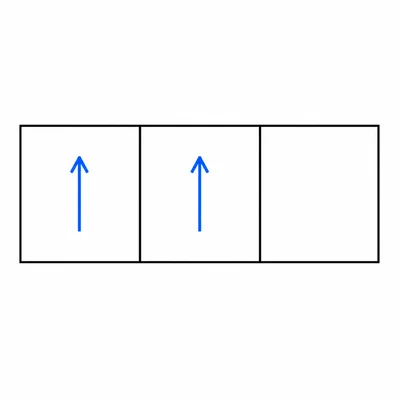
State Hund's rule and apply it to the three 2p orbitals when carbon has two electrons in 2p.
- 11
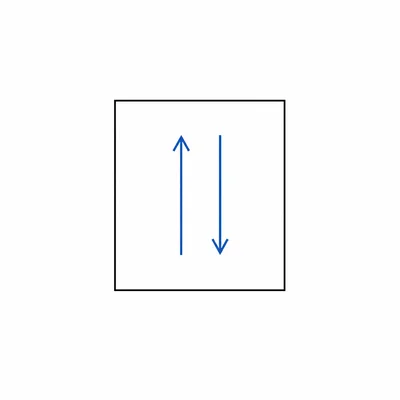
State the Pauli exclusion principle and explain what it means for one orbital.
- 12
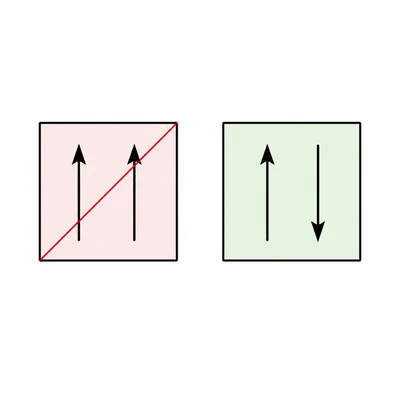
An orbital box diagram shows one box with two arrows both pointing up. Explain what is wrong with this diagram.
- 13
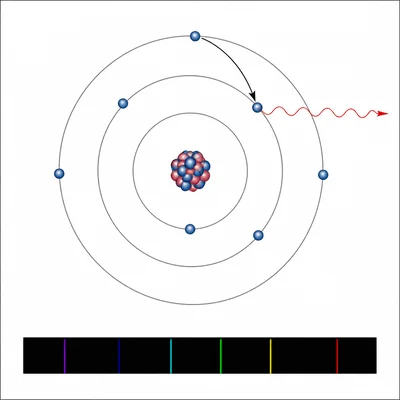
Explain how an atomic emission spectrum provides evidence that electrons have quantized energy levels.
- 14
A photon has an energy of 3.20 x 10^-19 joules. Use E = hν, with h = 6.63 x 10^-34 J·s, to calculate the frequency of the photon.
- 15
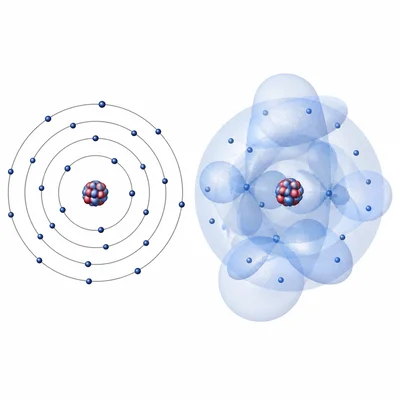
Explain why the quantum mechanical model is more useful than the Bohr model for describing atoms with many electrons.