Explore how engineers choose and test materials for bike helmets using properties such as strength, stiffness, density, energy absorption, cost, comfort, and safety.
Read each problem carefully. Use evidence and engineering reasoning in your answers. Show calculations when needed.
Choosing materials to protect the head during impacts
Engineering - Grade 6-8
- 1
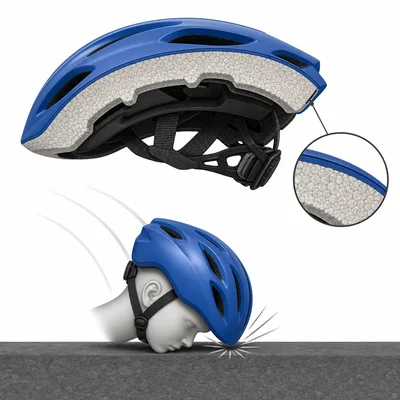
A bike helmet has two main parts: a hard outer shell and a foam liner. Explain the job of each part during a crash.
- 2
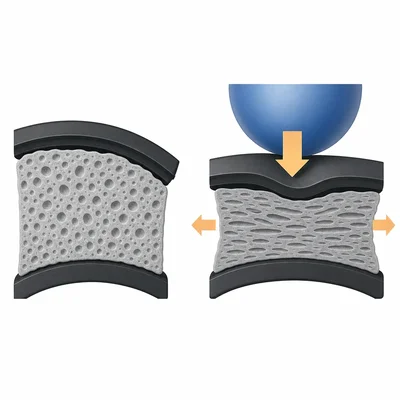
Engineers often use expanded polystyrene foam, called EPS foam, inside bike helmets. EPS foam is lightweight and crushes when hit. Why is crushing a useful property for a helmet liner?
- 3
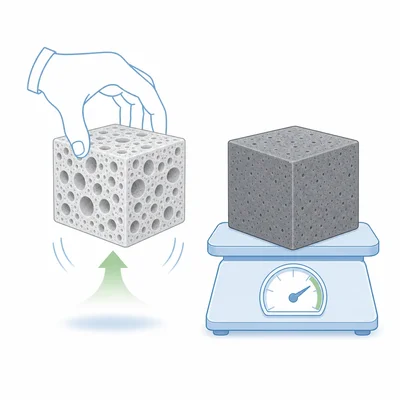
A helmet liner material has a density of 0.05 g/cm³. Another material has a density of 0.20 g/cm³. If both liners have the same volume and similar safety performance, which material is better for a comfortable bike helmet? Explain your choice.
- 4
A student says, "The strongest material is always the safest helmet material." Explain why this statement is not always true.
- 5
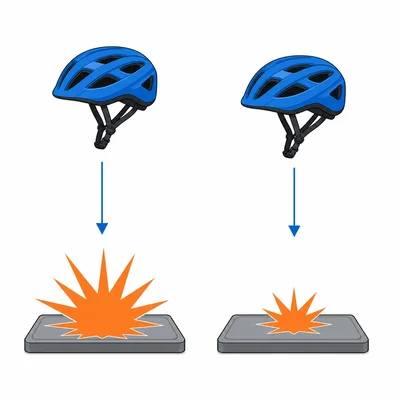
During a drop test, Helmet A produces a peak force of 900 N on a sensor. Helmet B produces a peak force of 650 N on the same sensor in the same test. Which helmet performed better in this test, and why?
- 6
Look at the material data: Material X costs $2 per helmet liner, has mass 180 g, and has impact force 720 N. Material Y costs $4 per helmet liner, has mass 130 g, and has impact force 610 N. Give one reason to choose Material X and one reason to choose Material Y.
- 7
A helmet shell can be made from polycarbonate plastic or thin metal. Polycarbonate is tough, lightweight, and does not rust. Thin metal can be strong but may dent and may be heavier. Which shell material would you choose for a youth bike helmet? Support your answer with at least two properties.
- 8
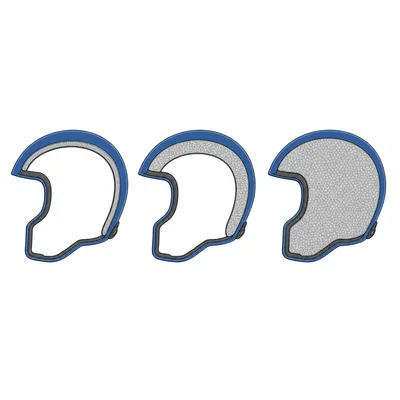
A helmet foam liner is tested at three thicknesses. A 15 mm liner gives a peak force of 850 N. A 25 mm liner gives a peak force of 620 N. A 35 mm liner gives a peak force of 590 N but makes the helmet bulky. Which thickness is the best design compromise? Explain your reasoning.
- 9
Explain the difference between a constraint and a criterion in an engineering design problem. Then give one constraint and one criterion for designing a bike helmet.
- 10
A company wants to make a low-cost helmet for students. List three material properties engineers should still test before choosing the cheapest material.
- 11
A helmet absorbs 45 J of impact energy in a test. A second helmet absorbs 60 J in the same test before the force reaches an unsafe level. Which helmet has better energy absorption, and what does that mean for safety?
- 12
A design team tests three liner materials. Foam A has low mass, low cost, and medium impact protection. Foam B has medium mass, high cost, and high impact protection. Foam C has high mass, low cost, and low impact protection. Rank the foams from best to worst for a safety-focused helmet and explain your ranking.
- 13
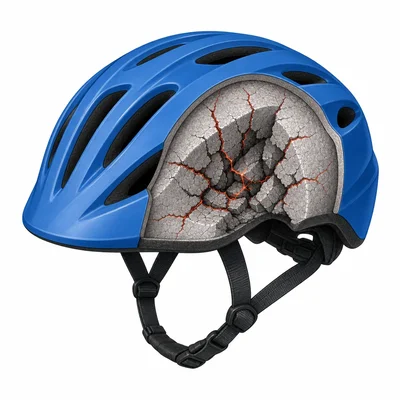
Why do bike helmets need to be replaced after a serious crash, even if they do not look broken from the outside?
- 14
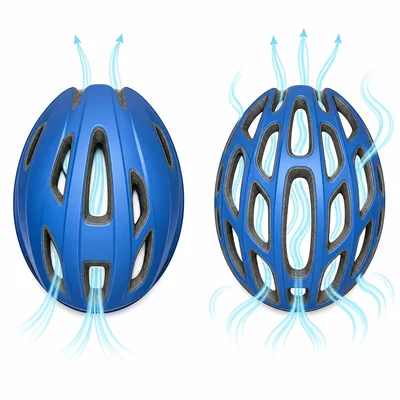
A helmet has vents to keep the rider cool. Adding too many vents can remove foam and shell material. Describe the trade-off engineers must consider when designing helmet vents.
- 15
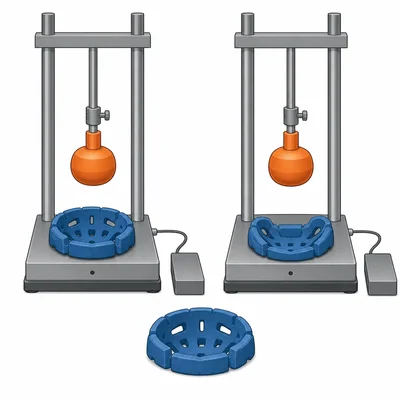
Design a simple fair test to compare two helmet liner materials. Include what you would keep the same, what you would change, and what you would measure.