Practice identifying sources of carbon emissions, estimating a personal or household carbon footprint, and designing practical steps to reduce environmental impact.
Read each problem carefully. Show your work when calculations are needed, and explain your thinking in complete sentences.
Measure everyday emissions and create a realistic plan to reduce them
Environmental Science - Grade 6-8
- 1
Define carbon footprint in your own words. Include at least two examples of activities that can add to a person's carbon footprint.
- 2
Sort each activity into the best category: riding in a car, charging a phone, eating beef tacos, throwing away leftover food, buying a new backpack. Categories: Transportation, Home Energy, Food, Waste, Goods.
- 3

Maya rides in a gasoline car 12 miles to school and 12 miles home each school day. If the car produces about 0.4 kilograms of CO2 per mile, how many kilograms of CO2 are produced from her school travel in one day?
- 4
A student records these weekly transportation emissions: car rides, 42 kg CO2; bus rides, 8 kg CO2; walking and biking, 0 kg CO2. What is the student's total weekly transportation footprint?
- 5
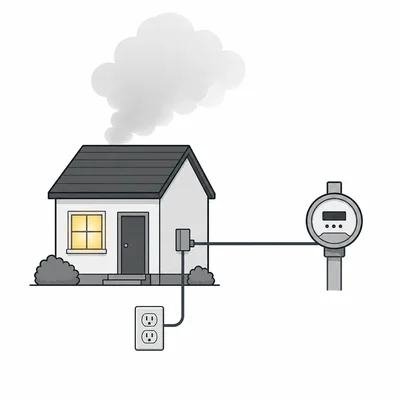
A family uses 180 kilowatt-hours of electricity in one month. If each kilowatt-hour produces about 0.45 kilograms of CO2, estimate the family's monthly electricity emissions.
- 6
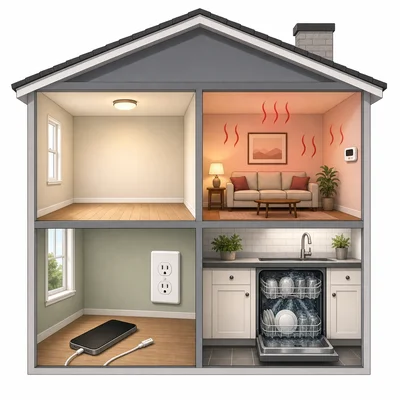
Look at this home energy audit list: lights left on in empty rooms, thermostat set very high in winter, unplugged phone charger, full dishwasher run once per day. Choose two items that could reduce emissions if changed, and explain how.
- 7
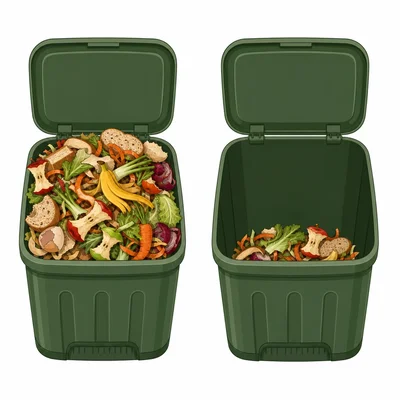
A cafeteria throws away 15 kilograms of food waste each day. Students start a program that reduces food waste by 40 percent. How many kilograms of food waste are saved each day?
- 8

Rank these lunches from likely lowest carbon footprint to likely highest carbon footprint: vegetable soup with bread, chicken sandwich, beef burger. Explain your ranking.
- 9

The circle graph shows one student's daily carbon footprint by category: transportation 50 percent, food 25 percent, home energy 15 percent, waste 10 percent. Which category should the student examine first for the biggest possible reduction, and why?
- 10
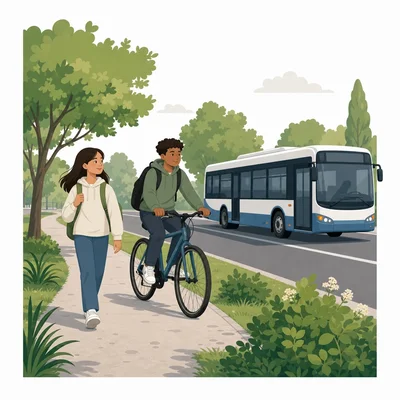
A student wants to reduce car travel. List three lower-emission transportation choices that could work for some trips.
- 11
Jamal's weekly carbon footprint is estimated at 120 kilograms of CO2. His goal is to reduce it by 15 percent. How many kilograms of CO2 does he need to cut each week, and what will his new weekly footprint be?
- 12
Choose the stronger reduction plan and explain why. Plan A: Turn off bedroom lights once this week. Plan B: Turn off lights whenever leaving a room and use daylight when possible for the next month.
- 13
Create one SMART goal for reducing a carbon footprint. The goal should be specific, measurable, achievable, relevant, and time-based.
- 14
A class compares two reduction actions. Action 1 saves 3 kg CO2 per week and is very easy. Action 2 saves 12 kg CO2 per week but requires family permission and planning. Explain how a student could decide which action to try first.
- 15
Write a short carbon footprint reduction plan for one week. Include one action for transportation, one action for home energy, one action for food or waste, and how you will track your progress.