Analyze major theories and research findings in cognitive development, including Piaget, Vygotsky, information processing, theory of mind, executive function, and lifespan change.
Read each problem carefully. Use psychological concepts and evidence to support your answers. Show your reasoning in the space provided.
Theories, evidence, and applications across the lifespan
Psychology - Grade advanced
- 1

A 4-year-old child says that a tall, narrow glass has more juice than a short, wide glass, even after watching the same amount of juice poured from one glass to the other. Identify the Piagetian concept illustrated and explain what this suggests about the child's thinking.
- 2
Compare Piaget's concept of readiness with Vygotsky's concept of the zone of proximal development. Explain how each theory would guide a teacher's decision about when to introduce a difficult new skill.
- 3
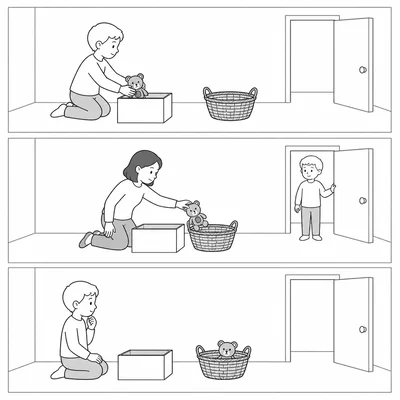
A researcher gives children a false-belief task. A child watches Maya put a toy in a box and leave the room. While Maya is gone, another person moves the toy to a basket. The child is asked where Maya will look first. What ability is being tested, and what answer would show that the child has developed it?
- 4
Explain how improvements in working memory can affect children's performance on multi-step math problems.
- 5
A 7-year-old uses a memory strategy by repeating a phone number several times, while a 4-year-old does not use the strategy spontaneously. Name the strategy and explain why this difference matters for cognitive development.
- 6
In a study, children who hear more complex language at home tend to develop stronger vocabulary and narrative skills. Explain one likely mechanism for this association and one reason researchers should be cautious about making a causal claim.
- 7
A toddler calls every four-legged animal a dog. Later, after seeing cats and cows, the toddler begins using more specific labels. Use Piaget's terms assimilation and accommodation to explain this change.
- 8
Describe how executive function contributes to school readiness. Include at least two components of executive function in your answer.
- 9
A cross-sectional study finds that 70-year-olds perform worse than 25-year-olds on a speeded reasoning task. Explain one limitation of using this result to conclude that reasoning declines with age.
- 10
A longitudinal study follows the same participants from age 20 to age 80. Identify one advantage and one disadvantage of this design for studying cognitive development.
- 11
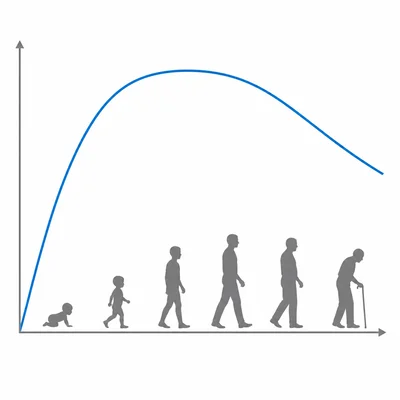
Interpret this developmental pattern: processing speed improves rapidly during childhood, peaks in early adulthood, and often declines in later adulthood. Explain how this pattern could affect performance on cognitive tasks.
- 12
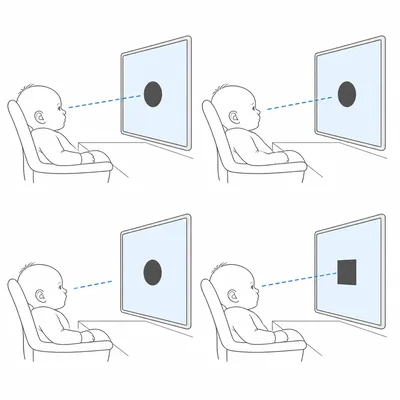
Explain why habituation and dishabituation methods are useful for studying infant cognition.
- 13
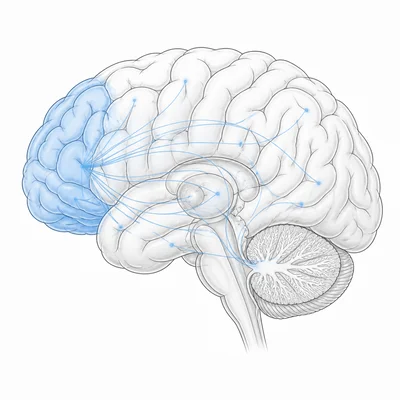
A teenager is better than a younger child at planning a long-term project, resisting distractions, and evaluating possible consequences. Explain how brain development may contribute to these changes.
- 14
Evaluate the claim: Cognitive development occurs in fixed stages that all children pass through in exactly the same way. Use evidence or concepts from modern developmental psychology.
- 15
Design a brief study to test whether guided practice improves children's performance on a problem-solving task. Identify the independent variable, dependent variable, and one control needed for a fair test.