Practice applying advanced concepts in personality psychology, including trait models, psychodynamic theory, social-cognitive theory, assessment validity, and person-situation debates.
Read each problem carefully. Use psychological concepts accurately and support your answers with clear reasoning.
Analyzing major theories, traits, assessment, and research methods
Psychology - Grade advanced
- 1
Define personality as psychologists use the term. Explain how personality differs from a temporary mood state.
- 2
A researcher finds that a person scores high in conscientiousness on a Big Five inventory. Predict two behaviors this person is more likely to show and explain why the prediction is probabilistic rather than certain.
- 3
Compare the Big Five trait model with Eysenck's PEN model. Identify one similarity and one difference.
- 4
A student argues, 'If personality traits are stable, people should act the same way in every situation.' Explain why this statement oversimplifies the person-situation interaction.
- 5
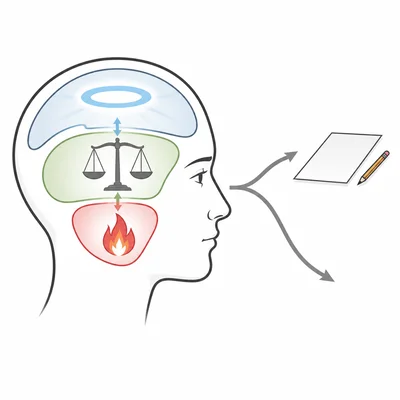
Use Freud's structural model to explain how the id, ego, and superego might each contribute to a person's decision to cheat on an exam or refuse to cheat.
- 6
Identify the defense mechanism in this example and explain your reasoning: After receiving harsh criticism from a supervisor, an employee goes home and yells at a roommate over a minor issue.
- 7
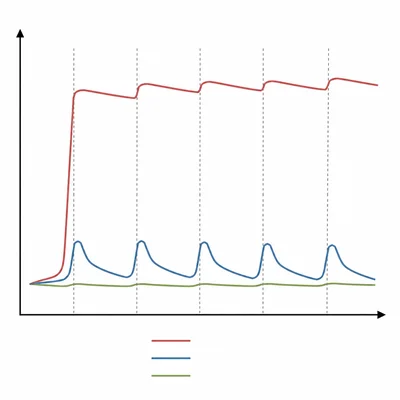
A graph shows three people across five stressful events. Person A stays emotionally steady, Person B shows moderate distress that quickly returns to baseline, and Person C shows intense distress that remains high. Interpret the graph using the concepts of trait neuroticism and resilience.
- 8
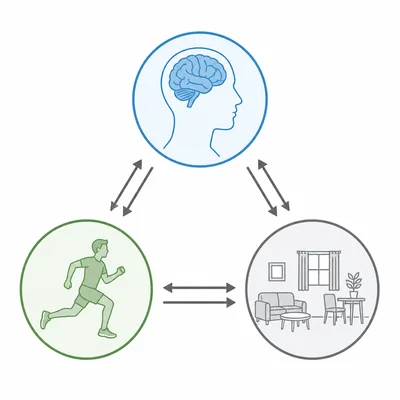
Explain how Bandura's concept of reciprocal determinism applies to personality development. Include the three interacting factors.
- 9
A personality inventory has high test-retest reliability but poor predictive validity for job performance. Explain what this means and why both reliability and validity matter.
- 10
Describe one advantage and one limitation of using self-report questionnaires to assess personality.
- 11
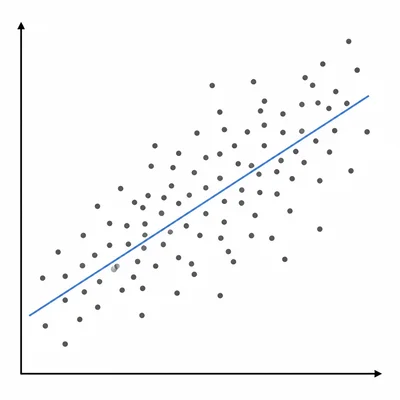
A scatterplot shows a correlation of r = .55 between conscientiousness and college GPA. Interpret this result without overstating causation.
- 12
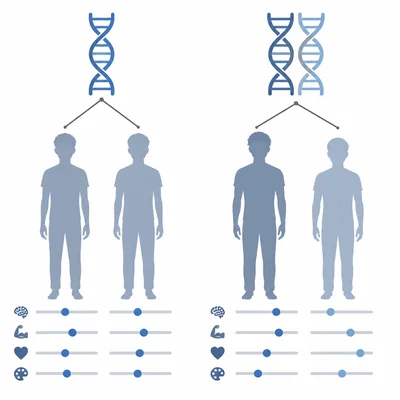
Explain how a behavior geneticist might use twin studies to estimate the heritability of personality traits. Include a caution about interpreting heritability.
- 13
Compare humanistic and psychodynamic approaches to personality. Include how each approach views motivation.
- 14

A client has a large gap between their real self and ideal self and reports chronic dissatisfaction. Explain this pattern using Carl Rogers's theory.
- 15
Design a brief study to test whether extraversion predicts leadership emergence in student project groups. Identify the independent or predictor variable, the outcome variable, and one control variable.