Practice key concepts in sensation and perception, including thresholds, sensory adaptation, attention, depth cues, illusions, and perceptual organization.
Read each problem carefully. Use complete sentences and psychology vocabulary in your answers.
How the brain detects, organizes, and interprets sensory information
Psychology - Grade 9-12
- 1
Define sensation and perception. Explain how they are different using one real-life example.
- 2
A student walks into a bakery and immediately notices the smell of fresh bread. After 10 minutes, the smell seems much weaker even though the bread is still baking. Identify the process involved and explain why it happens.
- 3
Explain the difference between an absolute threshold and a difference threshold.
- 4
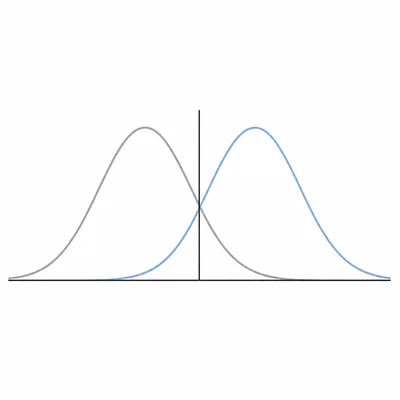
In a quiet room, you can hear a phone vibrating on a desk. In a crowded cafeteria, you do not notice the same vibration. Use signal detection theory to explain why.
- 5
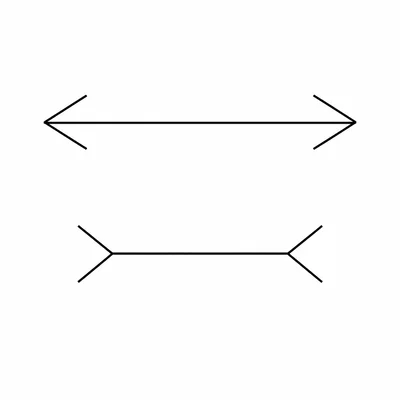
A teacher shows students two lines with arrow-like ends. The lines are the same length, but one appears longer than the other. Identify the type of phenomenon and explain what it shows about perception.
- 6
Describe selective attention. Give one example of selective attention from everyday life.
- 7
Explain the cocktail party effect and what it suggests about attention.
- 8
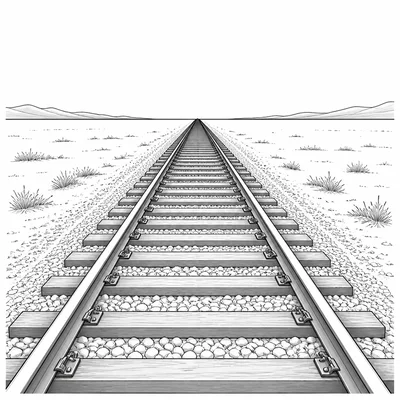
A person sees railroad tracks that appear to meet in the distance, even though the tracks are parallel. Identify the depth cue and explain how it helps perception.
- 9
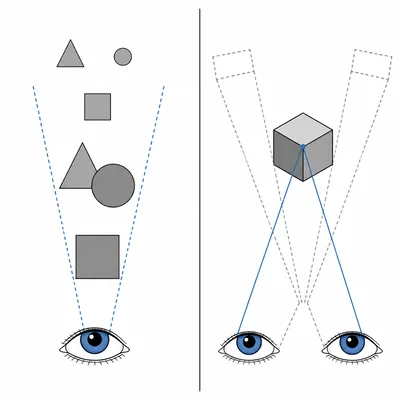
Compare monocular depth cues and binocular depth cues. Include one example of each.
- 10
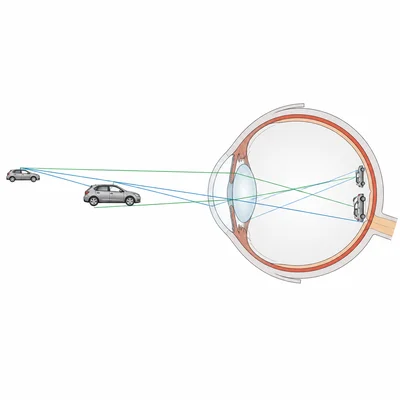
A nearby car and a faraway car are the same actual size, but the faraway car creates a smaller image on your retina. Explain how the brain uses this information to perceive depth.
- 11
Define perceptual constancy and give an example involving size, shape, or color.
- 12
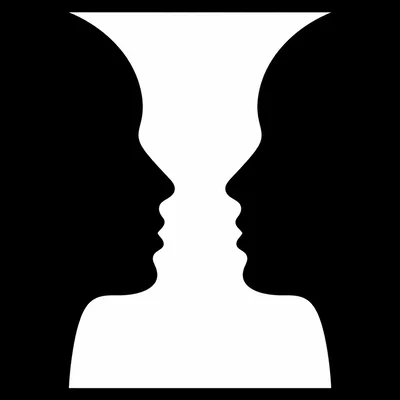
Look at a figure in which a white vase can also be seen as two black faces looking at each other. Explain figure-ground perception using this example.
- 13
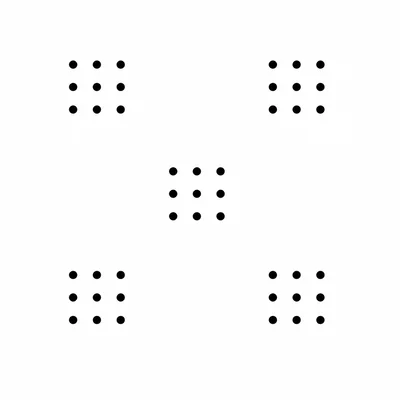
Describe one Gestalt principle of perception, such as proximity, similarity, continuity, closure, or connectedness. Explain how it helps the brain organize information.
- 14
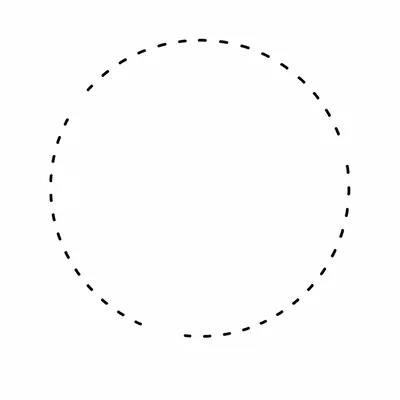
A dotted circle is missing several small sections, but most people still perceive it as a complete circle. Identify the Gestalt principle and explain it.
- 15
Explain how expectations, motivation, or culture can influence perception. Give one specific example.