Practice explaining how diffusion, osmosis, and active transport move substances into and out of cells.
Read each problem carefully. Show your reasoning and use science vocabulary in complete sentences.
Comparing passive and active movement across cell membranes
Biology - Grade 9-12
- 1
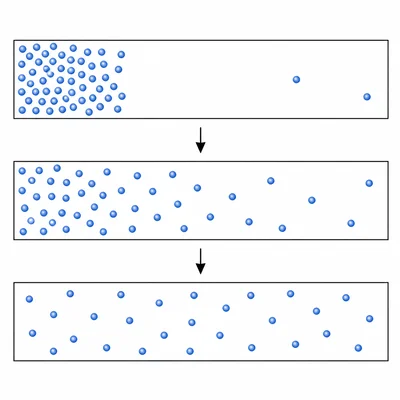
Define diffusion and describe the direction that particles move during diffusion.
- 2
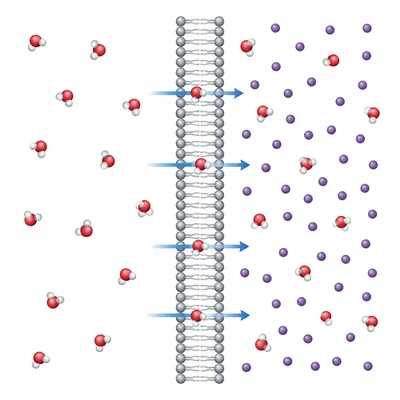
Define osmosis and explain how it is related to diffusion.
- 3
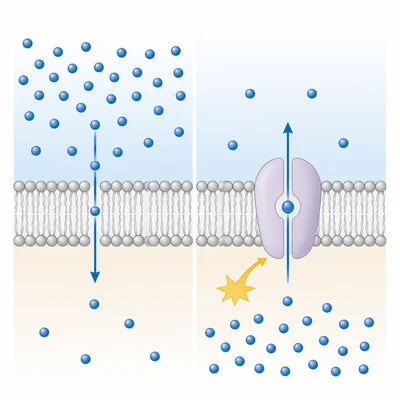
What is active transport, and how is it different from diffusion and osmosis?
- 4
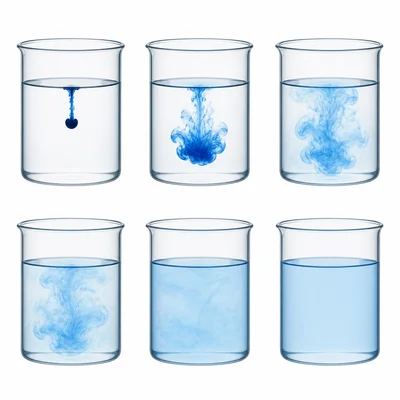
A drop of food coloring is placed in a beaker of still water. After several minutes, the color spreads evenly through the water. Identify the process and explain why it happens.
- 5
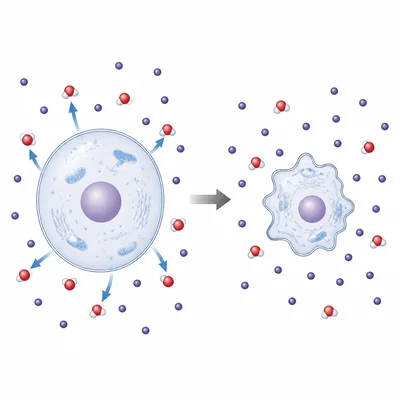
A cell is placed in a solution that has a higher solute concentration than the inside of the cell. Describe what happens to the cell and explain why.
- 6
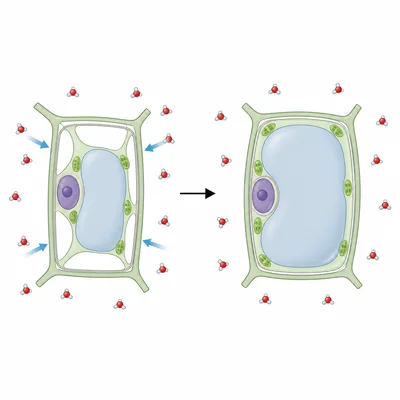
A plant cell is placed in distilled water. Predict what happens to the plant cell and explain your answer.
- 7
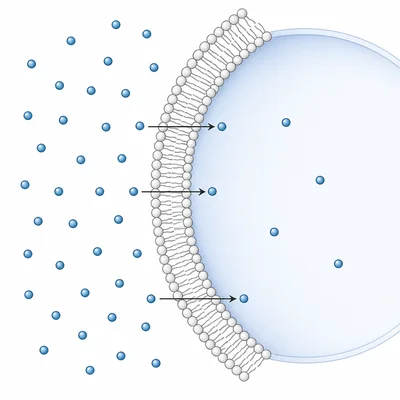
Explain why oxygen entering a cell is usually considered passive transport.
- 8
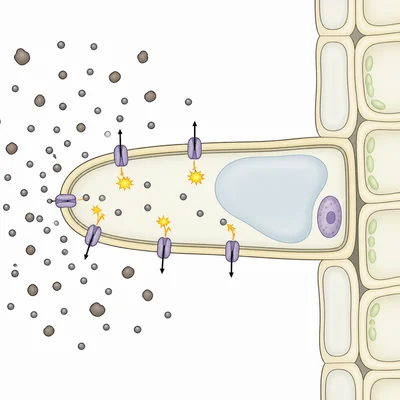
Some mineral ions are more concentrated inside root cells than in the soil. Explain how the root cells can still take in these ions.
- 9
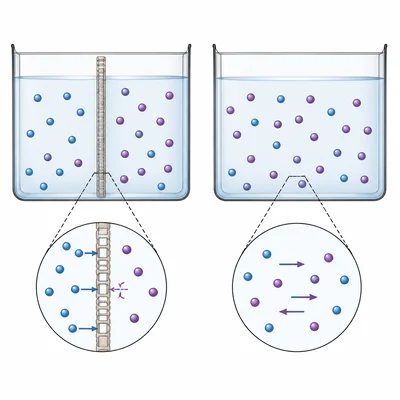
Compare a selectively permeable membrane with a membrane that is fully permeable.
- 10
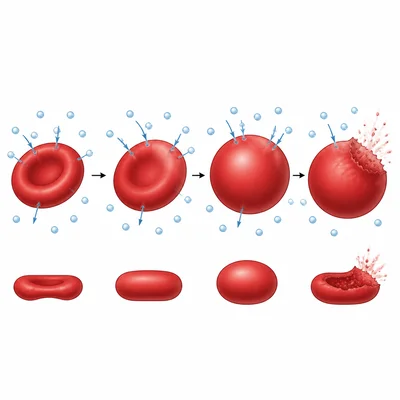
Red blood cells are placed in a hypotonic solution. Describe what happens to the cells and explain the role of osmosis.
- 11
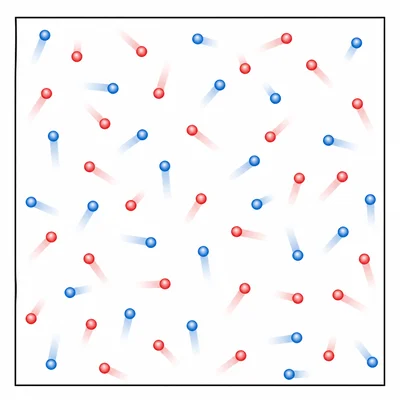
A student says that diffusion stops completely when equilibrium is reached. Evaluate this statement.
- 12
Complete the comparison: diffusion, osmosis, and active transport all move substances, but only one always requires energy. Identify which process requires energy and summarize the main difference in one or two sentences.