Practice AP Government concepts related to voting rights, voter turnout, political participation, and voter behavior.
Read each problem carefully. Use AP Government vocabulary where appropriate. Support written answers with specific evidence or reasoning.
Voter behavior, turnout, rights, and forms of civic action
Social Studies - Grade 9-12
- 1
Define political participation and give two examples of political participation in the United States.
- 2
Classify each action as conventional participation or unconventional participation: voting in a presidential election, attending a peaceful protest, donating to a campaign, and participating in a boycott. Explain your classifications.
- 3
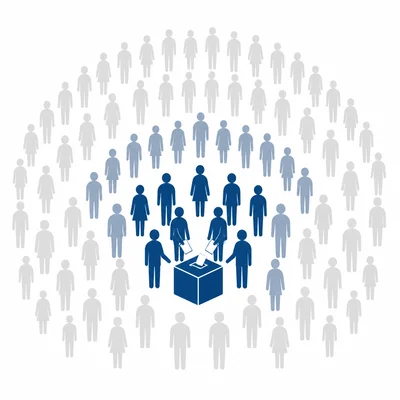
In a city election, 84,000 people are eligible to vote, 52,000 are registered, and 31,200 cast ballots. Calculate turnout as a percentage of registered voters and as a percentage of eligible voters.
- 4
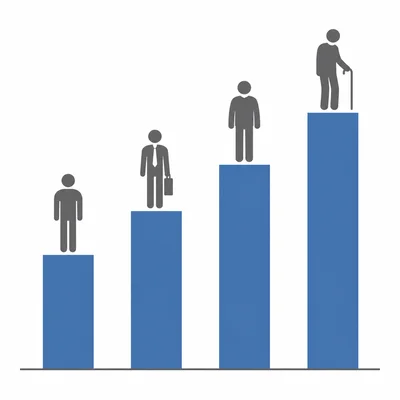
A chart shows voter turnout by age group: ages 18-29 at 46 percent, ages 30-44 at 58 percent, ages 45-64 at 67 percent, and ages 65 and older at 72 percent. Identify the trend and explain one reason this trend matters in elections.
- 5
Explain how the Twenty-Sixth Amendment affected political participation in the United States.
- 6
Explain the main purpose of the Voting Rights Act of 1965 and identify one practice it targeted.
- 7
Describe how voter registration requirements can affect turnout. Include one example of a policy that may increase turnout.
- 8
Use the rational choice model of voting to explain why some citizens choose not to vote.
- 9
Explain the difference between retrospective voting and prospective voting. Give one example of each.
- 10
A survey asks voters whether they believe they understand politics and whether they believe government officials respond to people like them. Identify which question measures internal political efficacy and which measures external political efficacy.
- 11
A state passes a strict photo voter ID law. Identify one argument supporters might make and one argument opponents might make.
- 12
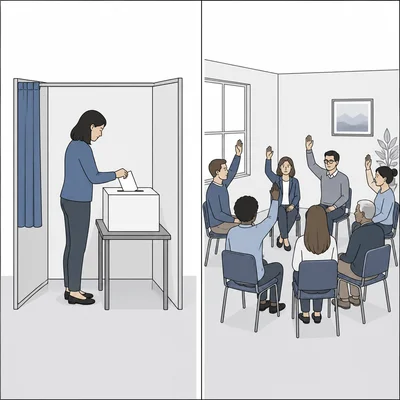
Compare primaries and caucuses as methods of selecting party nominees.
- 13
A campaign sends text reminders, knocks on doors, and offers information about polling places. Explain how these activities could affect voter turnout.
- 14
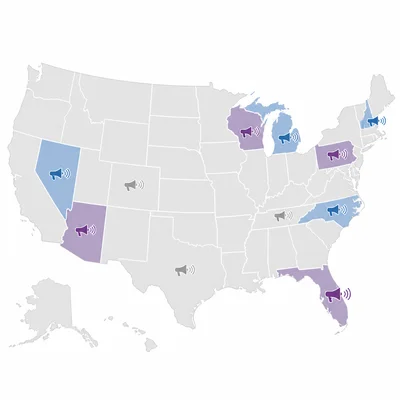
A map shows that presidential campaigns spend most of their advertising money in a small number of competitive swing states. Explain how the Electoral College can influence political participation in this way.
- 15
Write a short AP-style response that identifies one policy that could increase voter turnout, explains how it could increase turnout, and describes one possible criticism of the policy.