Practice AP Human Geography concepts related to ethnicity, culture, diversity, migration, political geography, and cultural landscapes.
Read each problem carefully. Use AP Human Geography vocabulary in your responses. Show your reasoning in the space provided.
Analyzing identity, culture, place, and spatial patterns
Social Studies - Grade 9-12
- 1
Define ethnicity in human geography and explain how it differs from race.
- 2
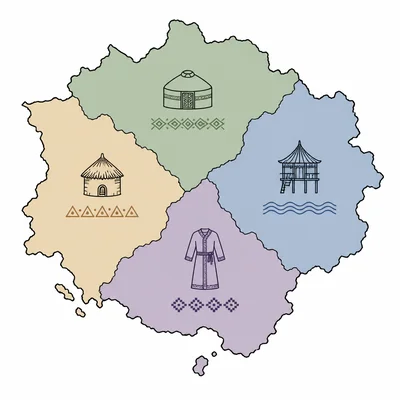
A country contains several major ethnic groups that each have distinct languages, traditions, and regional homelands. Identify the type of state this describes and explain one challenge it may face.
- 3
Explain the difference between a nation, a state, and a nation-state. Give one real or hypothetical example of a nation-state.
- 4
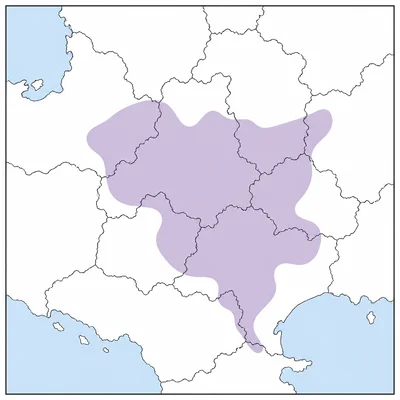
A map shows an ethnic group spread across several neighboring countries without its own independent state. What AP Human Geography concept best describes this group, and why?
- 5
Identify one centripetal force that can help unite a culturally diverse country and explain how it promotes national unity.
- 6
Identify one centrifugal force that can create tension in a culturally diverse country and explain how it may weaken unity.
- 7
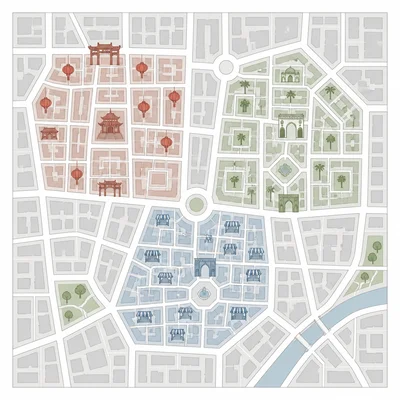
A city has neighborhoods such as Chinatown, Little Italy, and Koreatown. Explain how these neighborhoods are examples of ethnic enclaves and identify one reason they may form.
- 8
Describe how migration can increase cultural diversity in a receiving region. Include one cultural trait that migrants may bring.
- 9
Explain the difference between assimilation and acculturation. Provide a brief example of each.
- 10
A community celebrates a holiday that combines Indigenous traditions, Catholic symbols, and local food customs. What cultural process is shown, and why?
- 11
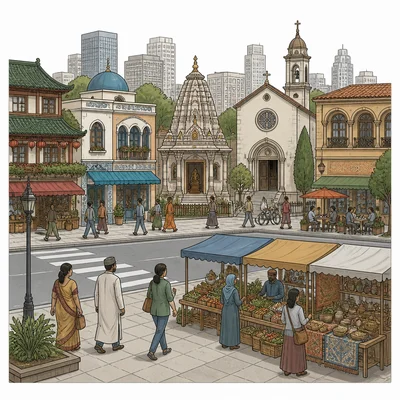
Use the concept of cultural landscape to explain how ethnic diversity can be visible in a city.
- 12
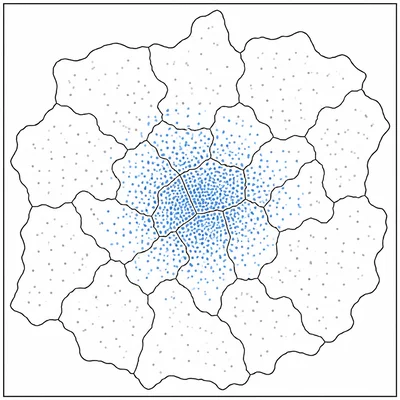
A government draws district boundaries in a way that splits a minority ethnic group across many voting districts, reducing its political influence. Identify this practice and explain its effect.
- 13
Explain how devolutionary pressures can be connected to ethnic or cultural diversity. Give one example of a demand that a regional group might make.
- 14
Compare multiculturalism and segregation as two different ways cultural diversity may appear in society.
- 15
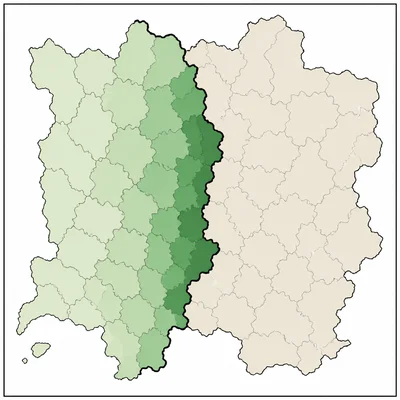
A choropleth map shows that speakers of a minority language are concentrated near an international border. Make one inference about why this spatial pattern might exist.