Learn how political parties help choose candidates, present ideas, organize government, and influence elections in the United States.
Read each problem carefully. Answer in complete sentences and use evidence from the question when needed.
How parties organize voters, candidates, and government
Social Studies - Grade 6-8
- 1
Define political party in your own words. Include at least two things political parties try to do.
- 2
A student says, Political parties only matter during presidential elections. Explain why this statement is not correct.
- 3
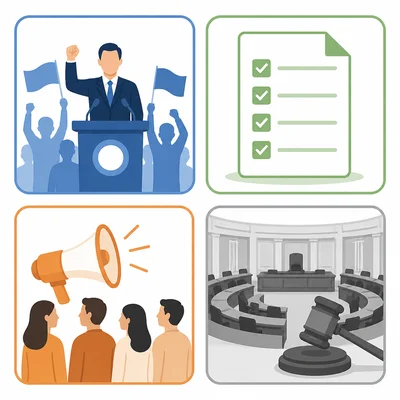
Look at a diagram with four boxes labeled nominate candidates, create platforms, inform voters, and organize government. Choose two boxes and explain what each party role means.
- 4
What is a party platform, and why might voters read one before an election?
- 5
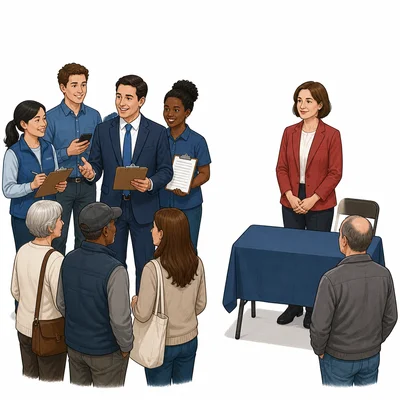
Two candidates are running for mayor. Candidate A belongs to a political party with many volunteers and a voter contact list. Candidate B is running without party support. Explain one advantage Candidate A may have.
- 6
Explain how political parties can help voters make choices in an election with many candidates.
- 7
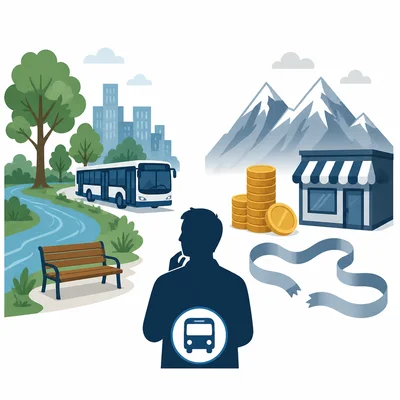
Study a sample table with two fictional parties. The River Party supports more parks and public transit. The Mountain Party supports lower taxes and fewer business rules. A voter cares most about expanding bus service. Which party is this voter more likely to support, and why?
- 8
What is the difference between a political party and an interest group?
- 9
In the United States, the Democratic Party and Republican Party are the two major parties. Name one reason third parties can still be important even if they rarely win major elections.
- 10
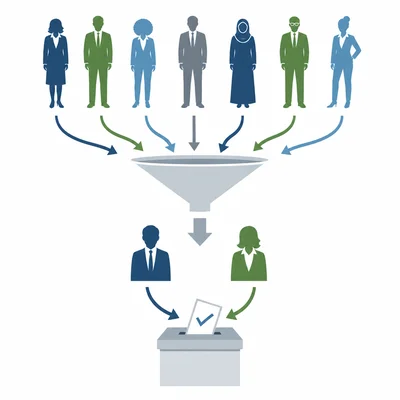
A primary election is held before the general election. Explain the purpose of a primary election.
- 11
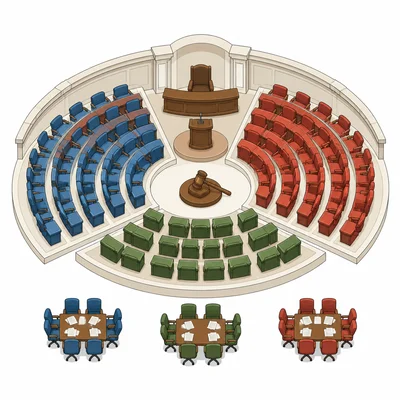
Explain how political parties can organize work inside a legislature such as Congress or a state legislature.
- 12
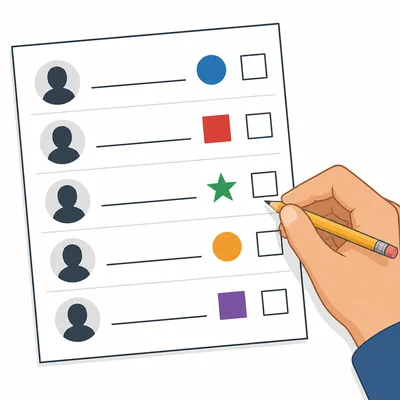
A ballot lists candidates with party labels next to their names. Explain one benefit and one possible drawback of using party labels on ballots.
- 13
Some local elections are nonpartisan, meaning candidates do not run with party labels on the ballot. Why might a city choose to have nonpartisan elections?
- 14
Political parties often create campaign messages to persuade voters. Describe two ways voters can evaluate whether a campaign message is reliable.
- 15
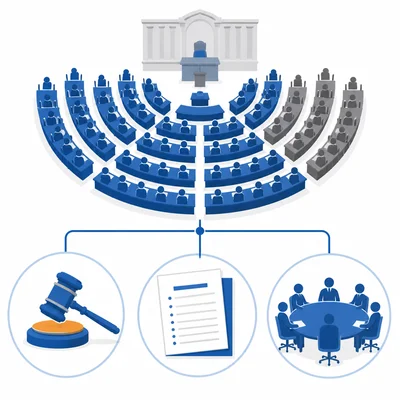
Complete this cause and effect explanation: If a political party wins a majority of seats in a legislature, then it can often have more influence because...