Practice identifying mountains, rivers, and valleys, and learn how these landforms affect where people live, travel, and work.
Read each problem carefully. Write your answer in complete sentences when possible. Use the pictures and clues to help you.
Identifying landforms and how people use them
Social Studies - Grade 2-3
- 1
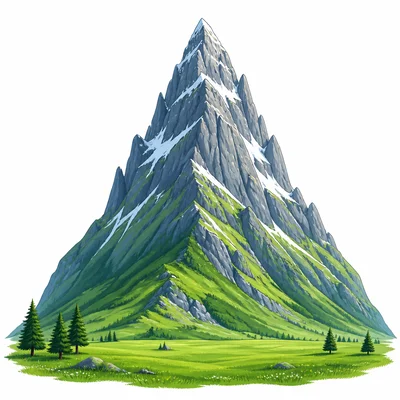
A mountain is a very high landform that rises above the land around it. What is one word you could use to describe a mountain?
- 2
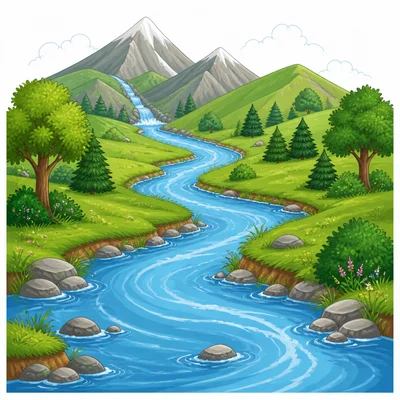
A river is a body of moving water. What direction does river water usually move?
- 3
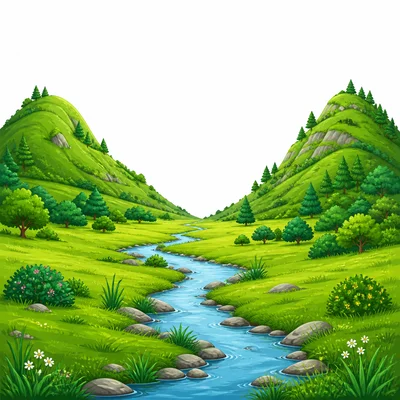
A valley is low land between hills or mountains. In your own words, describe where a valley is found.
- 4
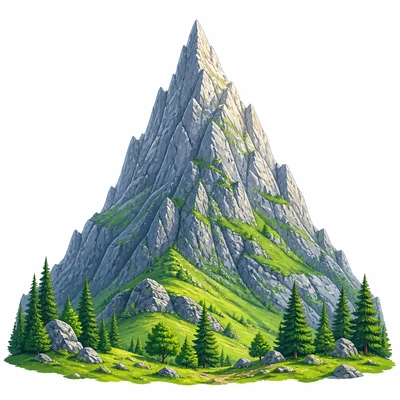
Choose the correct landform: A tall, rocky landform with a peak at the top is a river, mountain, or valley?
- 5
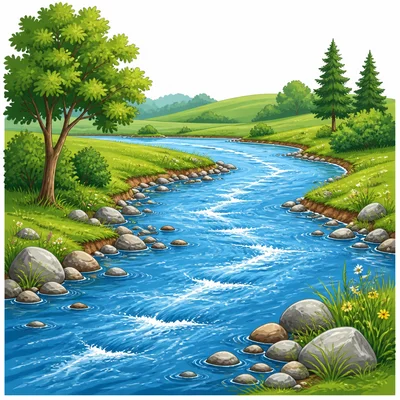
Choose the correct landform: A long body of moving water that flows across land is a mountain, river, or valley?
- 6
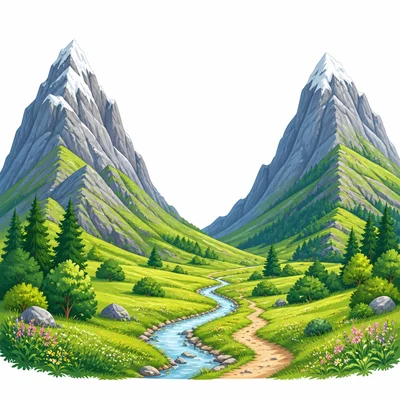
Choose the correct landform: Low land between two mountains is a mountain, river, or valley?
- 7
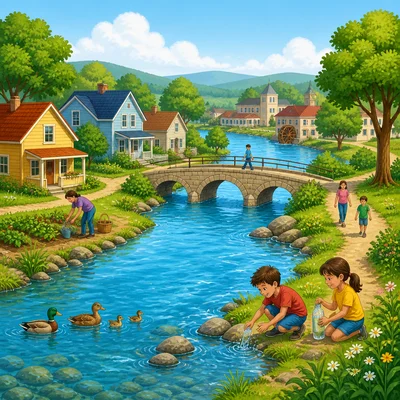
Why might people build a town near a river?
- 8
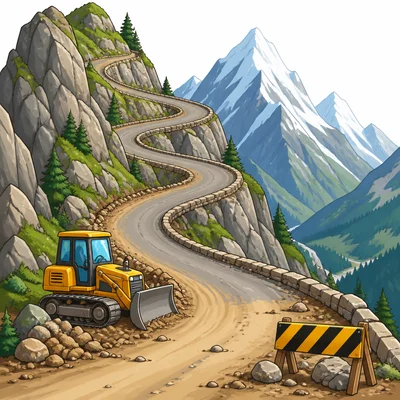
Why might it be harder to build roads in the mountains than on flat land?
- 9
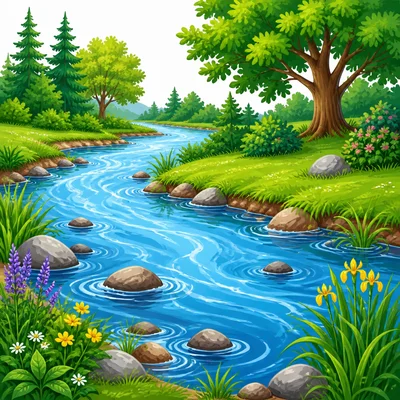
Look at this list: mountain, river, valley. Which one is made of moving water?
- 10
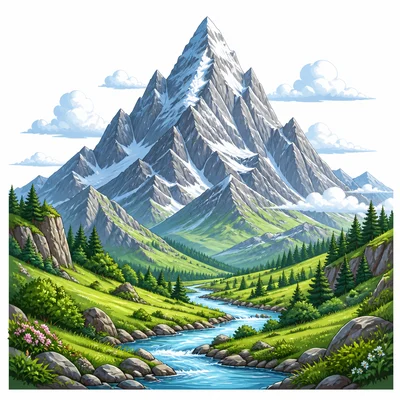
Look at this list: mountain, river, valley. Which one is usually the highest landform?
- 11
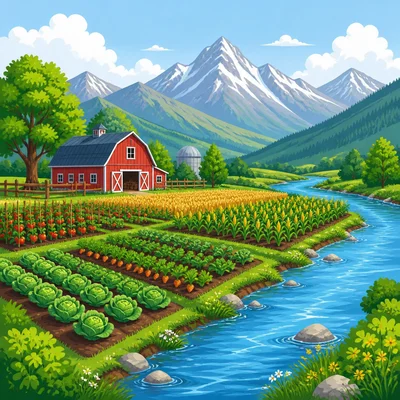
A farmer wants to grow crops. Which place might have flatter land and water nearby: a steep mountain peak or a valley near a river? Explain your answer.
- 12
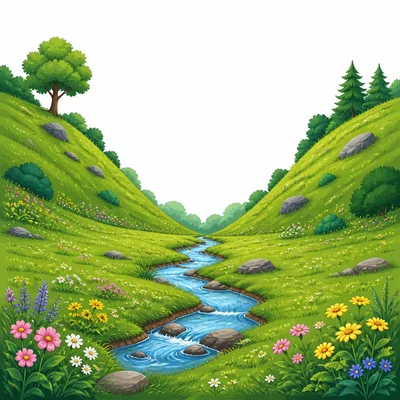
Write M for mountain, R for river, or V for valley. A low area between hills is ____.
- 13
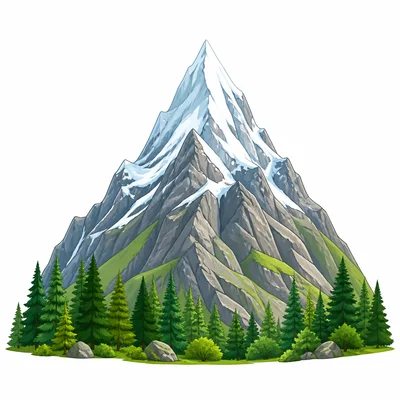
Write M for mountain, R for river, or V for valley. A landform with a peak is ____.
- 14
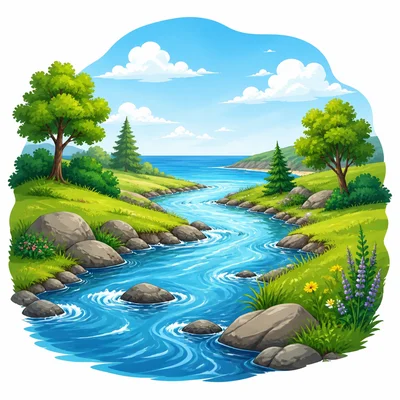
Write M for mountain, R for river, or V for valley. Moving water that may flow to the ocean is ____.
- 15
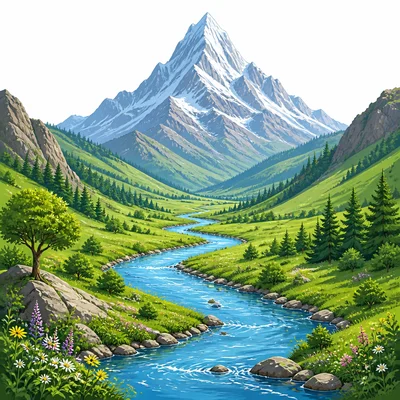
Draw a simple picture that includes one mountain, one river, and one valley. Then label each landform.