Practice understanding key people, places, vocabulary, and ideas connected to the Underground Railroad and the abolition movement in the United States.
Read each problem carefully. Answer in complete sentences and use evidence from what you have learned when you can.
Learning how people worked for freedom and justice
Social Studies - Grade 4-5
- 1
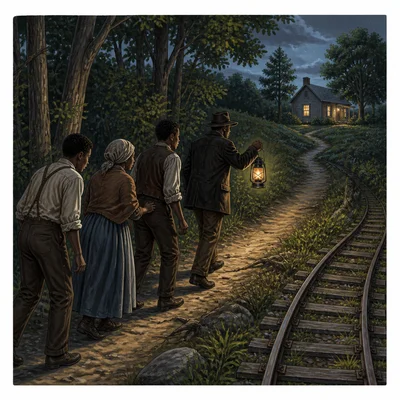
What was the Underground Railroad? Explain why its name can be confusing.
- 2
What does the word abolition mean in the phrase abolition movement?
- 3
List two ways abolitionists worked to end slavery.
- 4
Harriet Tubman was an important conductor on the Underground Railroad. What does conductor mean in this context?
- 5
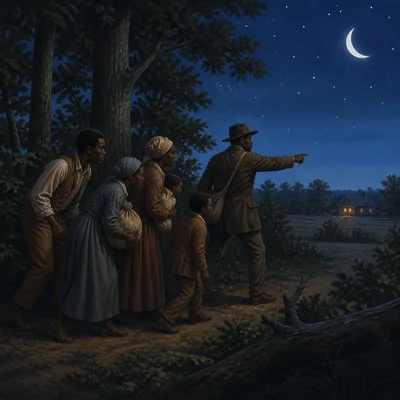
Why did freedom seekers often travel at night?
- 6
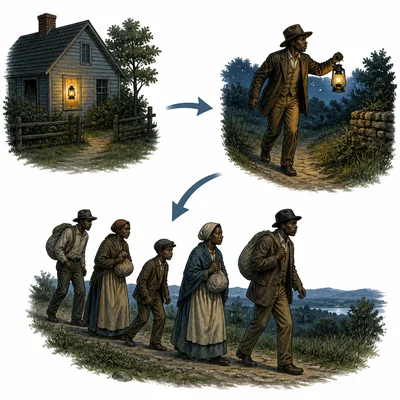
The Underground Railroad used words such as stations, conductors, and passengers. Match each term to its meaning: station, conductor, passenger.
- 7
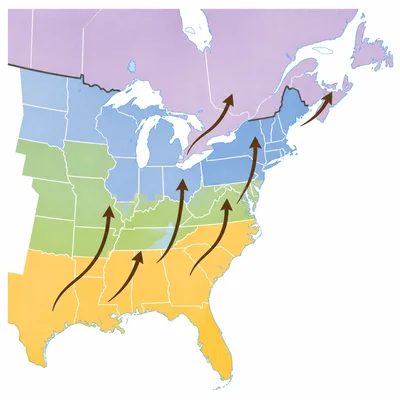
Look at a map of the United States in the 1800s. Many Underground Railroad routes went north toward free states and Canada. Why was Canada an important destination for some freedom seekers?
- 8
Explain why helping people on the Underground Railroad could be dangerous.
- 9
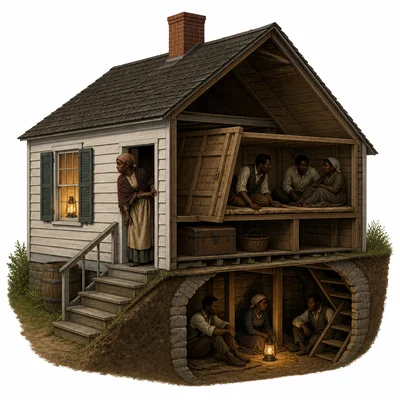
What was a safe house, and why was it important?
- 10
Frederick Douglass escaped slavery and became an abolitionist. How did his speeches and writings help the movement?
- 11
Write one sentence explaining why the Underground Railroad had to be secret.
- 12
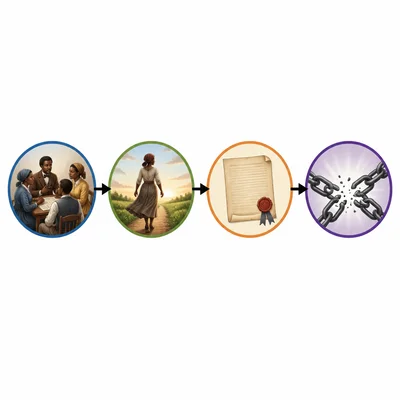
Study this timeline: 1820, many people organize against slavery; 1849, Harriet Tubman escapes slavery; 1850, the Fugitive Slave Act is passed; 1865, slavery ends in the United States. Which event happened last, and why was it important?
- 13
How were the Underground Railroad and the abolition movement connected?
- 14
Imagine you are writing a thank-you note to a person who helped at a safe house. Write two sentences that explain why their actions mattered.
- 15
Create a simple cause and effect statement: Because some people believed slavery was wrong, what actions did they take?