Sign in to save

Bookmark this page so you can find it later.

Sign in to save

Bookmark this page so you can find it later.

Biology middle-school May 21, 2026

Why Do Muscles Get Sore After Exercise?

tiny repairs after a hard workout
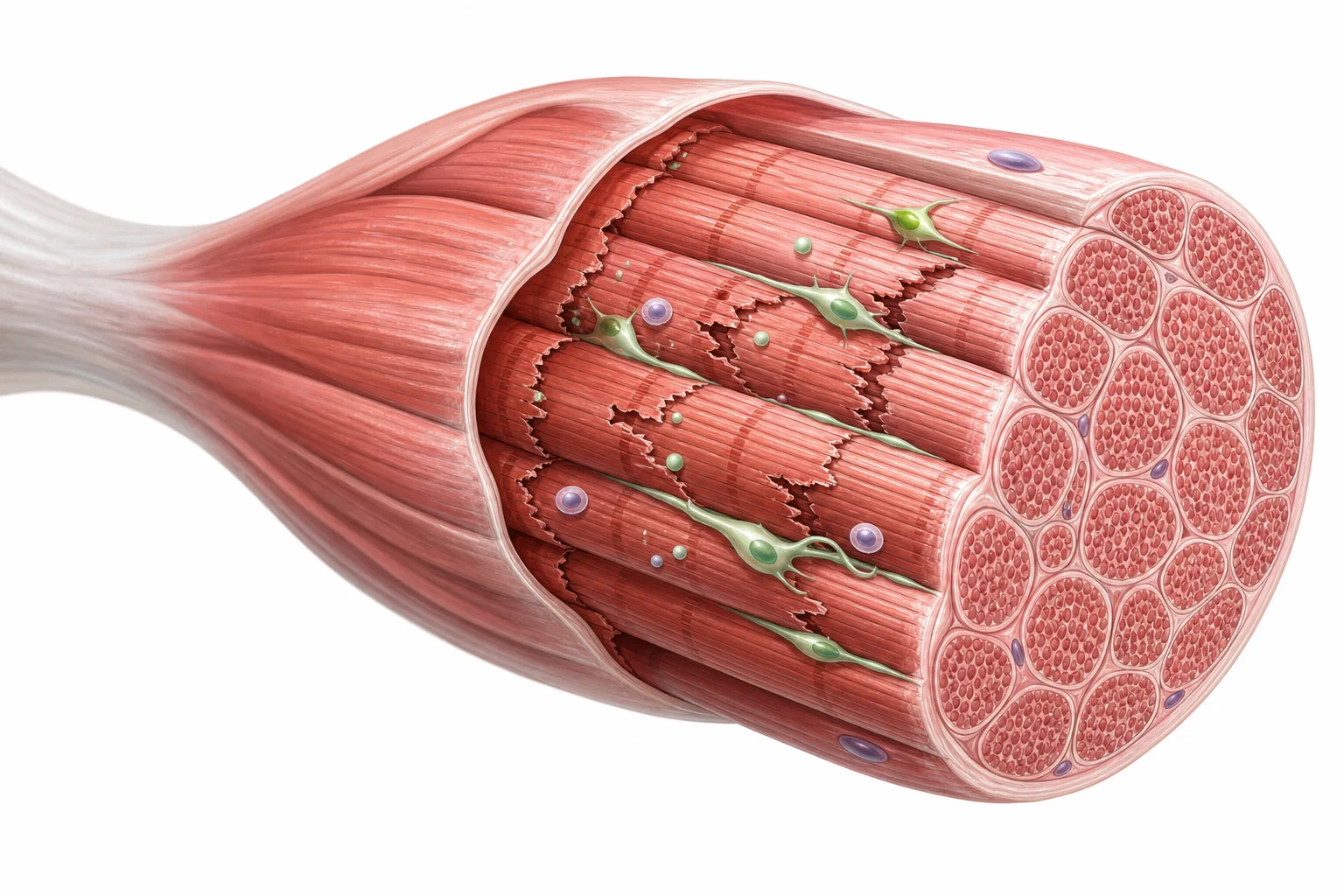
A student stretching after exercise while a magnified view shows muscle fibers being repaired by body cells

Muscles often get sore because hard exercise can make tiny tears in muscle fibers. Your body sends fluid and repair cells to the area, which can make the muscle feel stiff and tender. The soreness usually starts later because the repair process takes time to build up.

Big Idea. NGSS MS-LS1-3 connects muscle soreness to how body systems work together for movement, repair, and recovery.

A sore leg after soccer practice or a sore arm after climbing is not usually a sign that something went wrong. It is often a sign that your muscles did work they were not used to doing. The soreness that shows up many hours later is called delayed onset muscle soreness, or DOMS. It is common after new exercise, harder exercise, or movements that make a muscle lengthen while it works, such as walking downhill or lowering a weight. Inside the muscle, some fibers and nearby tissues can get tiny amounts of damage. That sounds scary, but it is part of how the body responds to exercise. Blood, immune cells, and chemical signals help clean up and rebuild the area. This article connects that familiar sore feeling to cells, tissues, organ systems, and recovery, which are core ideas in middle school life science.

Muscles work by pulling
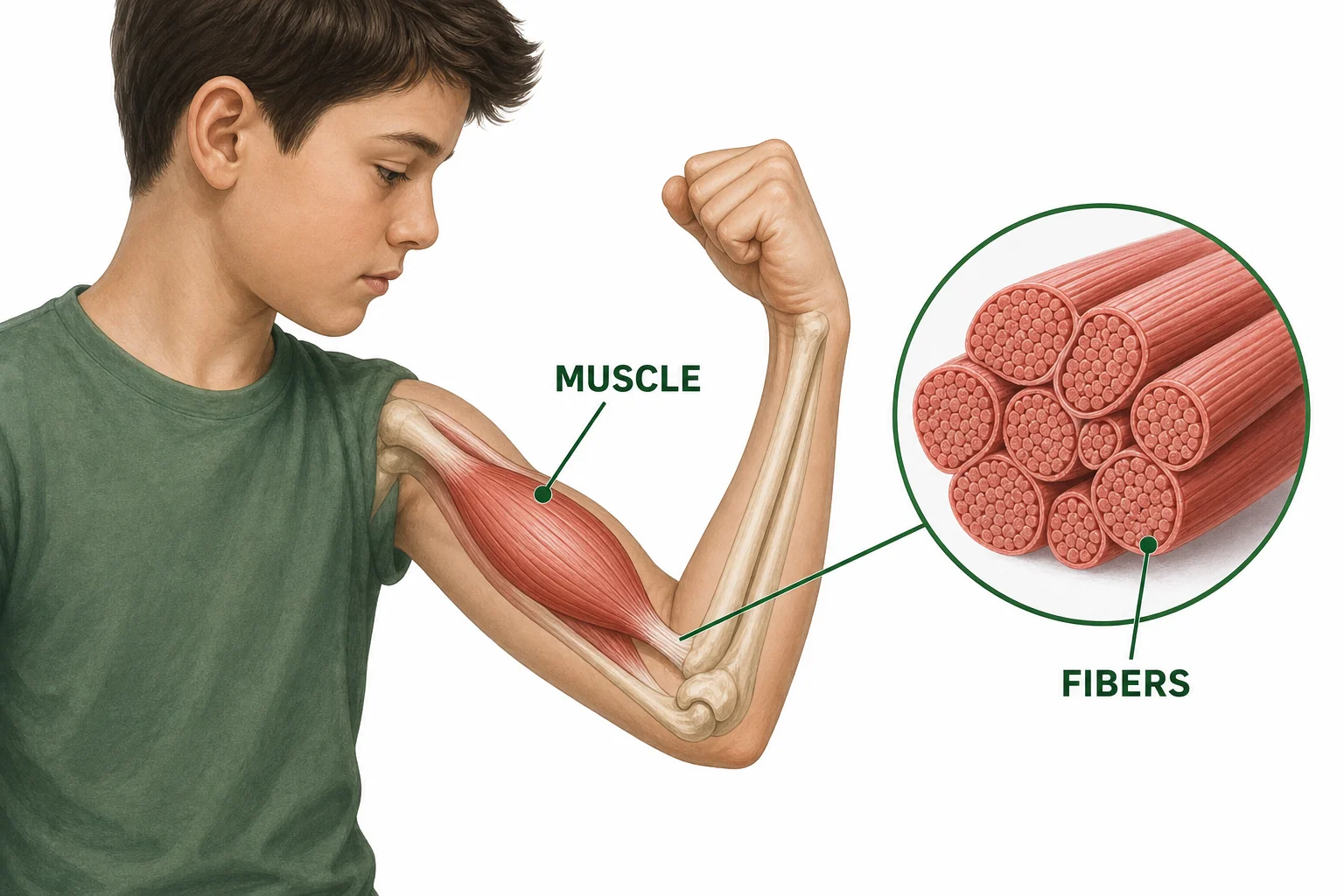
Diagram showing a biceps muscle pulling on a forearm bone with a magnified view of muscle fibers inside the muscle
Muscles pull on bones to create movement
A muscle is made of many long cells called muscle fibers. Each fiber contains smaller strands that slide past each other when the muscle contracts. That sliding action makes the muscle shorten and pull on a bone. Muscles do not push bones back the other way. They work in pairs, with one muscle pulling while another relaxes. During exercise, your muscle fibers use energy, receive signals from nerves, and get oxygen and nutrients from the blood. These jobs connect several body systems at once. The nervous system sends the command. The circulatory system delivers materials. The muscle tissue produces the force. When exercise is harder than usual, the fibers experience more stress. The stress is greatest when a muscle is trying to control a motion while lengthening, such as lowering into a squat.

Movement begins when muscle fibers contract and pull.

Tiny damage starts the soreness
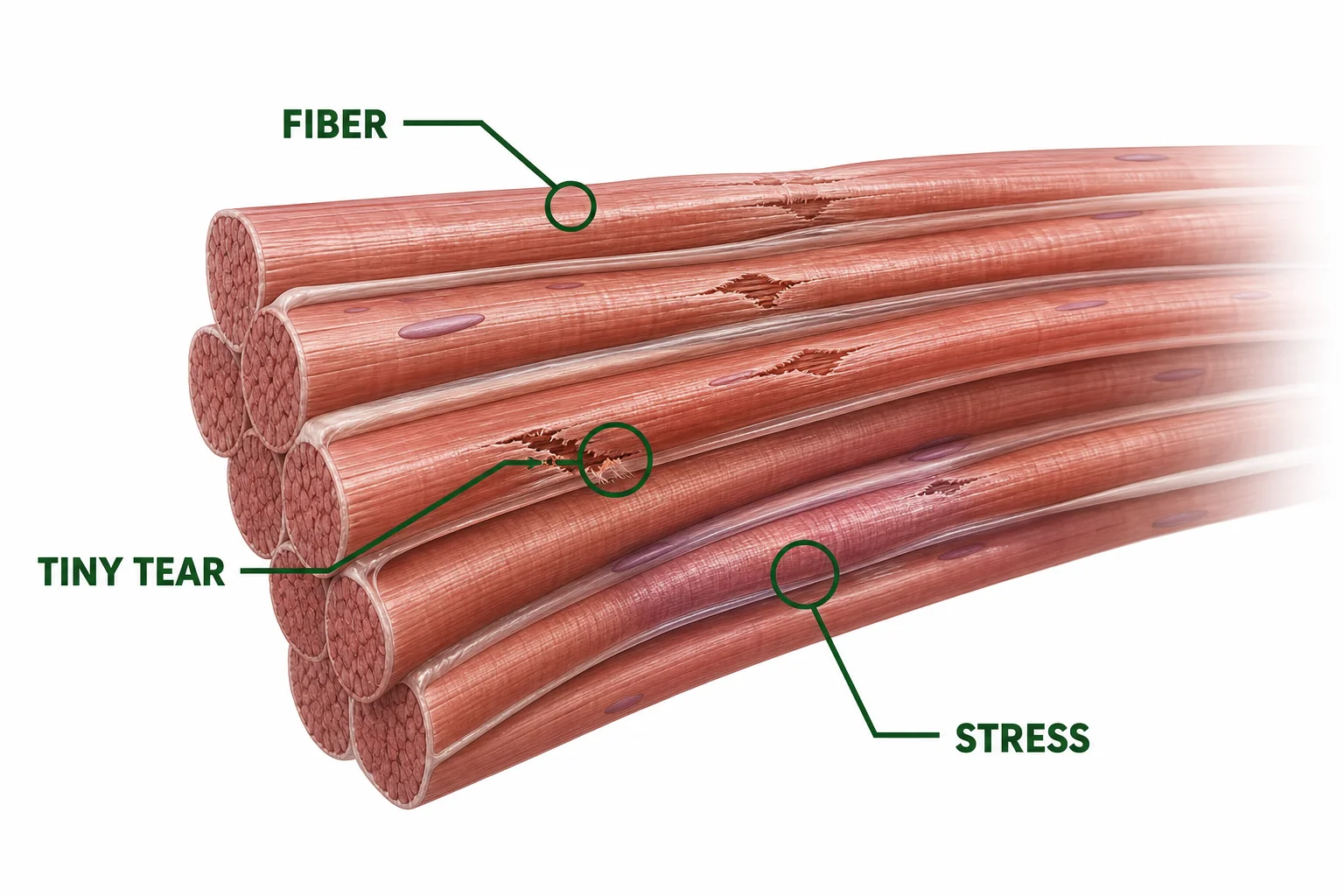
Magnified muscle fibers with small breaks in a few fibers after hard exercise
Microscopic damage can happen after hard or new exercise
Delayed soreness is linked to microscopic damage in muscle fibers and the tissues around them. Microscopic means too small to see without special tools. This damage is not the same as a serious injury. It is more like tiny disruptions in the structure of some fibers. Exercises that include slow lowering movements often cause more of it. Running downhill, doing lunges, or lowering a backpack from a shelf can all make muscles lengthen while they work. That action can strain parts of the fiber. The body senses the changes and begins a repair response. At first, you may not feel much. The damage is small and spread out through many fibers. The sore feeling usually grows later because it depends on chemical signals, swelling, and sensitive nerve endings in the tissue.

Soreness often begins with small changes inside muscle tissue.

Inflammation helps repair
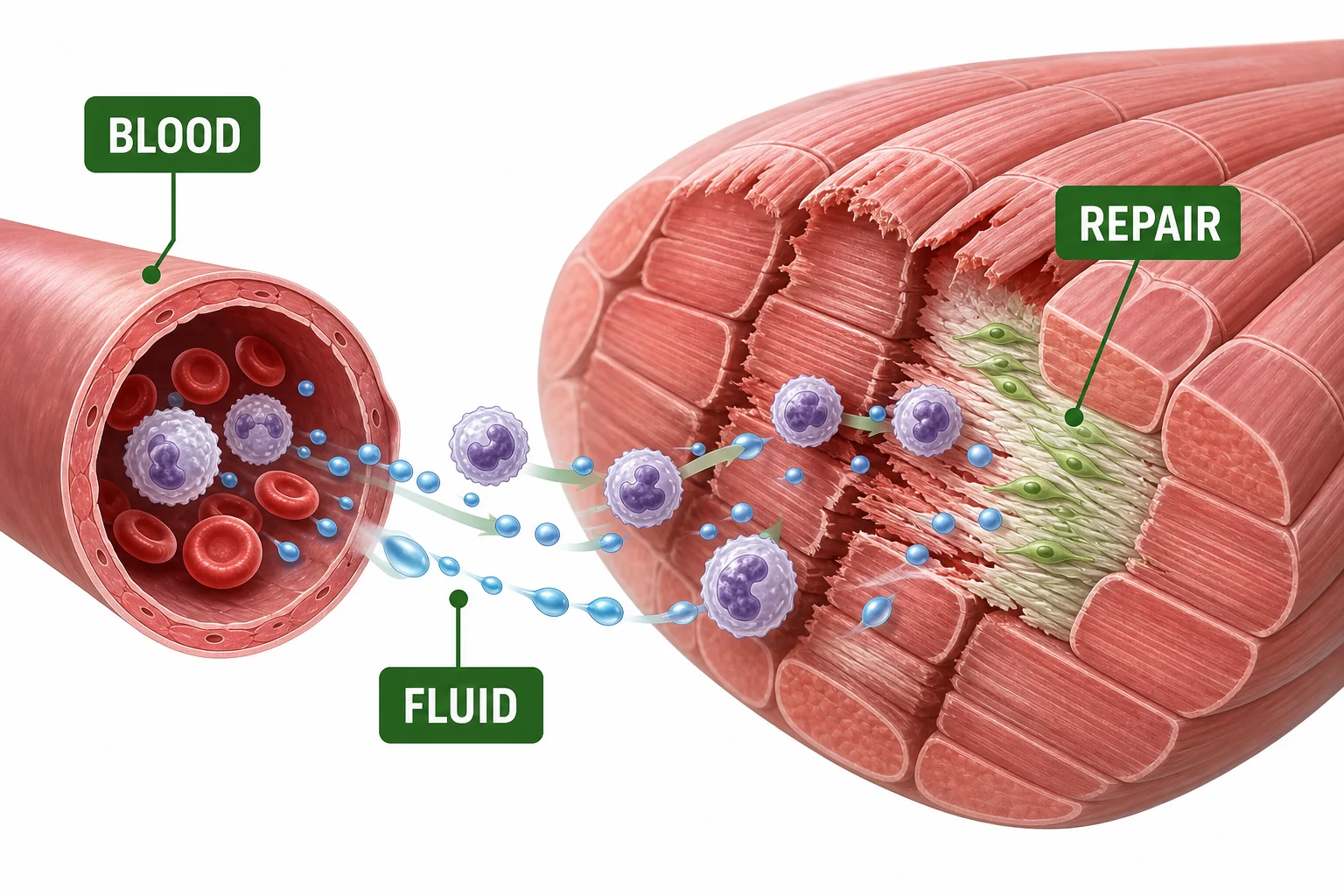
Immune cells and fluid moving from a small blood vessel toward damaged muscle fibers during repair
Inflammation brings repair cells to the muscle
Inflammation is one way the body protects and repairs tissues. After hard exercise, tiny blood vessels near the muscle can allow more fluid and immune cells to enter the area. These cells help remove damaged material and send signals that guide repair. The extra fluid can make the tissue feel tight. Chemical signals can make nearby nerve endings more sensitive. Together, those changes can create the tender feeling of DOMS. Inflammation is not always bad. Short-term inflammation is part of healing. Problems can happen when damage is too large, when pain is sharp, or when swelling is severe. Normal muscle soreness is usually spread through the muscle and improves over a few days. A sudden sharp pain during activity is different and should be treated as a possible injury.

Inflammation can cause tenderness while also helping repair tissue.

Soreness appears later
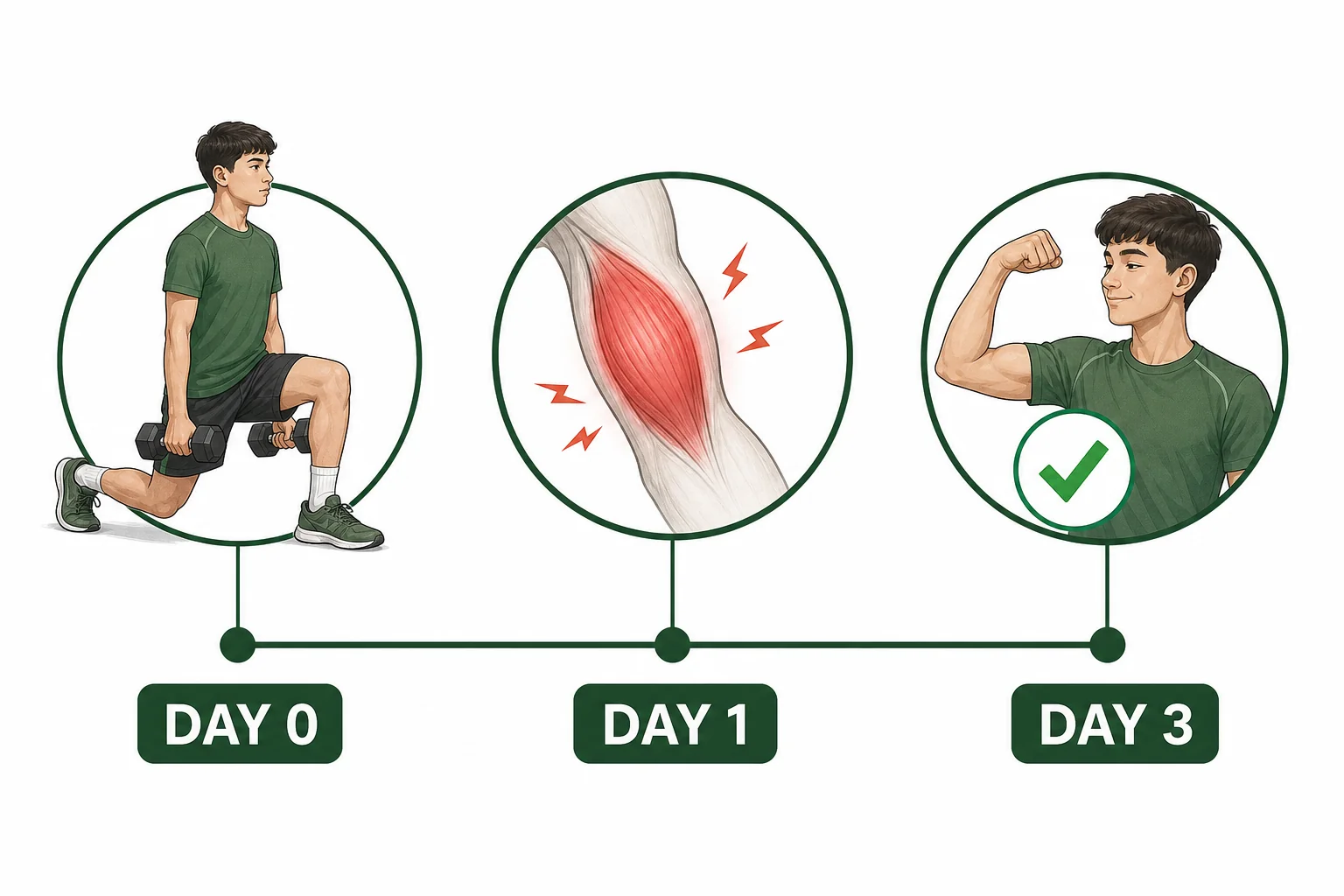
Timeline showing exercise followed by rising muscle soreness over the next two days and then recovery
DOMS often peaks after a delay
DOMS often begins 12 to 24 hours after exercise and can peak around one to three days later. The delay happens because the sore feeling is tied to the repair process, not just the workout itself. It takes time for immune cells to arrive, for fluid to build up, and for nerve endings to become more sensitive. This is why a person may feel fine right after a workout but stiff the next morning. The timeline can vary. A new activity may cause more soreness than a familiar one. A harder workout may also increase soreness. As the muscle adapts, the same activity often causes less soreness later. The body has strengthened and reorganized the tissue so it can handle that stress more easily next time.

The delay comes from the time needed for the repair response.

Recovery makes muscles ready
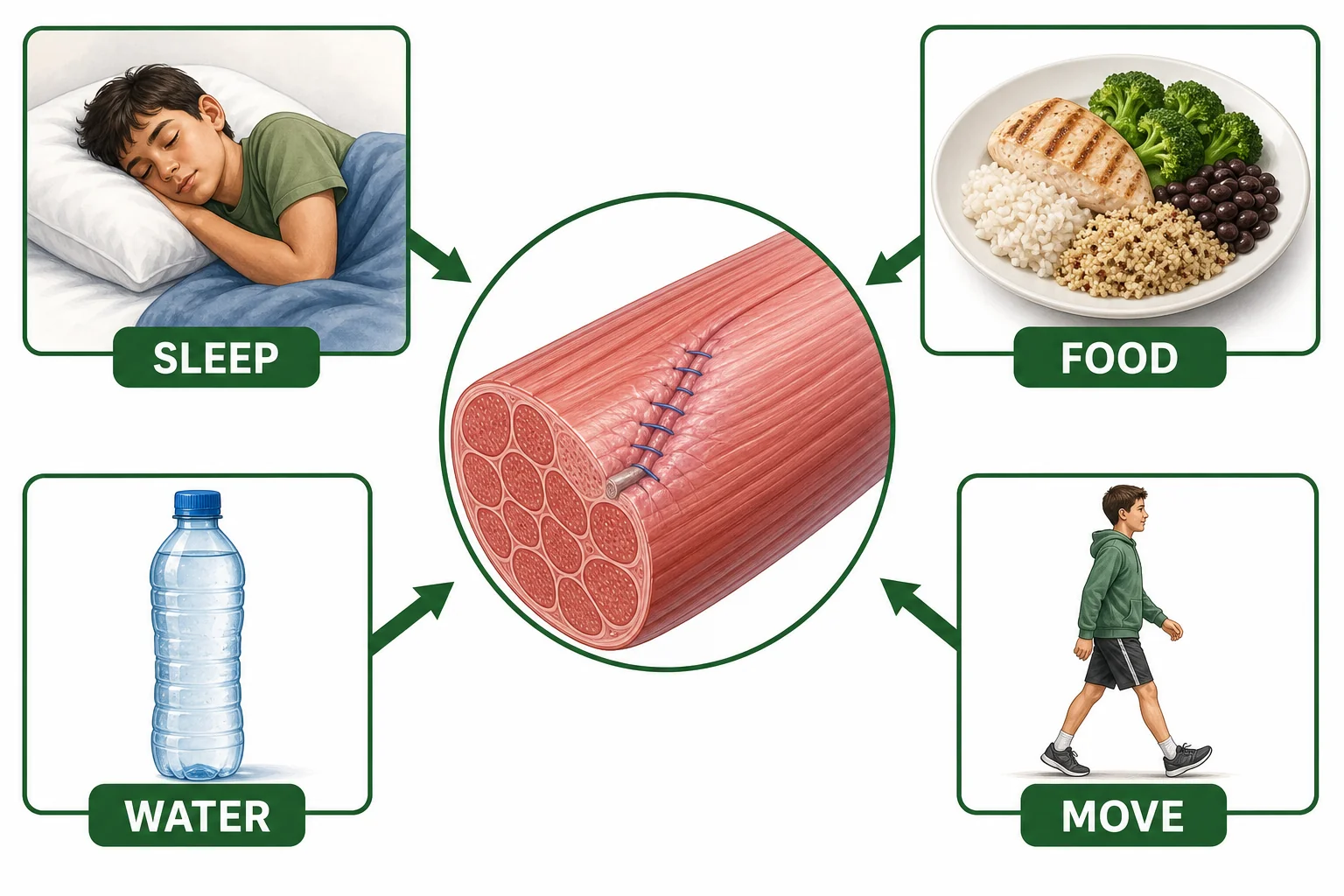
Recovery scene showing sleep, food, water, and light movement supporting muscle repair
Recovery supports repair and adaptation
Recovery is when the body rebuilds tissue and restores normal function. Sleep, food, water, and gentle movement all support this process. Protein in food supplies building blocks for repair. Carbohydrates help refill stored fuel in muscles. Water helps blood carry materials around the body. Easy movement can increase blood flow and reduce stiffness for some people. More hard exercise is not always the best answer when muscles are very sore. The body needs time to finish repairs. Over time, repeated exercise can make muscles better prepared for the same challenge. This is one reason practice matters in sports and fitness. Muscles, bones, blood vessels, nerves, and immune cells all work together so the body can move, adapt, and heal.

Rest and basic care help muscle tissue rebuild.

Vocabulary

muscle fiber
A long muscle cell that contracts to help move part of the body.
delayed onset muscle soreness
Muscle soreness that starts hours after exercise, often after a new or hard activity.
microscopic damage
Tiny changes in tissue that are too small to see without special tools.
inflammation
A body response that brings fluid and immune cells to an area that needs protection or repair.
recovery
The process of restoring tissues and body systems after exercise or stress.

In the Classroom

Soreness timeline

20 minutes over 3 days | Grades 6-8

Students keep a simple class chart after a safe activity such as step-ups or wall sits. They record how their muscles feel right after activity, the next day, and two days later, then compare patterns without ranking performance.

Model a muscle fiber

30 minutes | Grades 6-8

Students use yarn or pipe cleaners to model bundled muscle fibers. They add small paper markers to show microscopic damage, then move beads or tokens toward the area to represent repair cells.

Recovery plan sort

25 minutes | Grades 6-8

Students sort recovery choices into helpful, not helpful, and depends categories. They use evidence from the article to explain why sleep, food, water, and gentle movement can support repair.

Key Takeaways

  • Delayed muscle soreness often comes from tiny damage in muscle fibers and nearby tissues.
  • Inflammation can make muscles feel tender, but it also helps with repair.
  • Soreness can appear many hours after exercise because repair takes time to build up.
  • New or harder activities usually cause more soreness than familiar activities.
  • Recovery depends on body systems working together, including muscles, blood, nerves, and immune cells.