Why Are Sunsets Red and Orange?
How air changes sunlight near the horizon
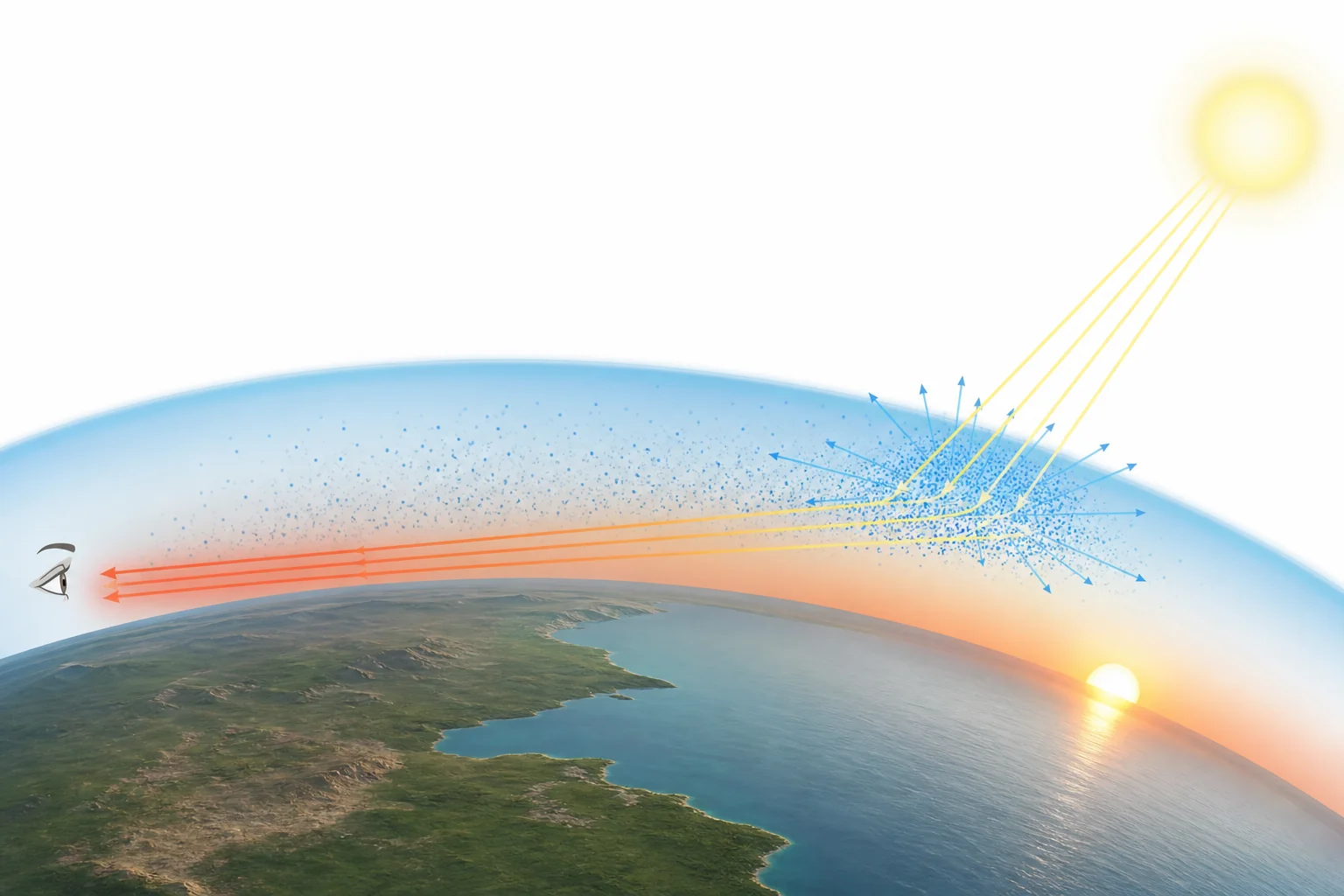
Sunlight has many colors mixed together. Near sunset, sunlight travels through more air before it reaches your eyes. Much of the blue light gets sent in other directions, so more red and orange light is left for you to see.
A sunset can turn the sky orange, red, pink, or purple. The color change is not because the Sun changes color. It happens because sunlight must pass through Earth’s air before it reaches your eyes. During the day, the Sun is high in the sky, so its light takes a shorter path through the air. Near sunset, the Sun is low near the horizon. Its light must travel through a much longer path of air. Tiny gas molecules and small particles in the air bump light in different directions. Blue light is scattered more than red light. By the time sunlight reaches you at sunset, much of the blue has been scattered away from the direct path. The colors that travel through more easily, red and orange, become easier to see. This is a real example of how waves of light interact with matter in the atmosphere.
Sunlight starts as many colors
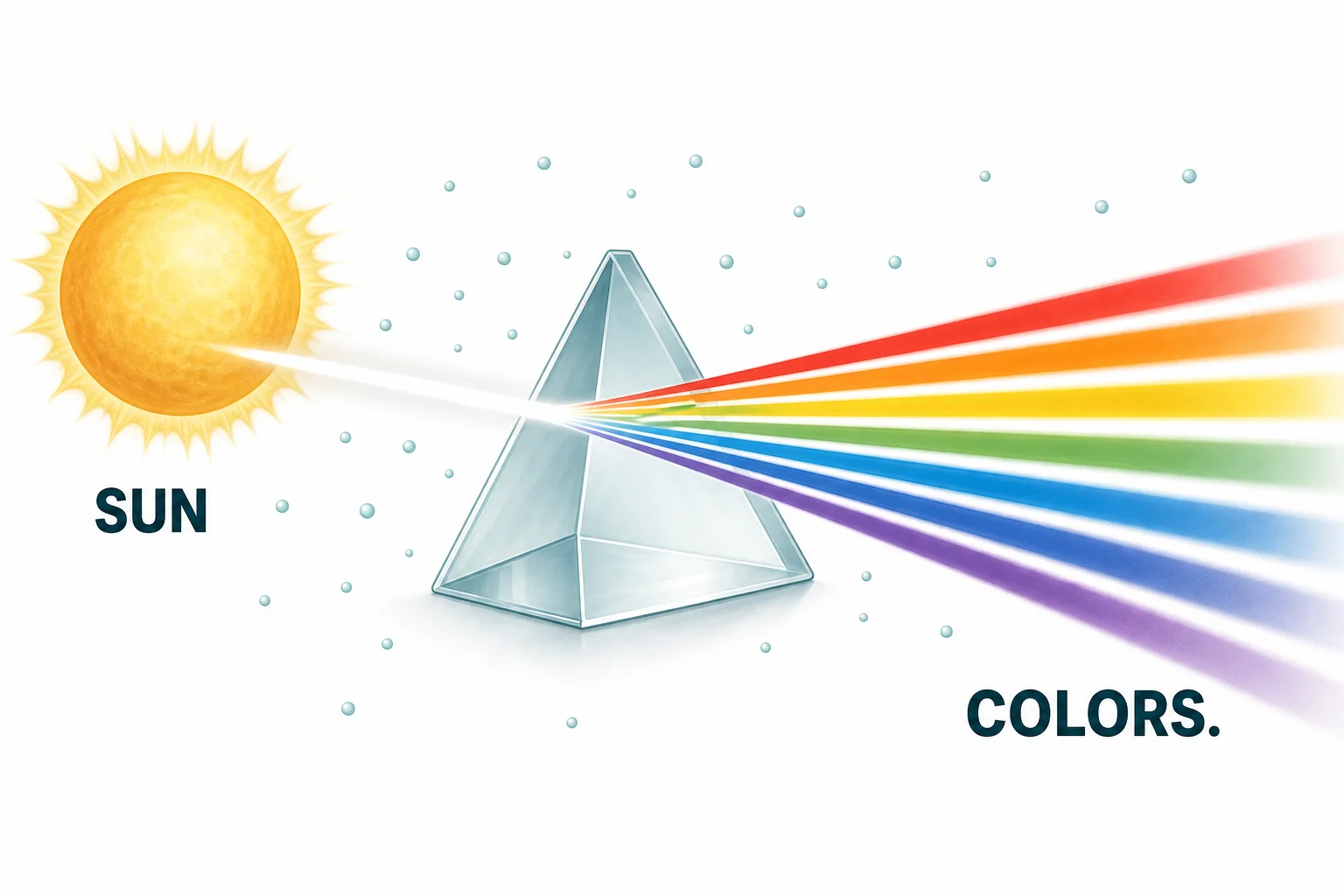
Sunlight contains all the colors we see in a rainbow.
Air scatters blue light more
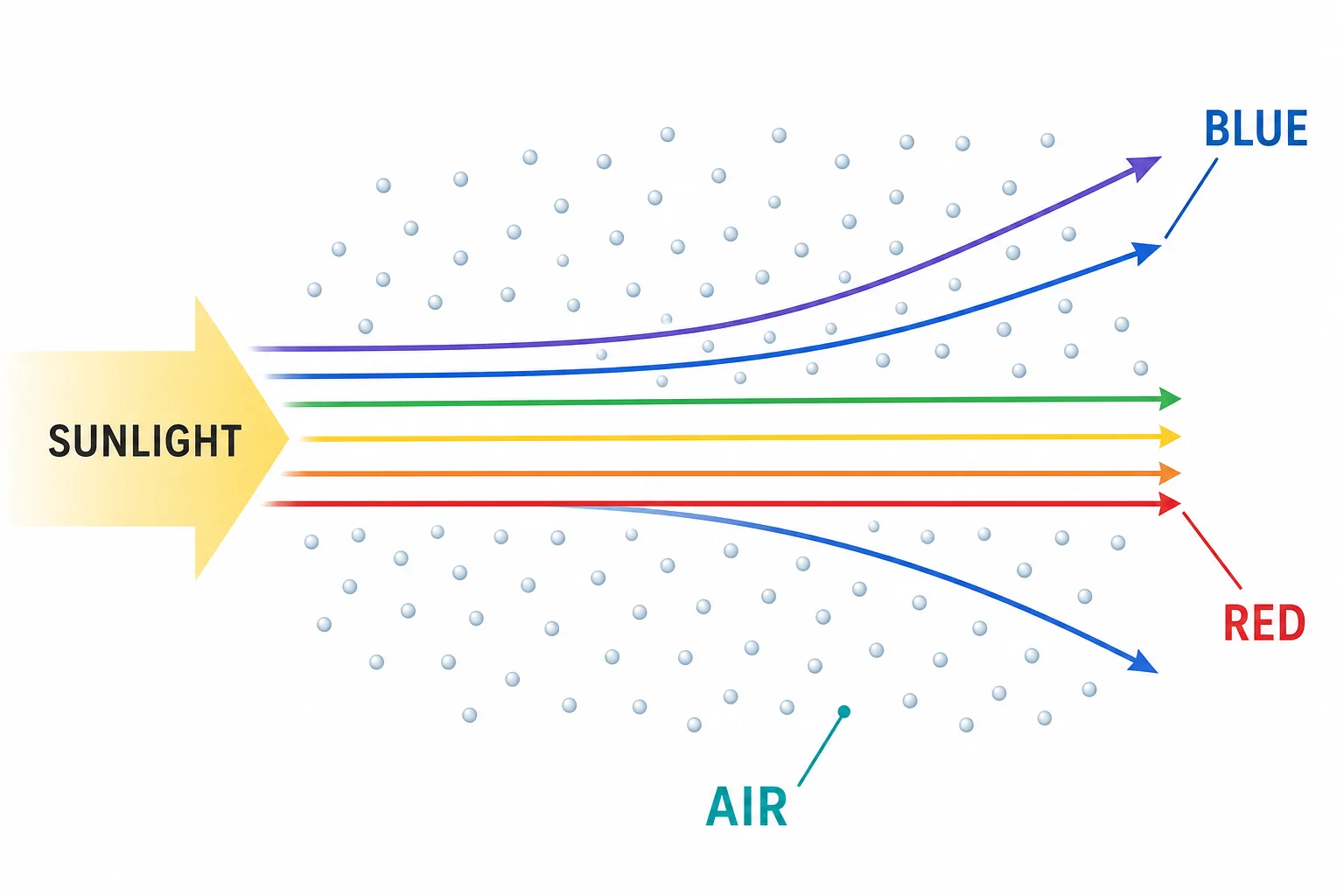
Shorter blue light is scattered more strongly by tiny air molecules.
Sunset light takes a longer path
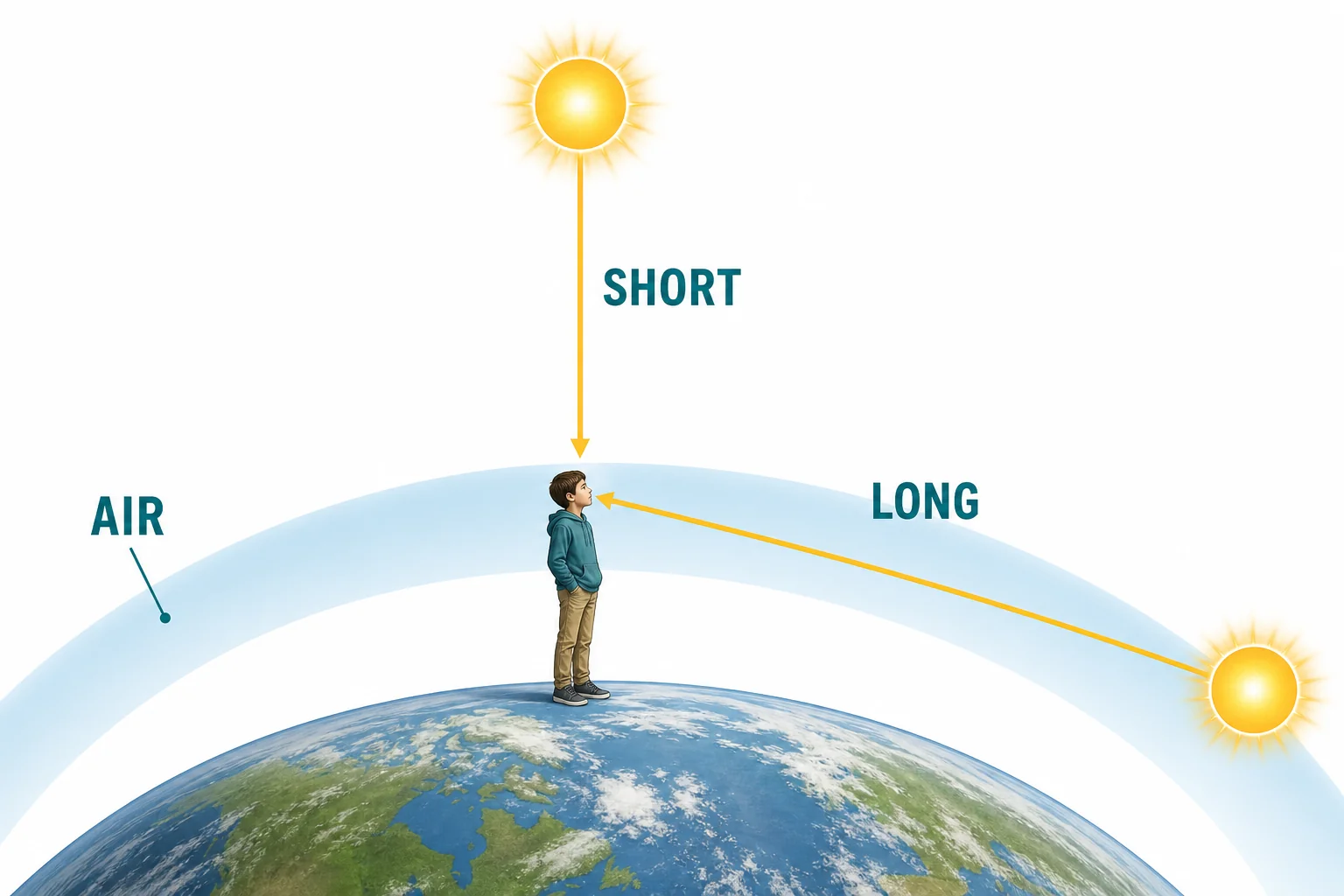
A low Sun sends light through more atmosphere before it reaches you.
Red and orange reach your eyes
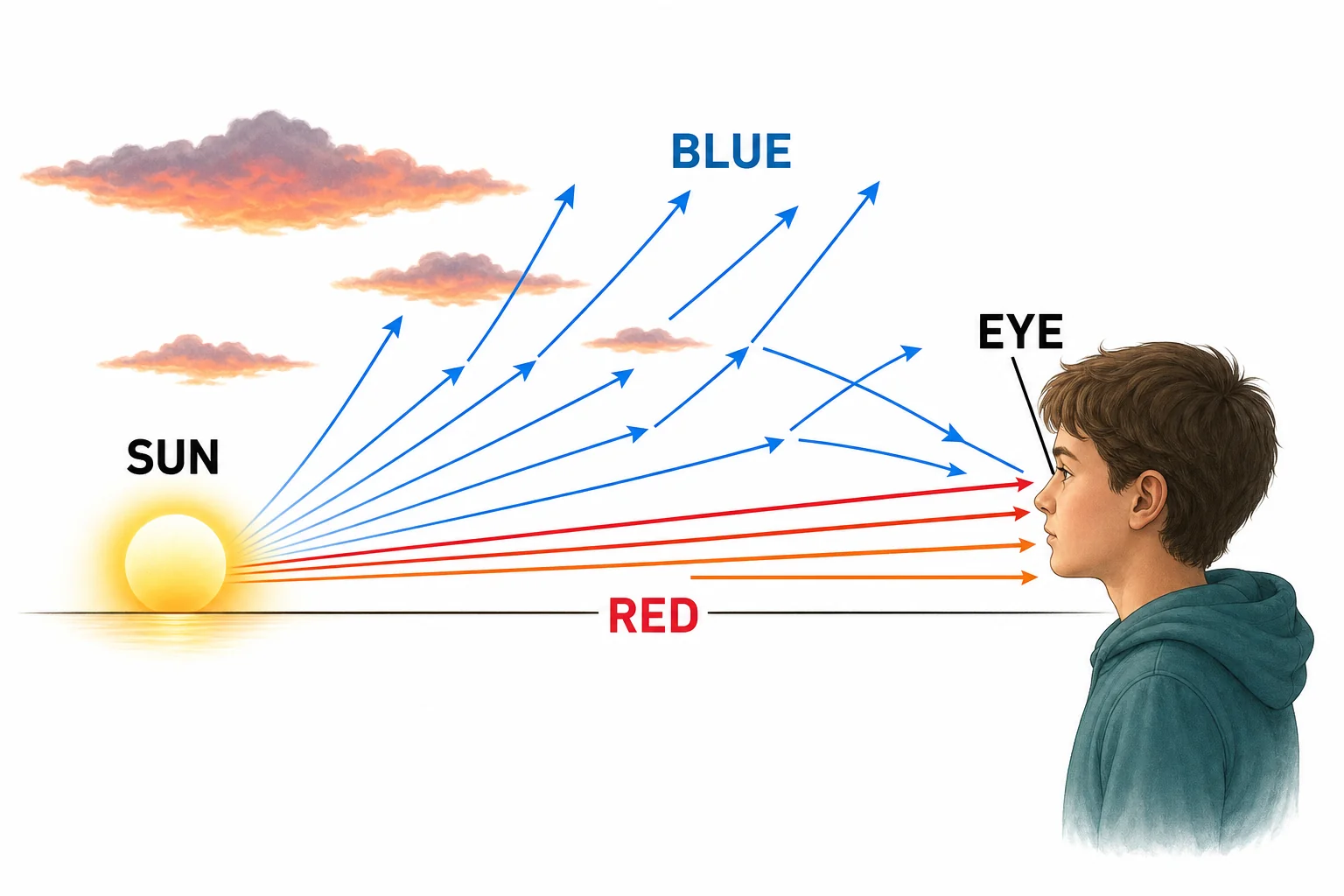
At sunset, more red and orange light stays on the path to your eyes.
The sky still follows patterns
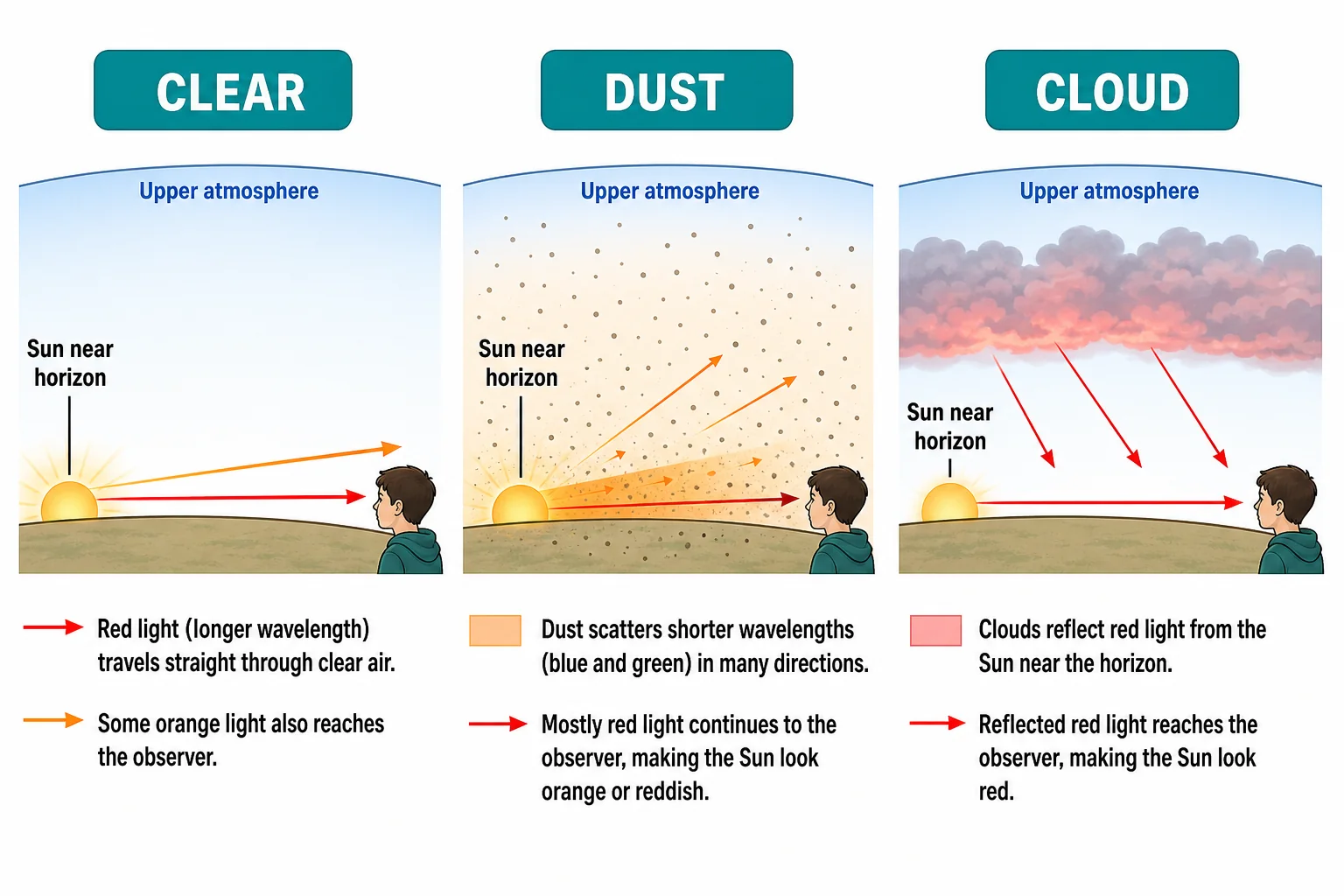
The same science can make different sunset colors in different weather.
Vocabulary
- Atmosphere
- The layer of gases around Earth that sunlight travels through before it reaches the ground.
- Scattering
- A change in the direction of light after it interacts with tiny bits of matter.
- Rayleigh scattering
- The kind of scattering in clear air that affects shorter blue light more than longer red light.
- Wavelength
- The distance from one crest of a light wave to the next crest. Different colors have different wavelengths.
- Horizon
- The line where the ground or ocean seems to meet the sky.
In the Classroom
Flashlight sunset model
20 minutes | Grades 3-5
Shine a flashlight through a clear container of water with a small amount of milk mixed in. Students observe how the beam looks from the side and from the end, then connect the model to scattered blue light and sunset colors.
Path length drawing
15 minutes | Grades 4-5
Students draw Earth, a high Sun, and a low Sun. They compare the short and long light paths through the atmosphere and explain why the low Sun passes through more air.
Sunset color journal
10 minutes per day | Grades 3-5
Students record sunset colors for one week and note clouds, haze, or clear air. The class looks for patterns between sky conditions and the colors they observed.
Key Takeaways
- • Sunlight is made of many colors mixed together.
- • Tiny gas molecules in air scatter blue light more than red light.
- • At sunset, sunlight travels through a longer path of air.
- • More blue light is scattered away, so red and orange light are easier to see.
- • Clouds, dust, smoke, and water droplets can change how a sunset looks.