Sign in to save

Bookmark this page so you can find it later.

Sign in to save

Bookmark this page so you can find it later.

Earth Science middle-school May 24, 2026

Why Does the Ocean Have Salt?

How rocks, rivers, and evaporation make seawater salty
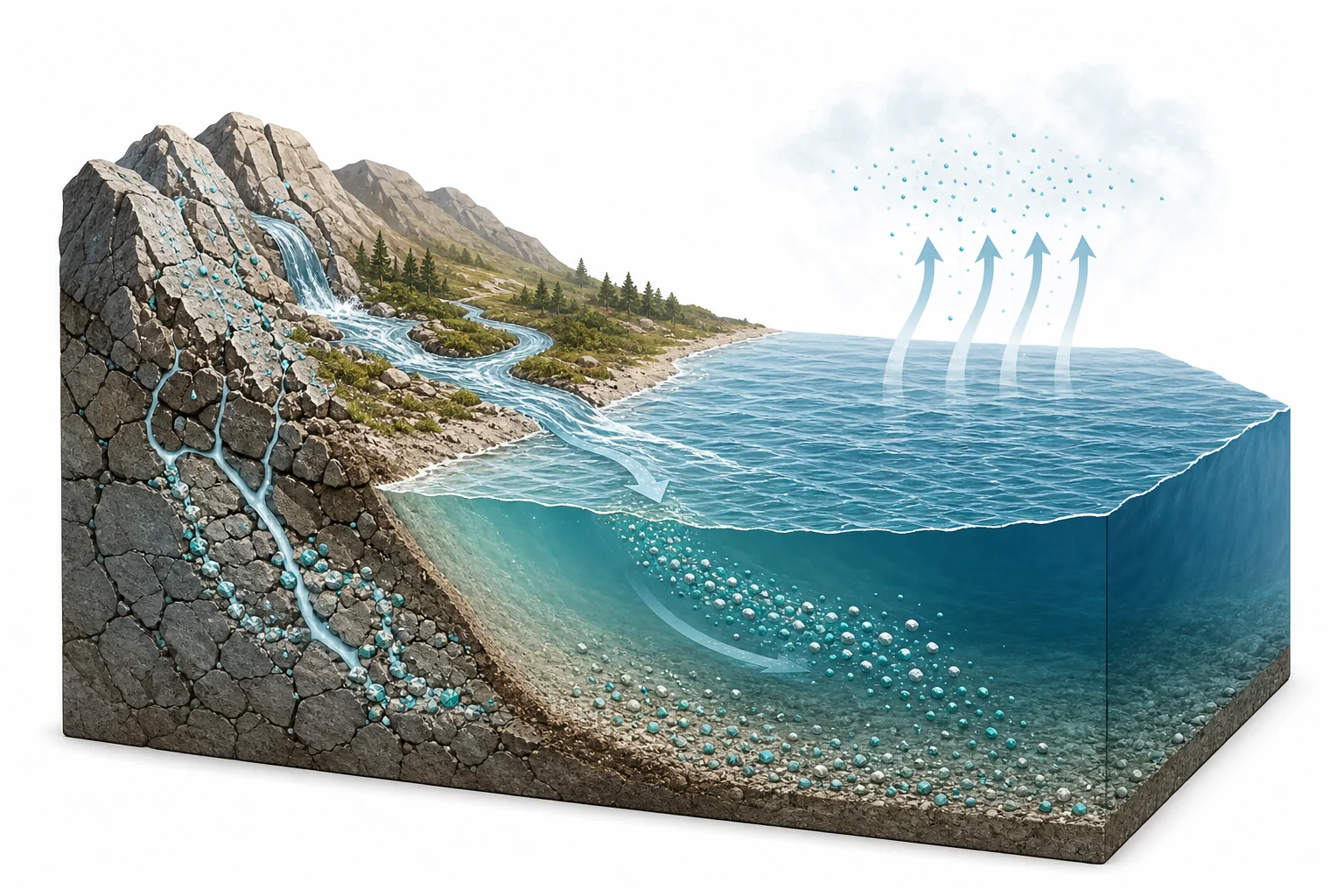
Diagram of rain weathering rocks, rivers carrying dissolved minerals, and the ocean concentrating salts as water evaporates

Ocean salt mostly comes from minerals that wash out of rocks on land. Rivers carry those dissolved minerals to the sea, where water leaves by evaporation but the salt stays behind. Over millions of years, this has made ocean water salty.

Big Idea. NGSS MS-ESS2-1 connects ocean salt to Earth materials moving through the rock cycle and water cycle.

Ocean water tastes salty because Earth is always moving water and minerals from place to place. Rain falls on land. Some of that rain mixes with carbon dioxide in the air and soil, which makes it slightly acidic. That weak acid helps break down rocks. Tiny mineral pieces and dissolved ions wash into streams, rivers, and groundwater. Many of them eventually reach the ocean. The water does not stay there forever. Sunlight warms the surface, and water evaporates into the air. Salt does not evaporate with it. It remains in the sea. This slow process has happened for a very long time. It also explains why seawater is much saltier than most rivers. The ocean is not just a big bathtub with salt added once. It is part of an active Earth system, where weathering, rivers, seafloor vents, and evaporation keep changing the chemistry of water.

Rain starts the process
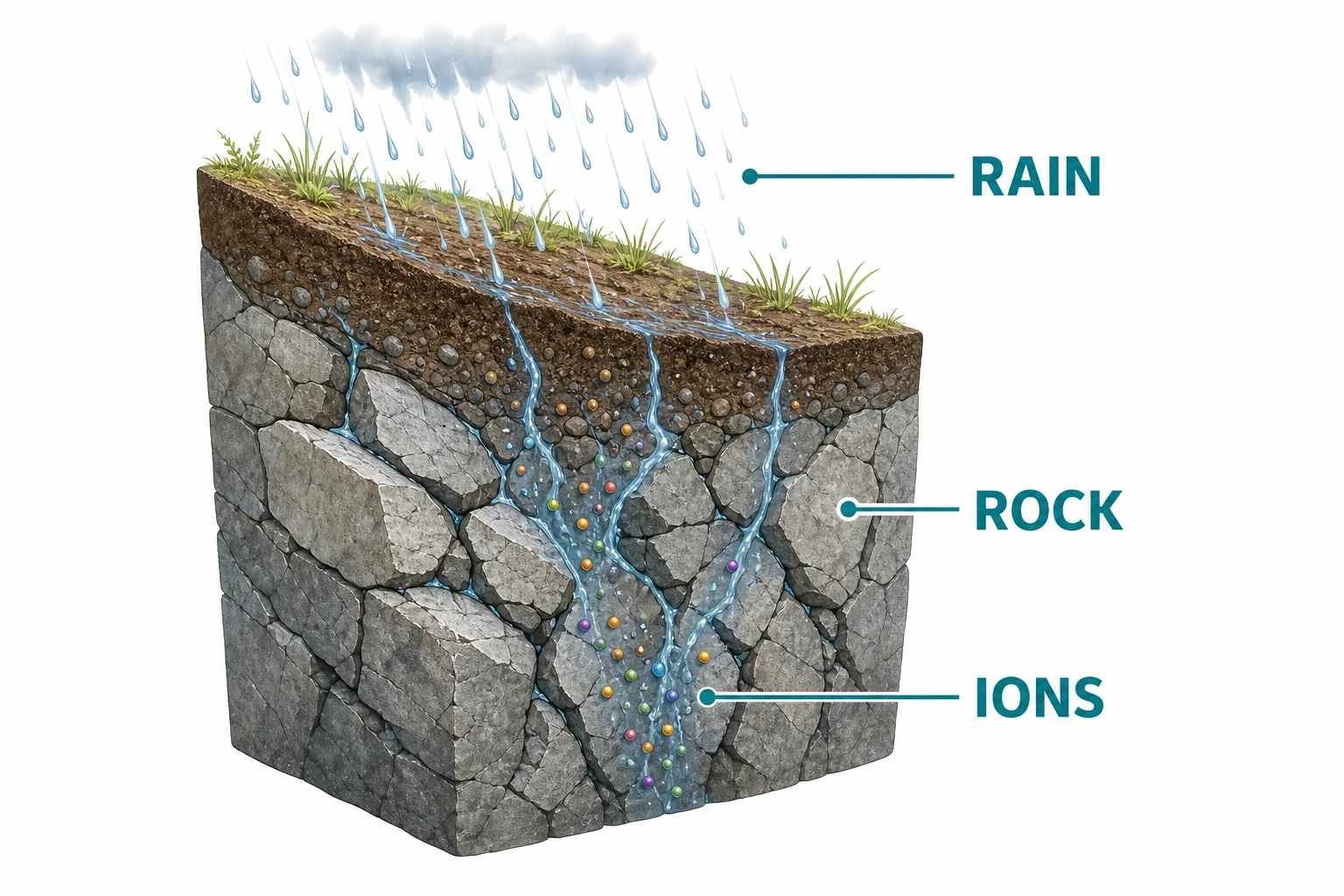
Rainwater moving through soil and cracks in rock while minerals dissolve into the water
Weathering releases dissolved minerals
Salt in the ocean begins far from the beach. Rainwater falls through the air and soaks into soil. Along the way, it picks up a small amount of carbon dioxide. This makes the water weakly acidic. It is not dangerous like a strong acid in a lab. It is just reactive enough to help minerals in rocks break apart. This process is called chemical weathering. Granite, limestone, basalt, and other rocks contain atoms that can become dissolved ions. Sodium, chloride, calcium, magnesium, and potassium are examples. Once these ions are in water, they can move. Some stay in soil. Some are used by living things. Some flow into streams. Over time, huge amounts of water touch huge amounts of rock. Even a tiny amount of dissolved material in each liter can add up across a whole continent.

Weathering turns some rock minerals into dissolved ions.

Rivers carry minerals to sea
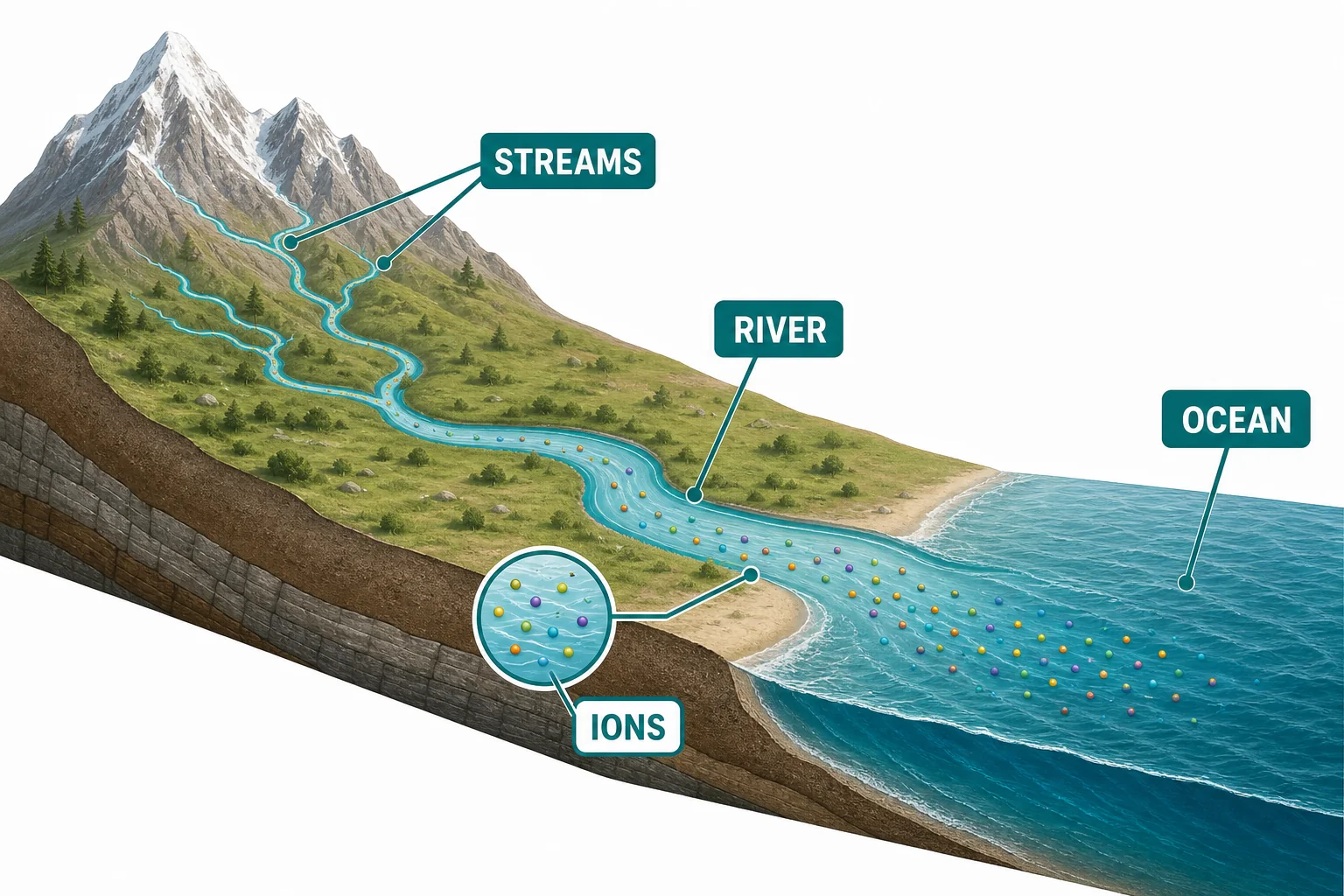
River network carrying dissolved minerals from mountains and plains into the ocean
Rivers deliver dissolved minerals
Streams and rivers act like conveyor belts for dissolved minerals. Water flows downhill, so it gathers material from many small places and moves it toward lower land. A single stream may not carry much salt. A large river drains a wide area, so it collects minerals from many rocks, soils, farms, forests, and cities. Some dissolved ions settle into lake beds or react with other chemicals along the way. Many keep moving. When a river reaches the ocean, its water mixes with seawater. The river water may taste fresh to us because its dissolved minerals are spread out. Still, it is not pure water. It carries a small mineral load. Multiply that by many rivers and millions of years, and the ocean receives a steady supply of dissolved matter.

Rivers are fresh, but they still carry small amounts of dissolved minerals.

Evaporation leaves salt behind
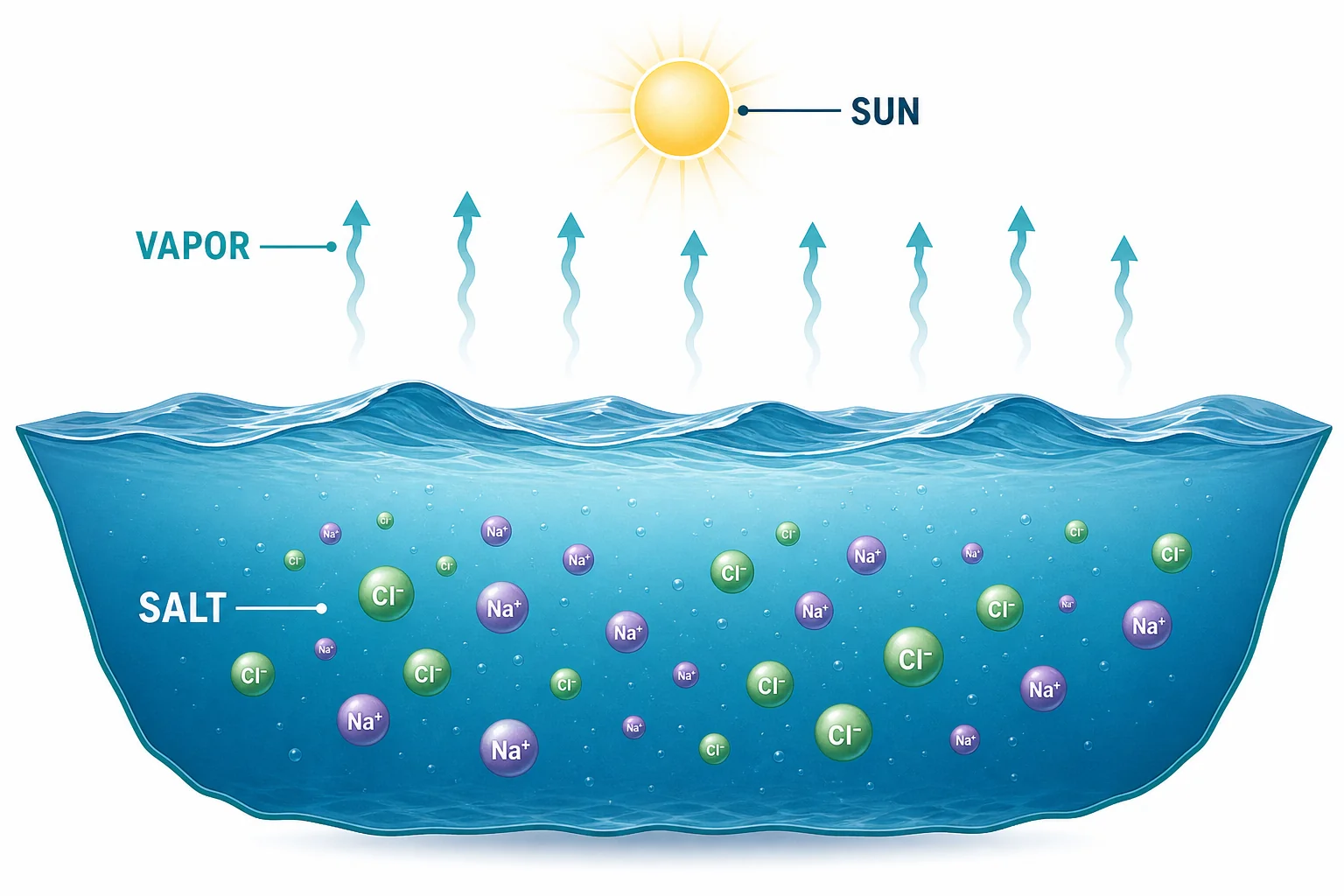
Ocean surface evaporating water vapor while dissolved salt ions remain in the water
Evaporation removes water, not salt
The ocean loses water mainly when liquid water at the surface becomes water vapor. This is evaporation. Water vapor rises into the air and later forms clouds. The dissolved salts do not leave with the vapor. They stay in the ocean. This is why evaporation can concentrate salt. Think about a shallow puddle of seawater left in the sun. As the water disappears, salt crystals can form on the surface or ground. The ocean is much larger, and it is constantly mixed by waves and currents, so the salt does not just pile up in one sunny spot. Still, the rule is the same. Water can move into the air, while most dissolved ions remain in the liquid. Over geologic time, this helps keep the ocean salty.

Evaporation makes seawater saltier because the water leaves and the salt stays.

The ocean also loses salt
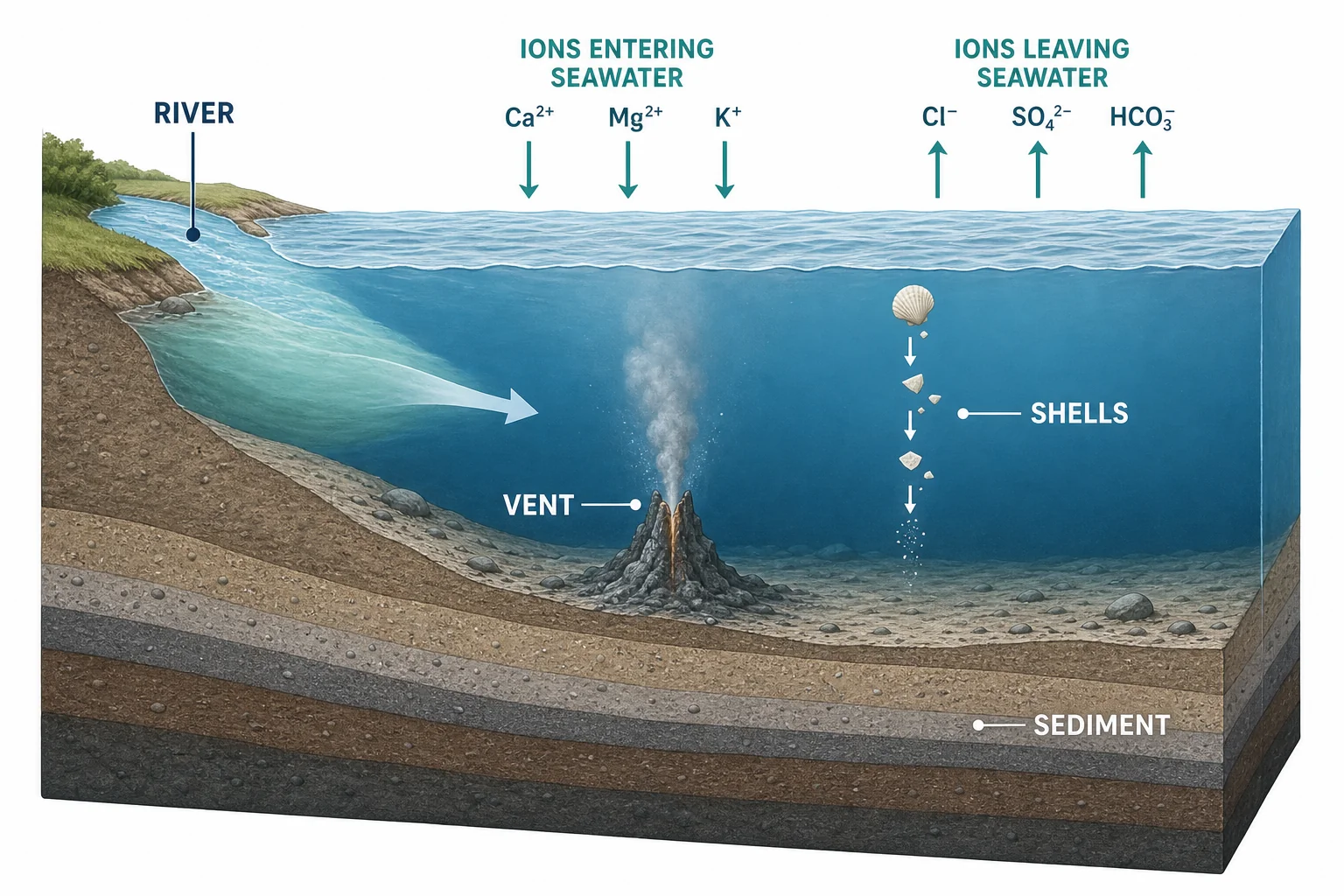
Ocean chemistry balance showing rivers and vents adding ions while shells and sediments remove ions
Ocean salt has inputs and outputs
The ocean is salty, but salt does not increase forever. Several processes remove dissolved ions from seawater. Some ions join with other chemicals and form solid minerals that sink to the seafloor. Some are used by organisms to build shells, skeletons, or hard parts. When those organisms die, their remains can become sediment. Salt can also be trapped when seawater evaporates in restricted basins and leaves thick mineral layers behind. Ocean water also reacts with hot rock at mid-ocean ridges and hydrothermal vents. These reactions can add some chemicals and remove others. The saltiness of the ocean is a balance between inputs and outputs. Rivers and vents add dissolved materials. Sediments, minerals, organisms, and rock reactions remove them.

Ocean salinity stays within a range because salt is both added and removed.

Why most lakes are fresh
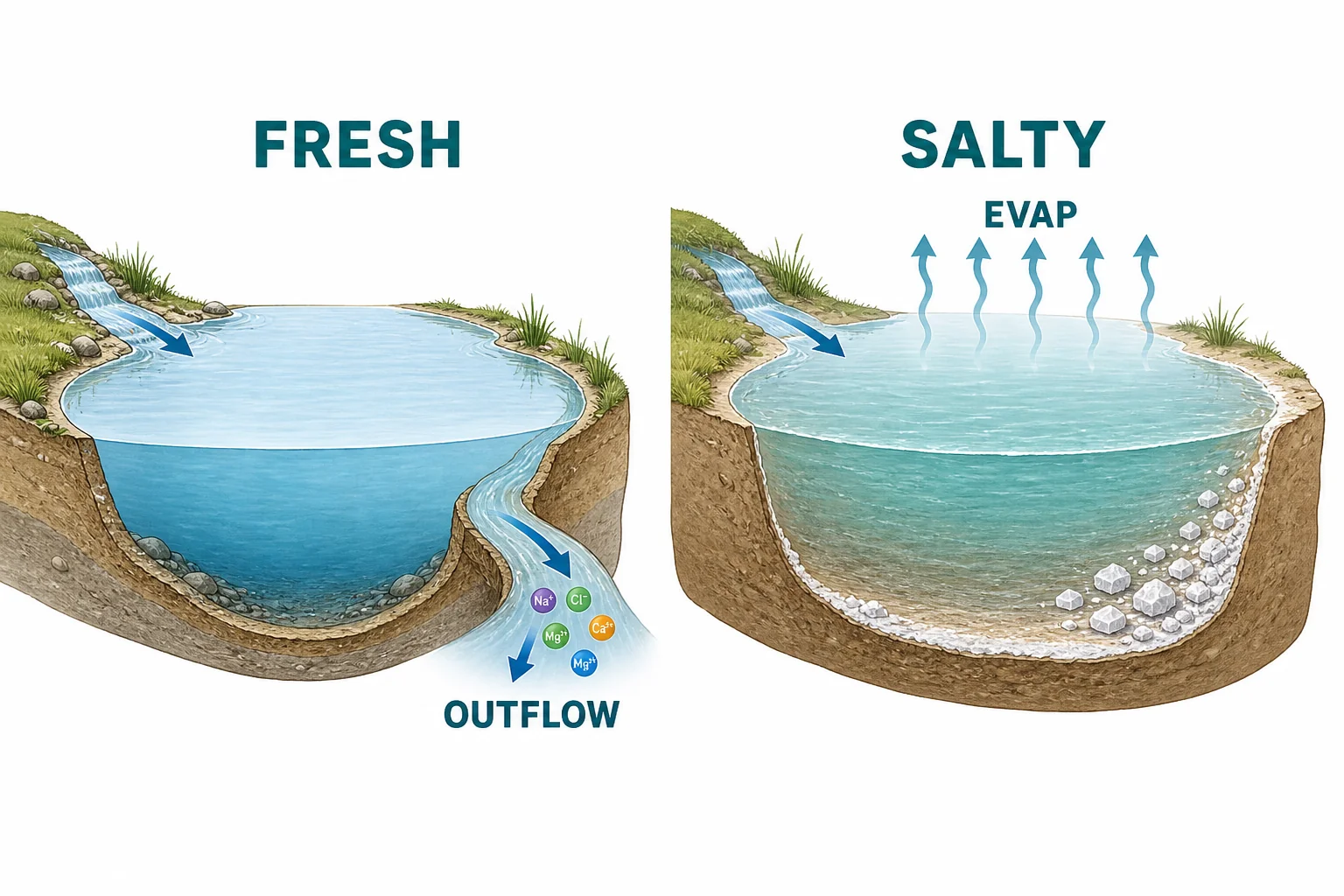
Comparison of a freshwater lake with an outlet and a salty lake where evaporation leaves salts behind
Outlets help lakes stay fresh
Most lakes are much less salty than the ocean because they have an outlet. Water flows in from streams, rain, and groundwater. Water also flows out through a river or seepage. That outflow carries dissolved minerals away before they can build up too much. Many lakes are also young compared with the ocean, so they have had less time to collect salts. Some lakes are salty, though. The Great Salt Lake and the Dead Sea are examples. They have little or no river outflow. Water leaves mostly by evaporation. Salts remain and become concentrated. This makes them more like a small version of the ocean concentration process. The difference between fresh and salty water depends on the balance of water in, water out, minerals in, and minerals out.

A lake with no outlet can become salty when evaporation removes water.

Vocabulary

Weathering
The breakdown of rocks at Earth’s surface by water, air, temperature changes, living things, or chemical reactions.
Ion
A tiny charged particle that can dissolve in water and move with flowing water.
Salinity
A measure of how much dissolved salt is in water.
Evaporation
The process in which liquid water changes into water vapor and enters the air.
Hydrothermal vent
An opening on the seafloor where hot, mineral-rich water flows out and reacts with ocean water.

In the Classroom

Evaporating Saltwater Model

20 minutes plus drying time | Grades 6-8

Students dissolve a measured spoonful of salt in a small cup of water and leave it in a warm place. They observe what remains after some water evaporates and connect the model to ocean salinity.

Watershed Mineral Path

30 minutes | Grades 6-8

Students draw a watershed from mountain rocks to ocean. They add arrows for rain, weathering, river transport, evaporation, and sediment removal.

Fresh Lake or Salty Lake

25 minutes | Grades 6-8

Students compare simple lake diagrams with and without outlets. They predict which lake becomes saltier over time and explain their reasoning with inputs and outputs.

Key Takeaways

  • Ocean salt mostly comes from minerals weathered out of rocks on land.
  • Rivers carry dissolved minerals to the ocean, even when the river water tastes fresh.
  • Evaporation removes water from the ocean but leaves most dissolved salts behind.
  • The ocean also loses salts through sediments, minerals, organisms, and reactions with seafloor rocks.
  • Most lakes stay fresh because outflow carries dissolved minerals away.