Why Does Wind Blow?
Air moves when heating makes pressure uneven
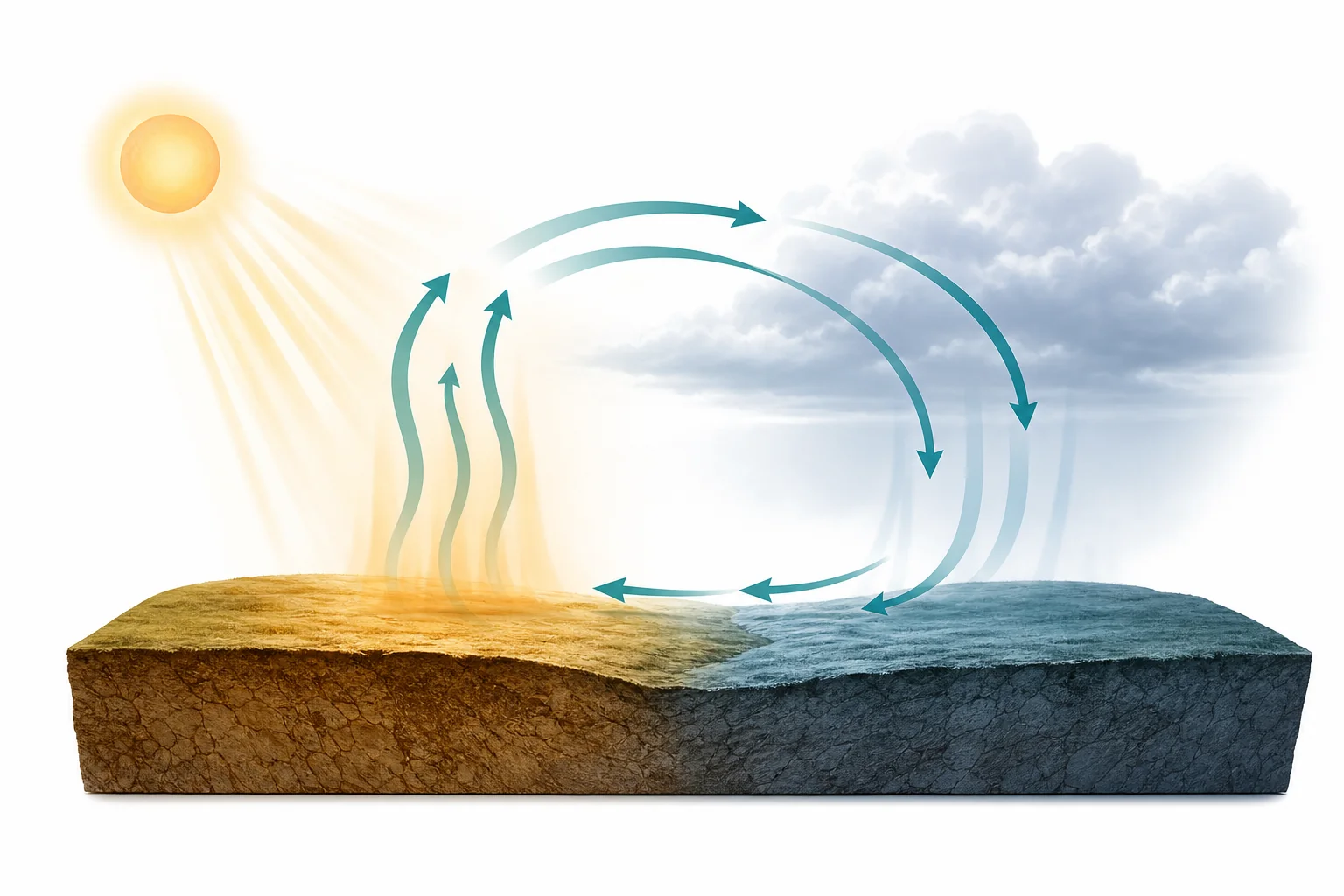
Air piles up in some places and is thinner in others. Wind happens when air moves from crowded places toward less crowded places. Uneven heating by the Sun helps make those differences.
Wind is moving air. It can push leaves across a sidewalk, turn a windmill, or cool your face at the beach. The air around Earth may look empty, but it has weight and takes up space. When the Sun heats Earth, some places warm faster than others. Warm air spreads out and rises. Cooler air can sink and take its place. This creates areas where air is more crowded and areas where air is less crowded. Air moves from crowded areas toward less crowded areas, and that moving air is wind. The same idea works in many places. It can happen between a beach and the ocean, across a playground, or around a storm. Learning about wind helps students model how the atmosphere, land, and water interact. That is part of understanding Earth as a connected system.
Air has weight
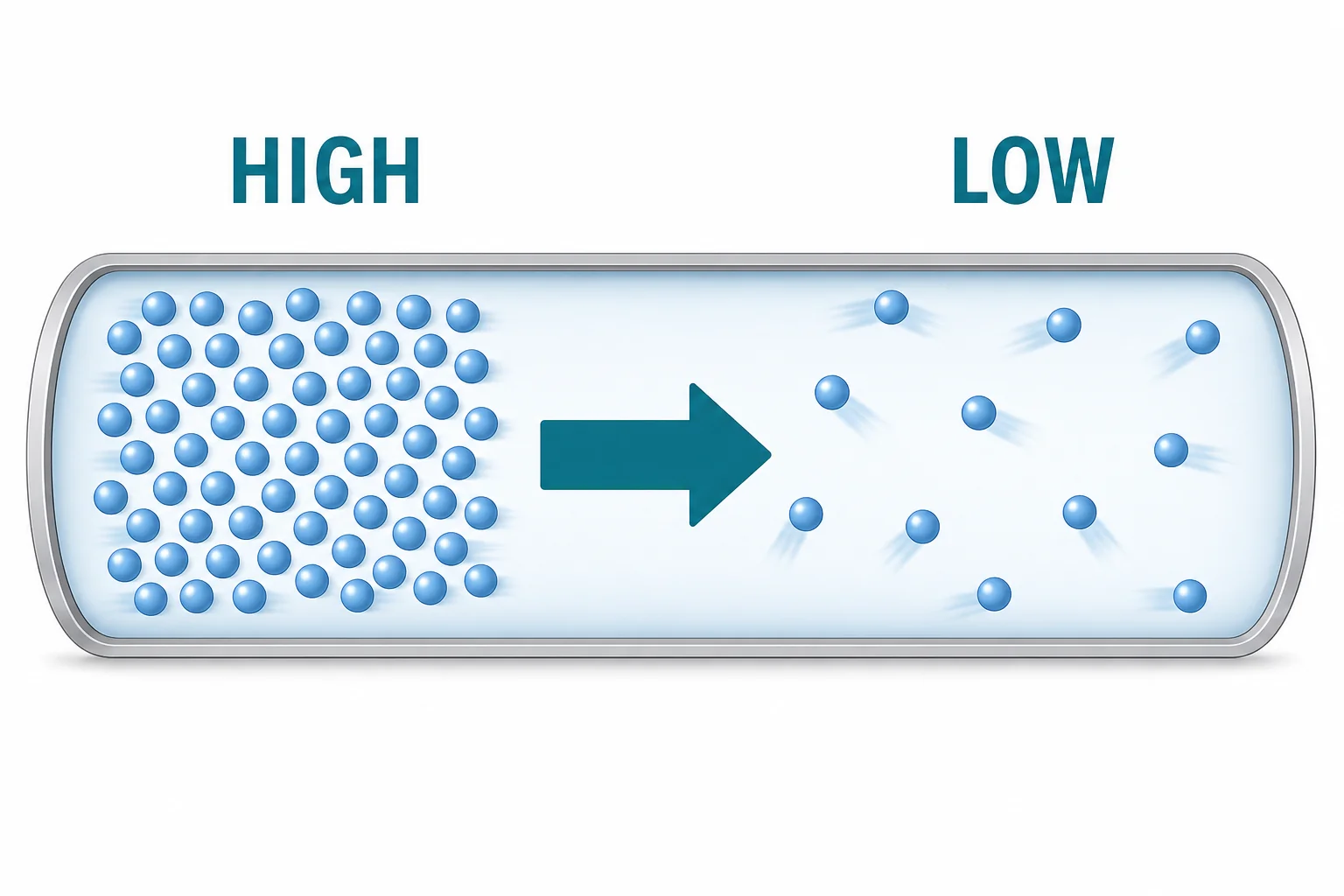
Air moves from higher pressure toward lower pressure.
Sunlight heats unevenly
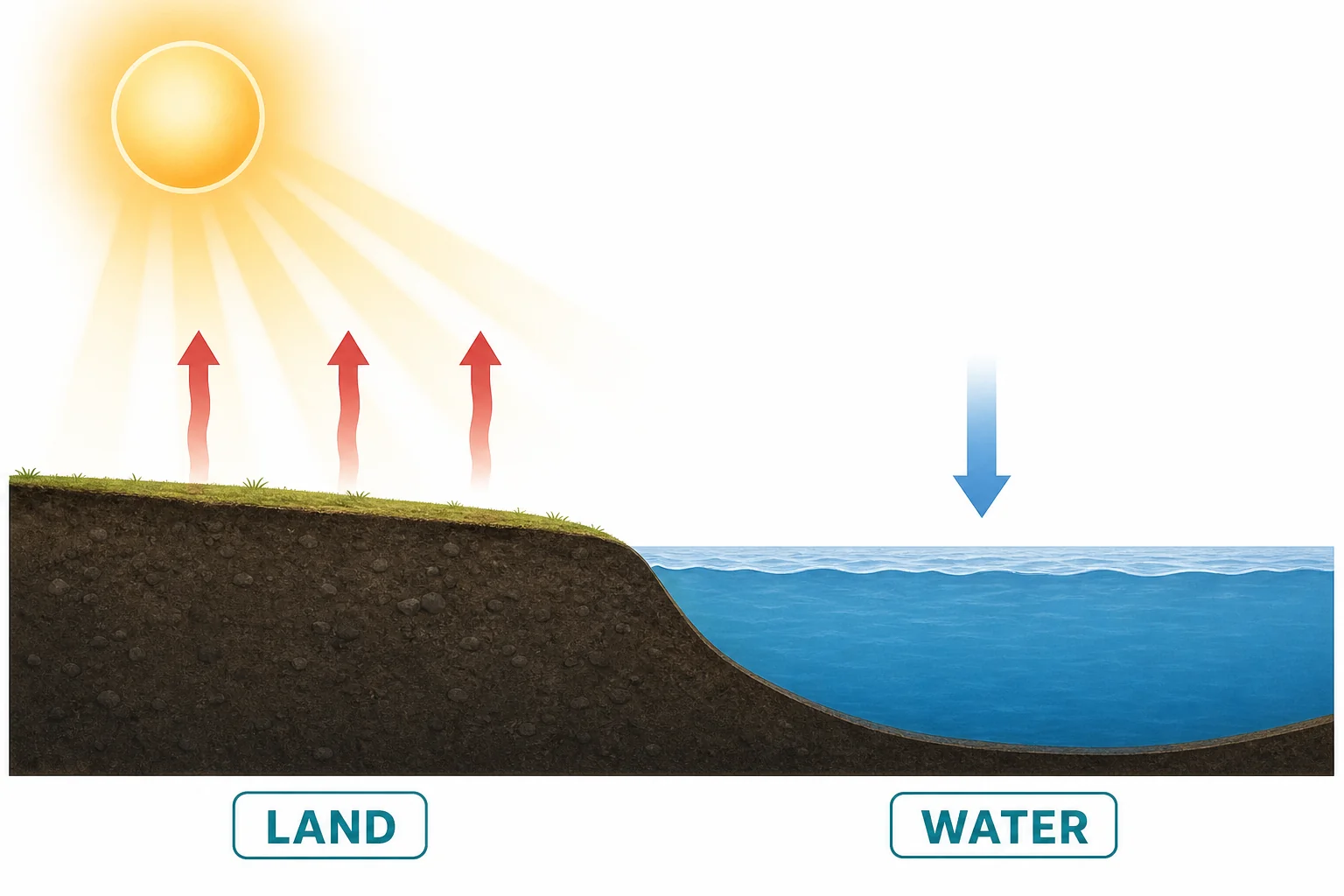
Different surfaces heat at different speeds.
Warm air rises
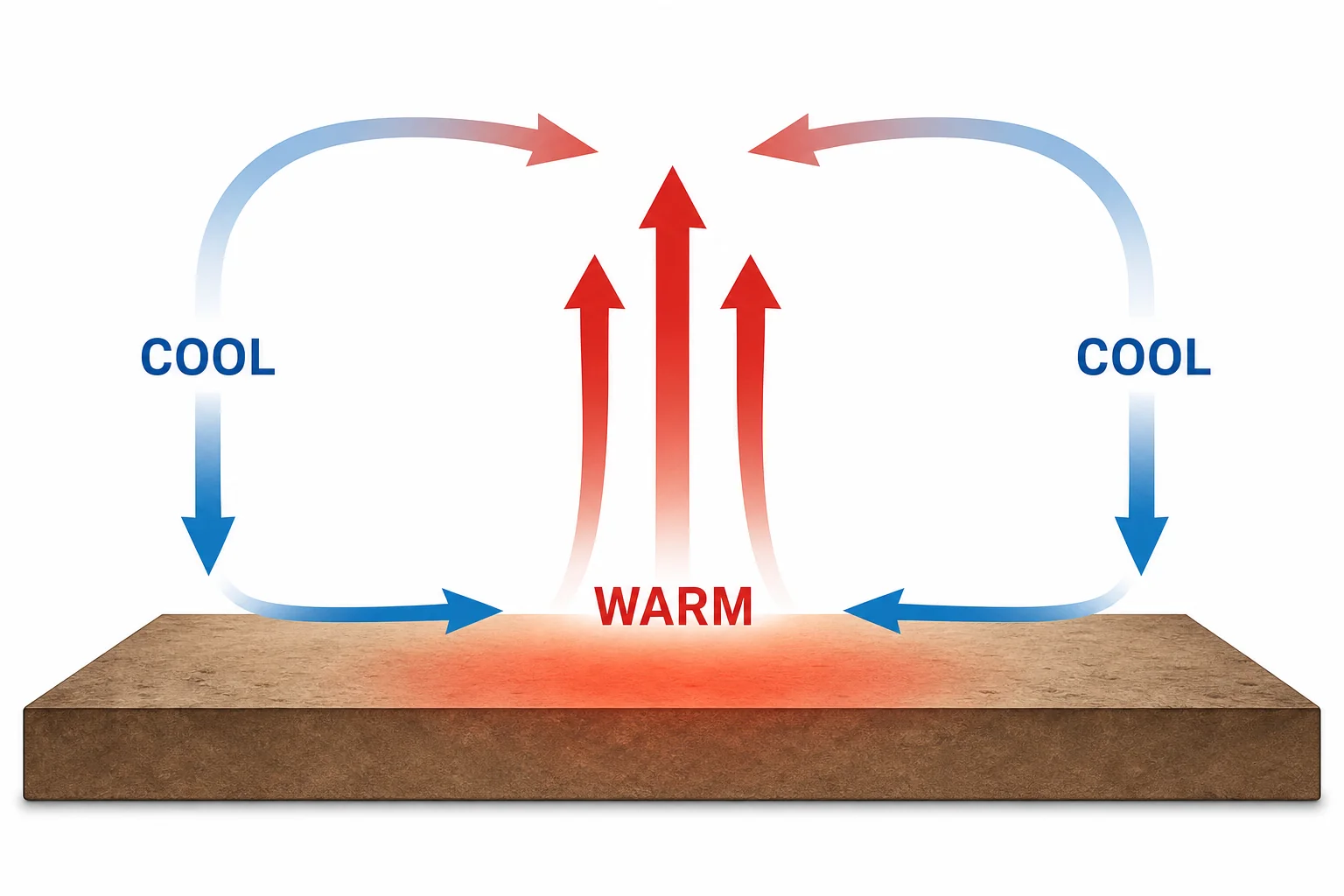
Warm air rising can pull cooler air in near the ground.
Sea breeze by day
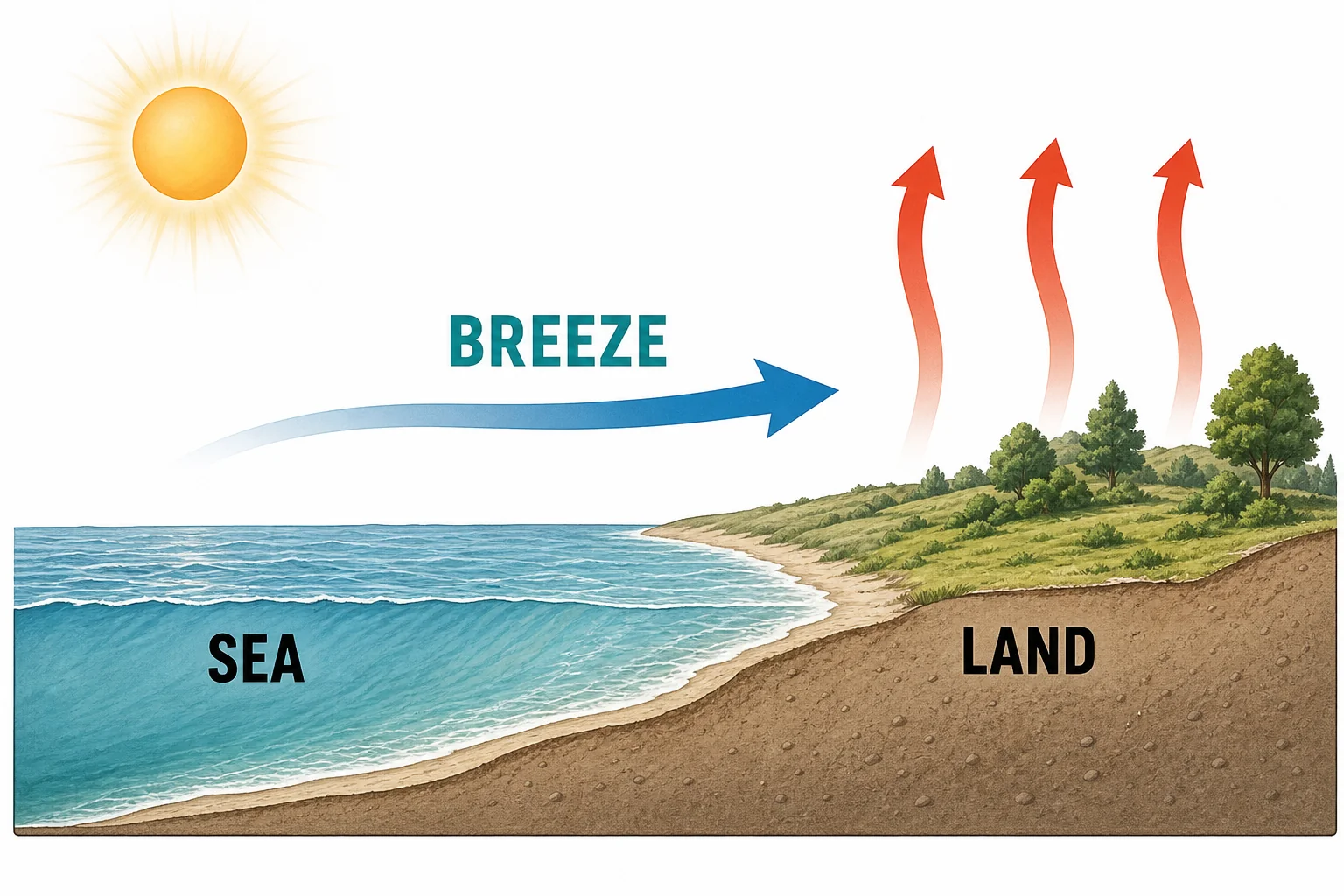
During the day, cool ocean air can blow toward warmer land.
Land breeze at night
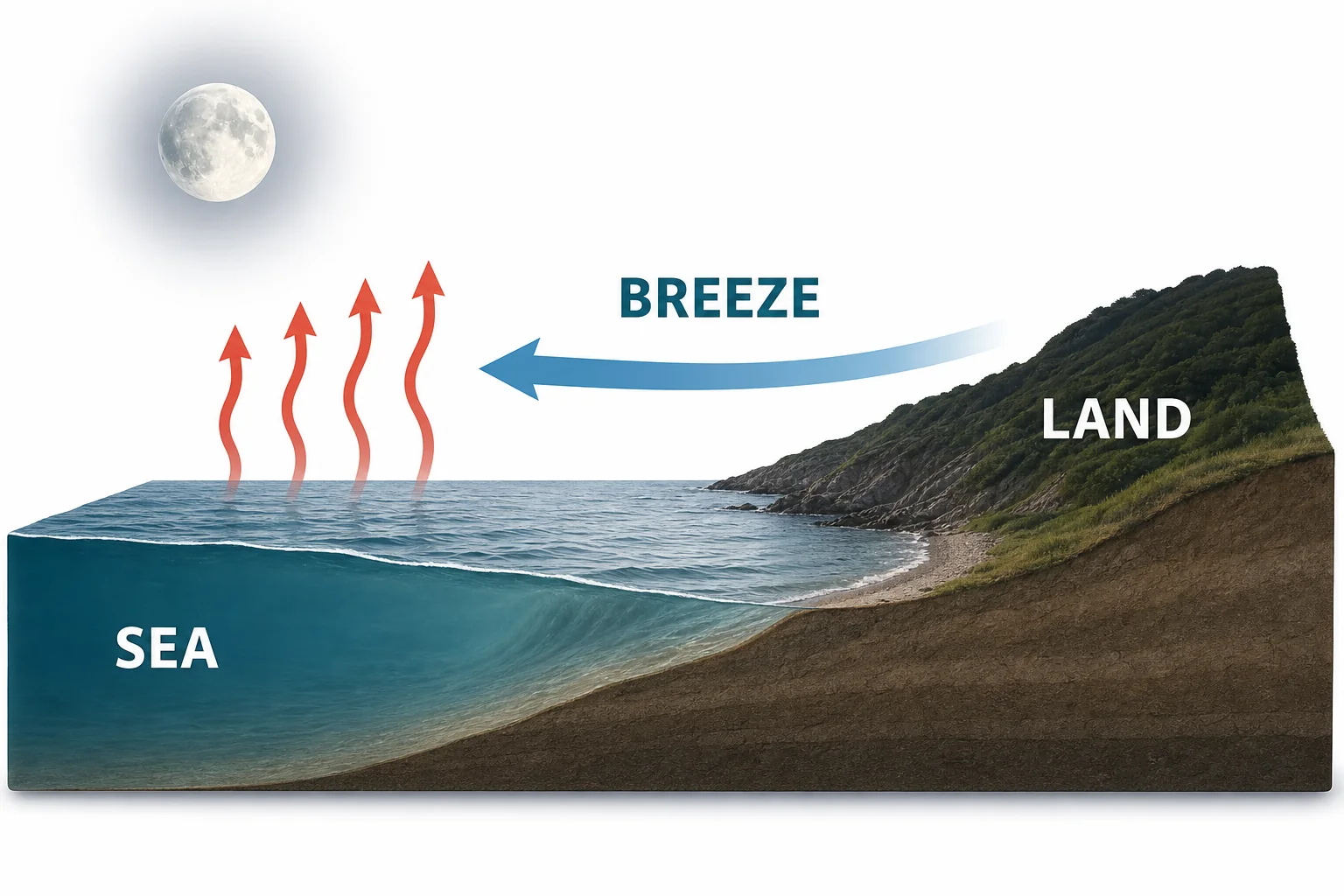
At night, cooler land air can blow toward warmer water.
Vocabulary
- Wind
- Air that is moving from one place to another.
- Air pressure
- The push made by the weight and motion of air particles.
- High pressure
- An area where air is more crowded or pushing more strongly than nearby air.
- Low pressure
- An area where air is less crowded or pushing less strongly than nearby air.
- Convection
- A pattern of motion where warmer fluid rises and cooler fluid sinks or moves in.
- Sea breeze
- A wind that blows from the ocean toward land, often during the day.
In the Classroom
Map the classroom breeze
20 minutes | Grades 3-5
Students use small strips of tissue paper to test air movement near a door, window, vent, or fan. They draw arrows on a simple room map to show wind direction and discuss what might be causing the motion.
Land and water heating model
30 minutes | Grades 4-5
Place equal cups of dry sand and water under a lamp for several minutes, then compare their temperatures. Students record which material warms faster and connect the result to sea breezes.
Build a breeze diagram
25 minutes | Grades 3-5
Students draw two coast diagrams, one for day and one for night. They add arrows for rising warm air, sinking cool air, and surface wind, then explain the difference in one paragraph.
Key Takeaways
- • Wind is moving air.
- • Air tends to move from higher pressure toward lower pressure.
- • Uneven heating by the Sun helps create pressure differences.
- • Warm air can rise, and cooler air can move in to replace it.
- • Sea breezes and land breezes show how land and water affect local wind.