How Does a Forest Clean the Air?
Trees take in gases, store carbon, and trap dust
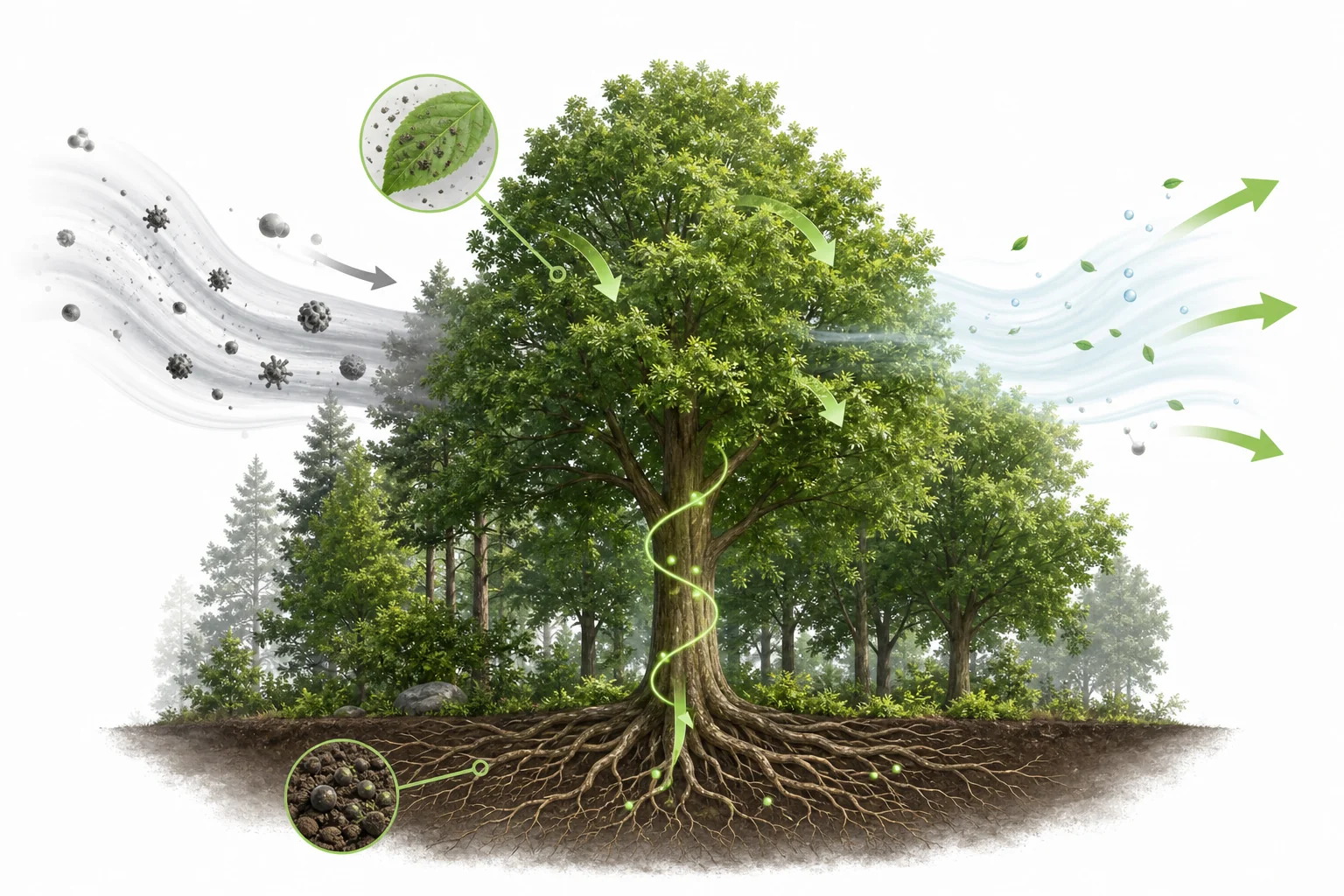
A forest cleans air in more than one way. Leaves take in carbon dioxide and use sunlight to help trees grow. Leaf surfaces also catch dust and smoke bits, and tree wood stores carbon that would otherwise be in the air.
A forest is not a giant vacuum cleaner, but it does change the air around it. Each tree has thousands of leaves. Those leaves are tiny living factories. In sunlight, they take in carbon dioxide from the air and water from the ground. The tree uses these materials to make sugar, grow new cells, and build wood. Some oxygen goes back into the air. Forests also help with air in a second way. Leaves, bark, and needles have surfaces that catch dust, ash, pollen, and tiny pollution bits. Rain can wash some of those particles down to the soil. This does not make pollution disappear, but it can lower what is floating near the trees. When a forest is cut down, the air loses both jobs. Fewer leaves clean the air, and stored carbon can return to the atmosphere as wood decays or burns.
Leaves take in carbon dioxide
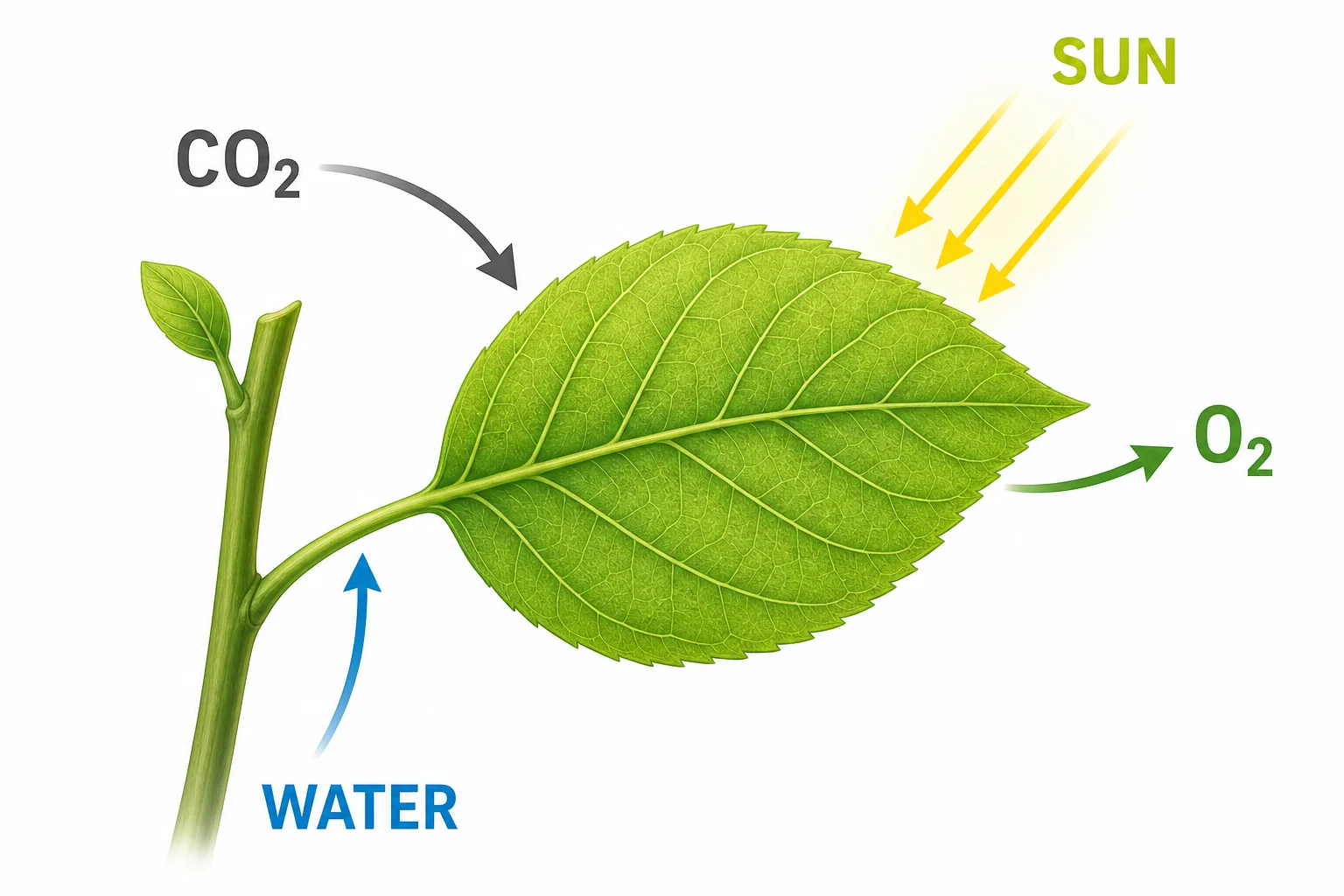
Photosynthesis moves carbon from the air into plant matter.
Wood stores carbon
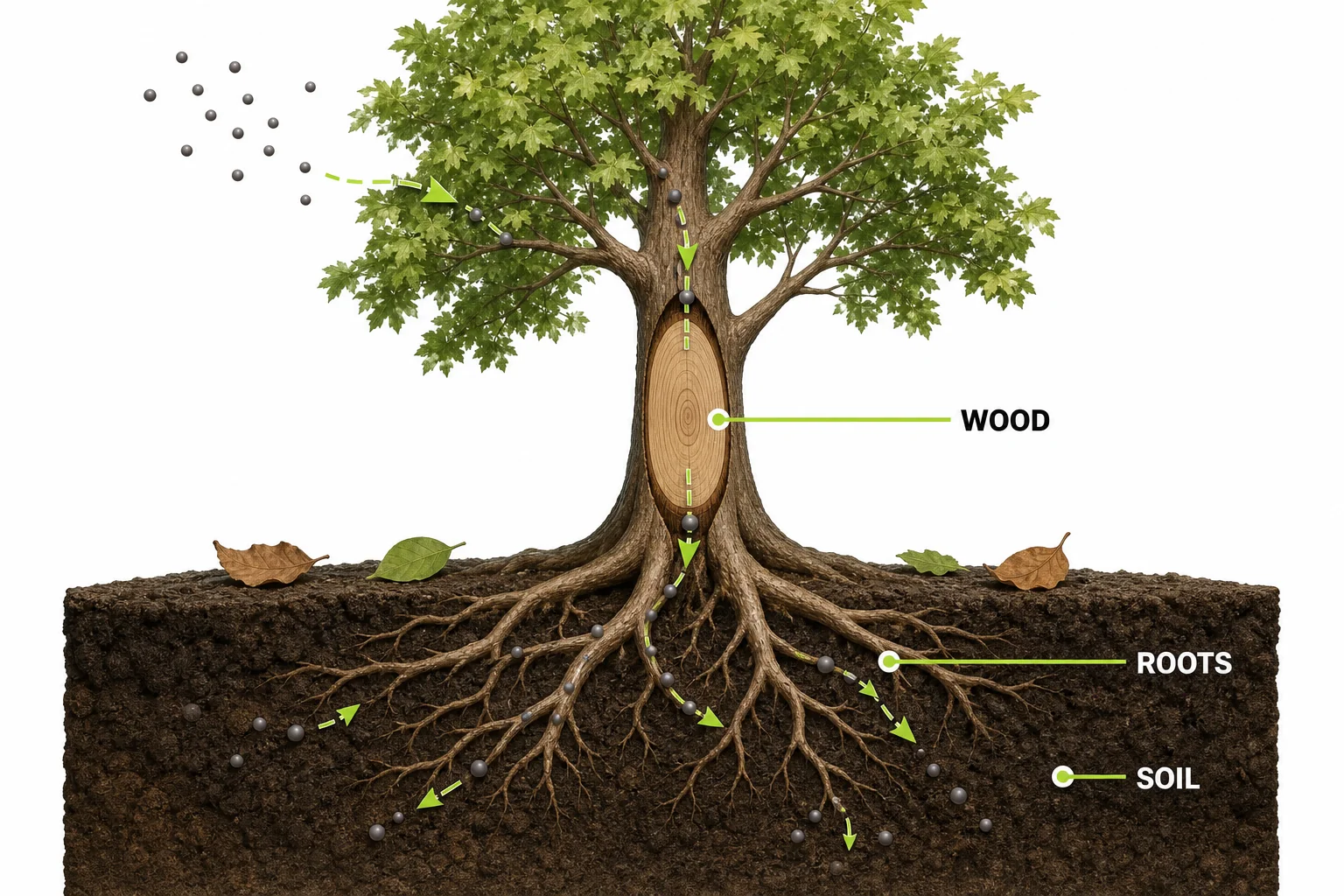
Wood and soil keep some carbon out of the air for years.
Leaf surfaces catch particles
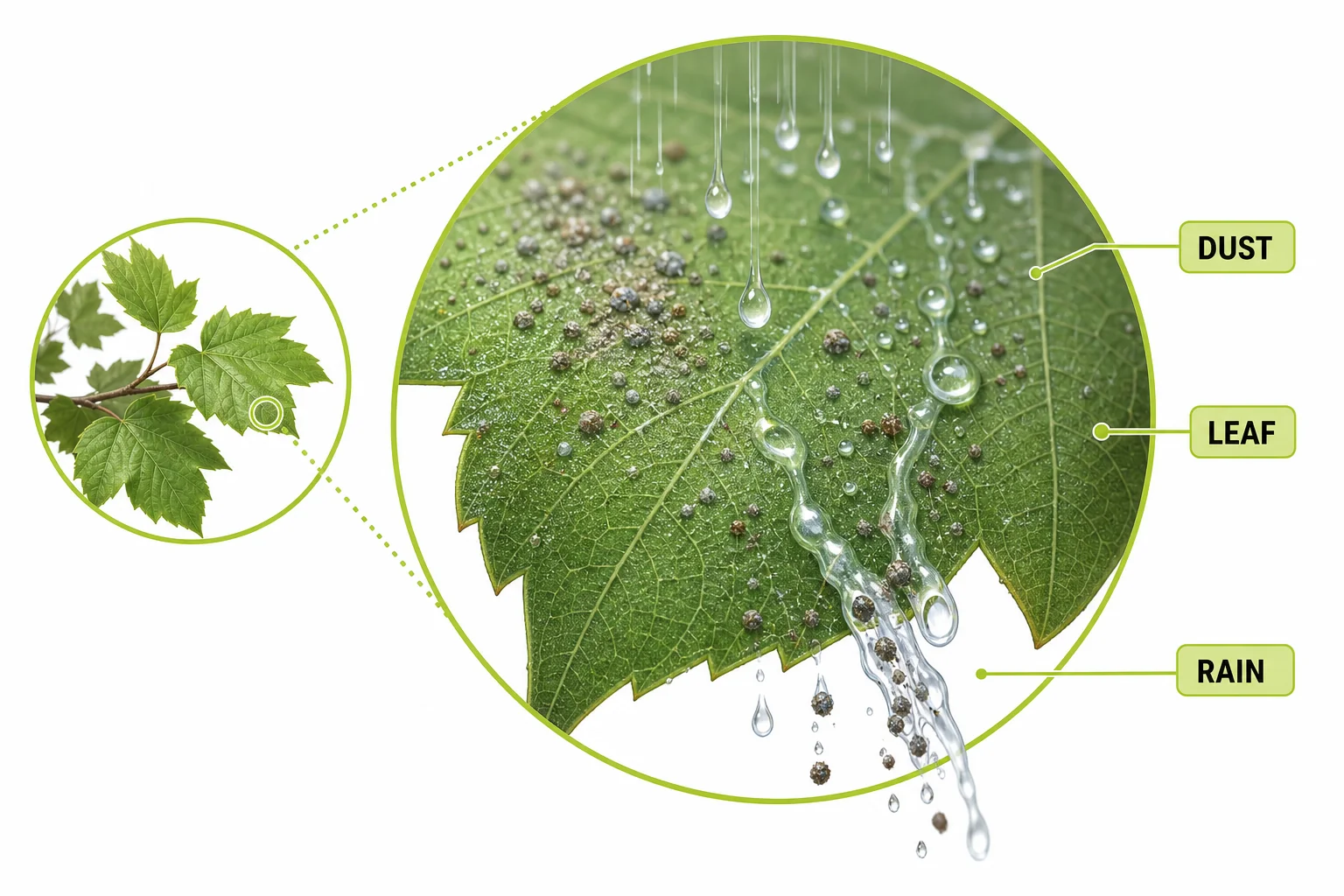
Leaves can lower some particle pollution near the trees.
Forests are part of a cycle
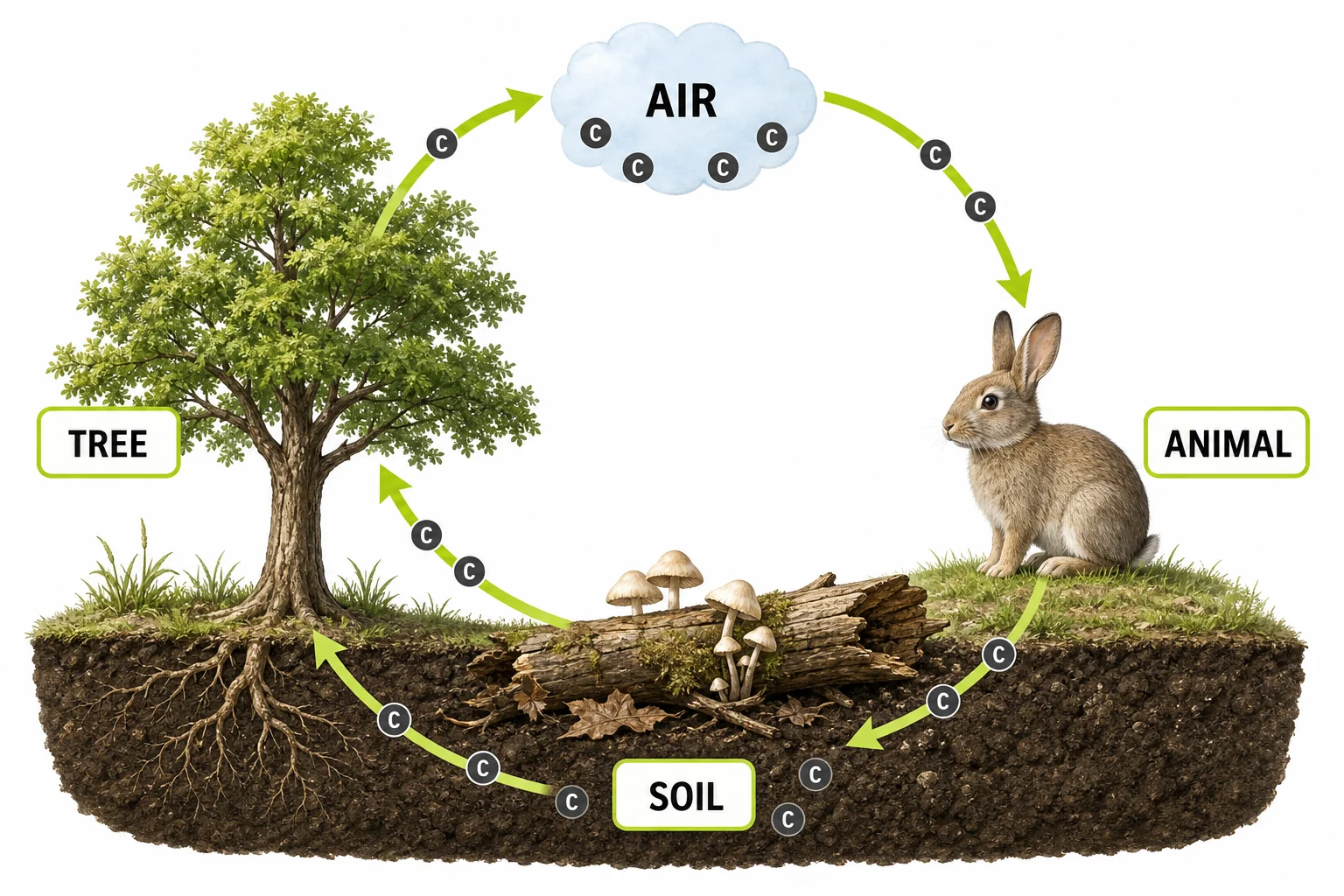
A forest stores carbon, but carbon still moves through the ecosystem.
Deforestation is a double hit
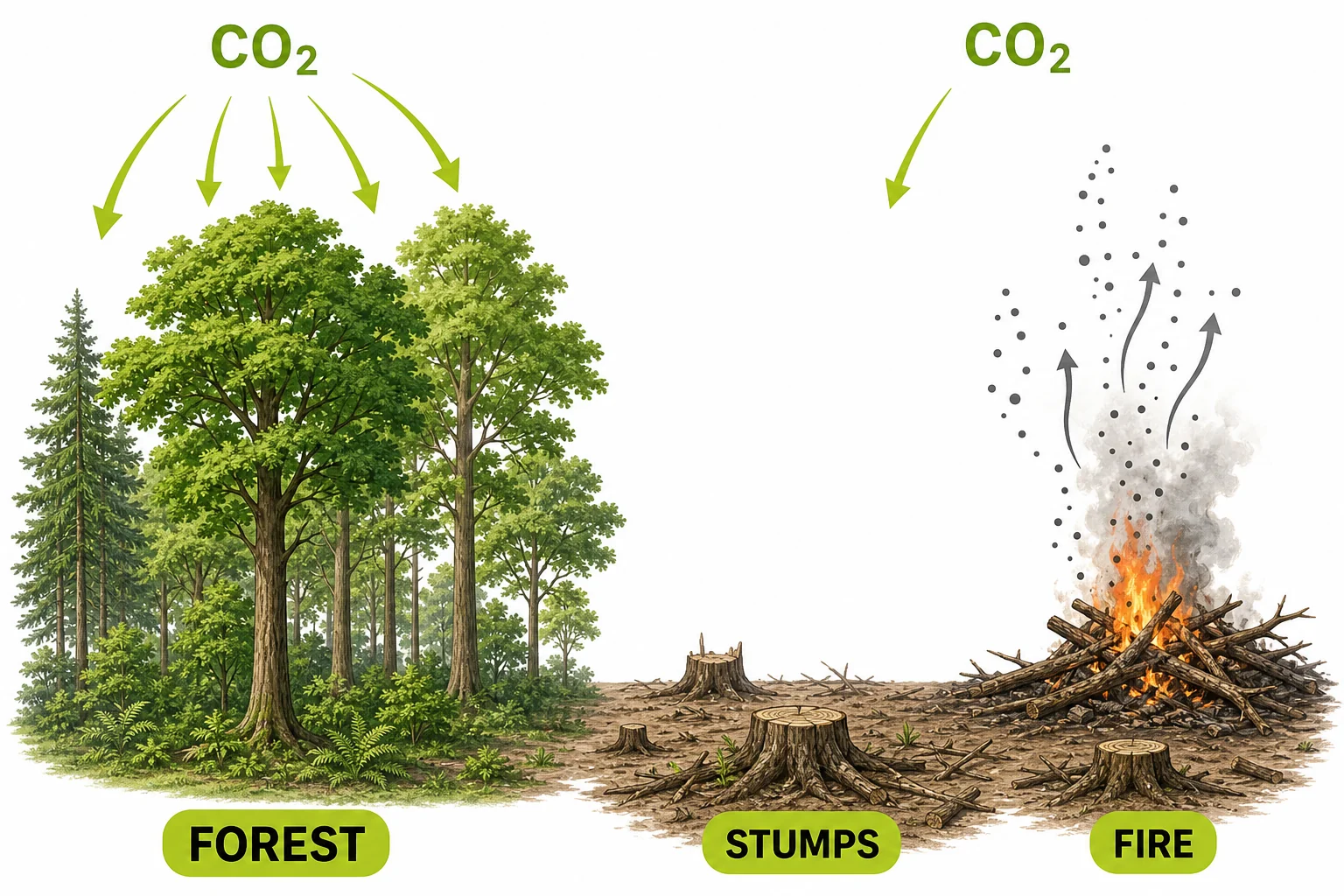
Deforestation removes future carbon uptake and can release past carbon storage.
Vocabulary
- photosynthesis
- The process plants use to make sugar from carbon dioxide, water, and sunlight.
- carbon dioxide
- A gas in the air that plants use for photosynthesis and that also traps heat in the atmosphere.
- carbon storage
- The holding of carbon in places such as tree trunks, roots, leaves, and soil.
- particles
- Tiny bits of matter in the air, such as dust, ash, smoke, or pollen.
- decomposers
- Living things such as fungi and bacteria that break down dead plants and animals.
- deforestation
- The clearing or removal of forests from an area.
In the Classroom
Leaf filter observation
20 minutes | Grades 3-5
Give students clear tape and leaves from different plants. Students press tape gently on leaf surfaces, place it on white paper, and compare the dust or particles they see with hand lenses.
Carbon in a paper tree
30 minutes | Grades 4-5
Students build a paper tree with leaves, branches, trunk, roots, air, and soil. They move paper carbon dots through the model to show photosynthesis, eating, decay, and storage.
Deforestation cause and effect chart
25 minutes | Grades 4-5
Students make a two-column chart showing what happens when a forest stays and what happens when it is cut down. They should include leaves, wood, soil, particles, and carbon dioxide.
Key Takeaways
- • Forests clean air by taking in carbon dioxide during photosynthesis.
- • Some carbon from the air becomes part of tree wood, roots, leaves, and soil.
- • Leaf and bark surfaces can catch tiny particles from dust, smoke, and other pollution.
- • Carbon keeps cycling through air, plants, animals, decomposers, and soil.
- • Deforestation is a double hit because it removes living leaves and can release stored carbon.