Sign in to save

Bookmark this page so you can find it later.

Sign in to save

Bookmark this page so you can find it later.

Environmental Science elementary May 24, 2026

How Does Recycling One Bottle Actually Help?

Small choices add up through matter and energy
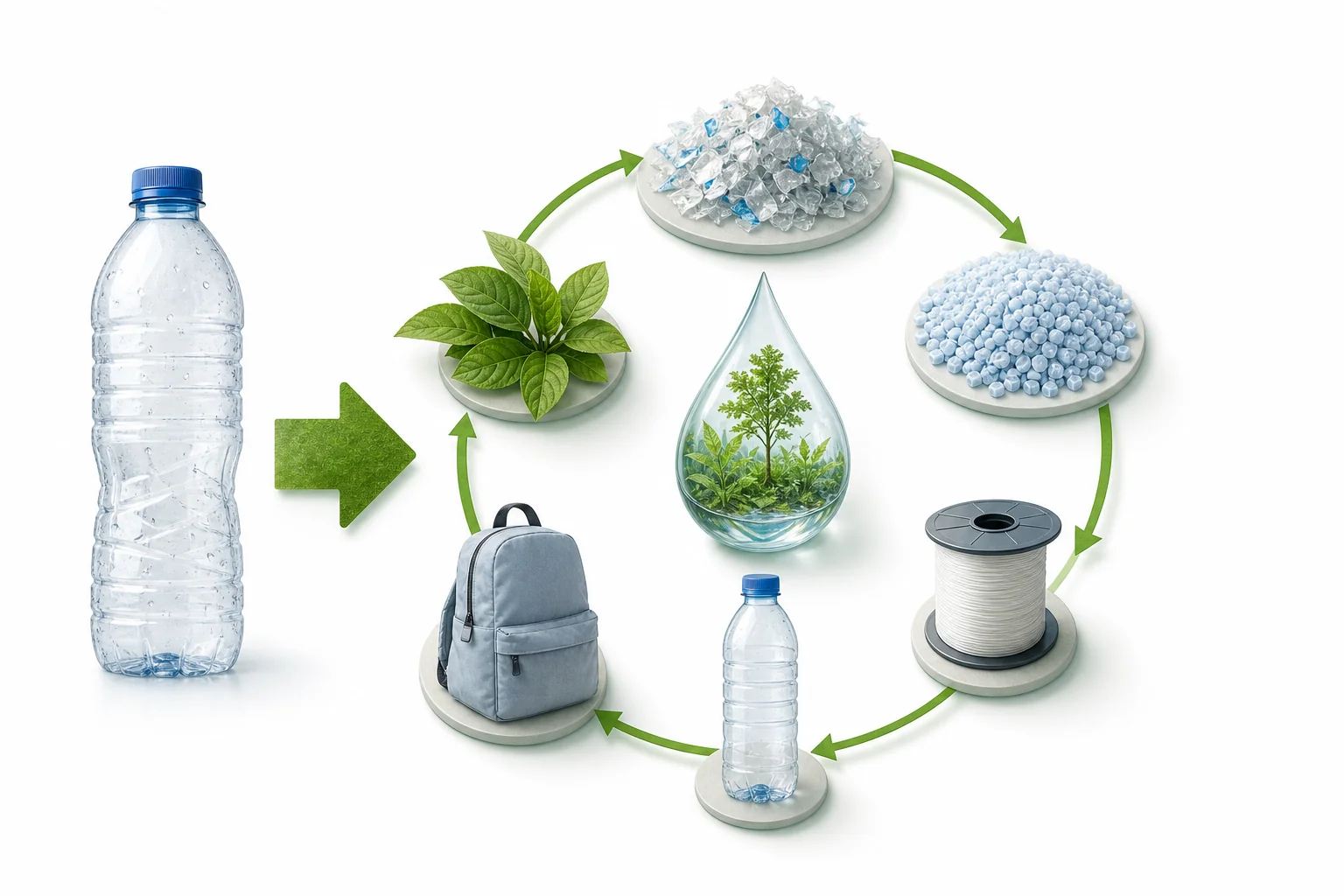
A plastic bottle moving from a recycling bin to a sorting center and then into new plastic pellets

Recycling one bottle can save some energy and keep some plastic out of landfills or nature. The help is small for one bottle, but it grows when many people recycle many bottles. A bottle only helps this way if it is collected, sorted, cleaned, and made into something new.

Big Idea. NGSS 5-ESS3-1 asks students to explain how communities use science ideas to protect Earth resources and environments.

One empty plastic bottle feels light. It may not seem like it can matter much. But that bottle is made from material that came from Earth. It took energy to make, fill, ship, chill, buy, and use. Recycling is one way to keep some of that material in use instead of throwing it away after one drink. The big idea is not that one bottle fixes a pollution problem. It is that one bottle is part of a system. When a community recycles thousands or millions of bottles, the saved material and energy can become large. This is called life-cycle thinking. It means looking at a product from the start of its materials to what happens after we use it. It also means noticing an important difference. A bottle can be recyclable, but it is not truly recycled unless it enters the recycling system and becomes new material.

One bottle starts as a resource
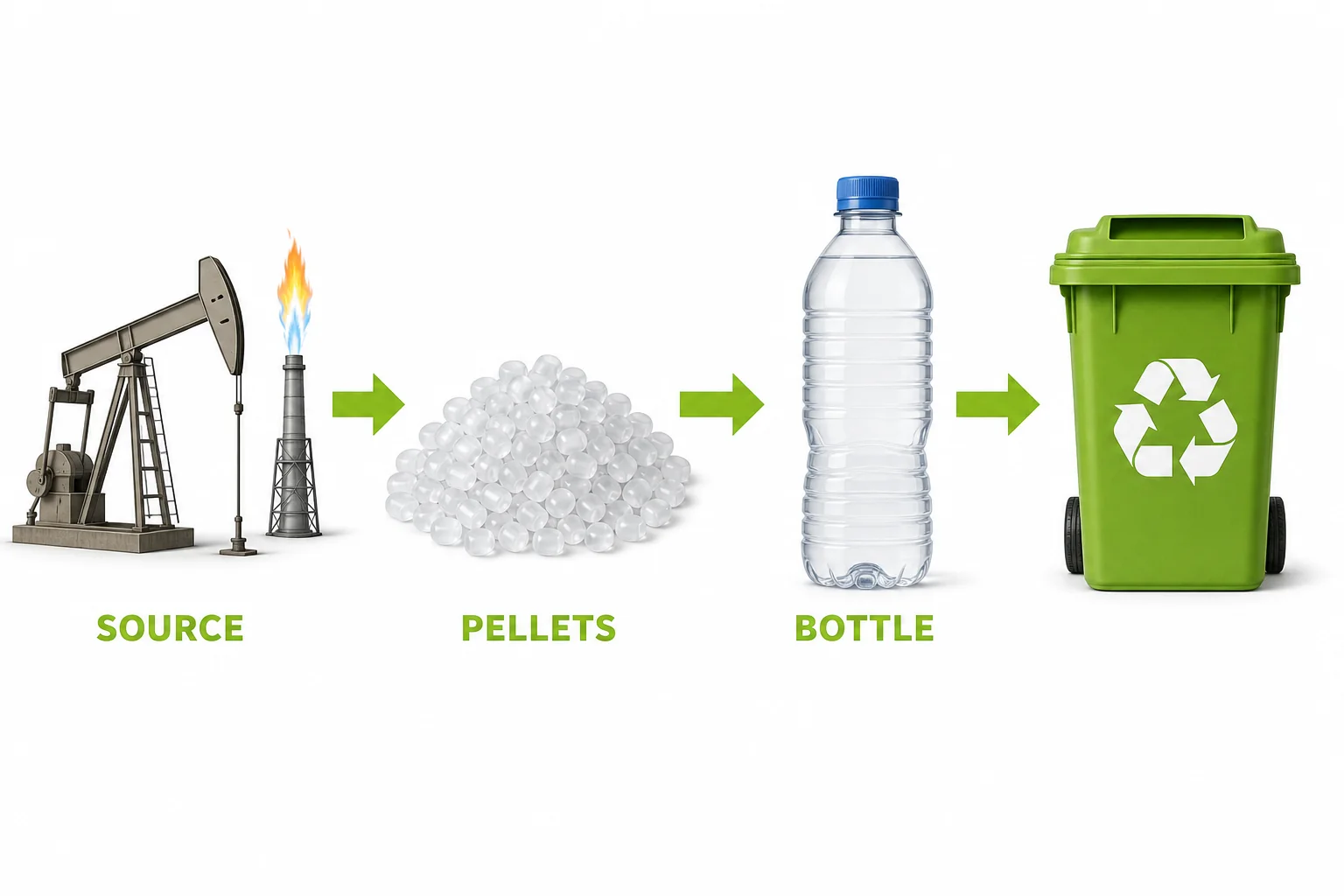
A simple life-cycle diagram showing oil or gas materials becoming plastic pellets, then a bottle, then a recycling bin
A bottle carries a material story
Most single-use drink bottles are made from PET plastic. PET starts with materials that come from oil or natural gas. Those materials are changed in factories into plastic resin, shaped into bottle blanks, stretched into bottles, filled, and shipped to stores. Each step uses energy. Each step can also create waste or pollution. When you recycle a bottle, you do not erase all of those steps. The bottle has already been made and used. But recycling can keep some of its plastic in use. That means a factory may need less new plastic for the next product. For a single bottle, the amount is small. For a town, school, or city, many small amounts can combine into a large pile of material. That is why recycling is often measured by weight, truckloads, or tons instead of by one item.

Recycling helps by keeping material useful for longer.

Recyclable is not the same as recycled
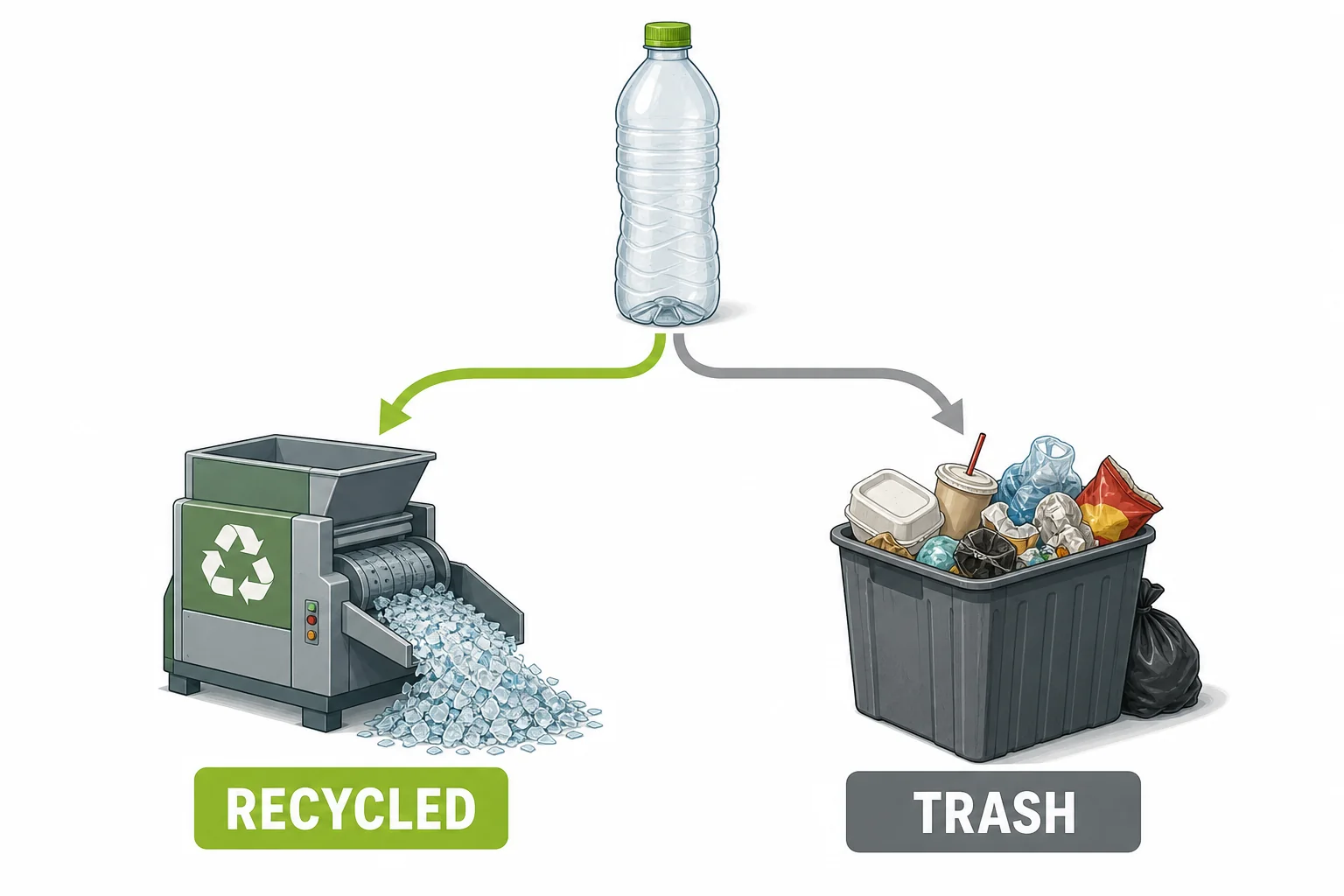
Two paths for a plastic bottle, one showing a successful recycling route and one showing a rejected route
A label is not the whole journey
A package may say it is recyclable. That means it is made from a material that could be recycled in the right place. It does not mean the item will be recycled every time. The bottle must go into the correct bin. It must be collected by a recycling program. It must be sorted from trash and from other materials. It must be clean enough for the recycler to use. Then it must be sold to a factory that can make it into new plastic. If any step fails, the bottle may be landfilled, burned, or littered. This is why local rules matter. Some places accept certain bottles and not others. Caps, labels, food, and liquids can also affect sorting. Recycling works best when people follow local directions and put only accepted items in the bin.

Recyclable means possible, while recycled means it actually happened.

Energy is part of the savings
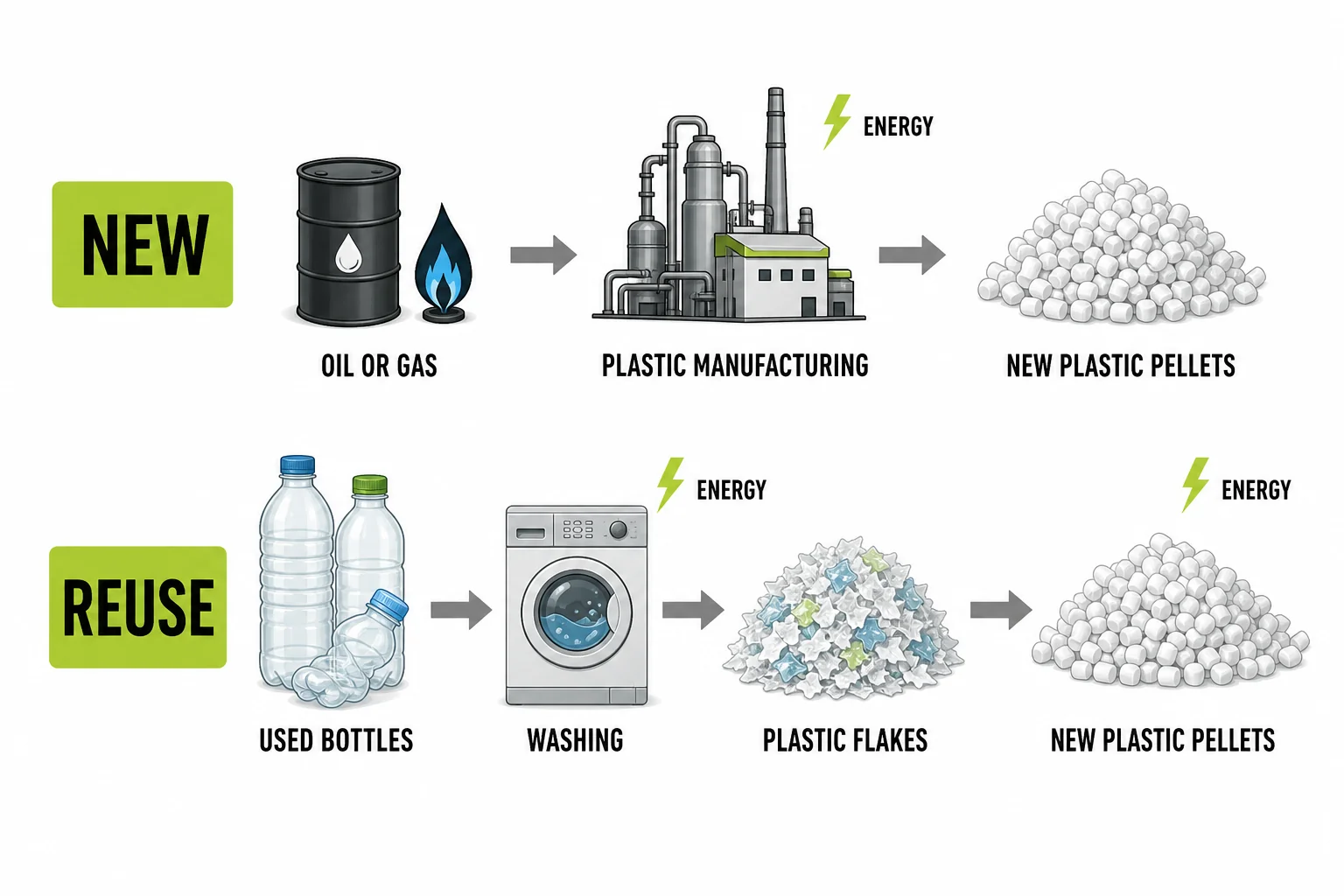
A comparison of two plastic production paths, one using new raw material and one using recycled bottle flakes
Energy use depends on the path
Making plastic from new raw materials takes energy. Machines heat, press, move, and shape the material. Recycling also takes energy because bottles must be collected, sorted, washed, shredded, melted, and formed again. The savings come from using plastic that already exists instead of starting from brand-new raw material. Scientists and engineers compare these choices with life-cycle studies. They look at energy use, pollution, water use, transportation, and what happens to waste. Recycling is usually not magic. It still uses trucks and factories. But for many materials, including PET bottles, using recycled material can reduce the need for new raw material and can lower some environmental impacts. The exact amount depends on the local recycling system, the distance traveled, and what the recycled plastic becomes next.

Recycling can save energy because the material has already been made once.

Many bottles make a bigger change
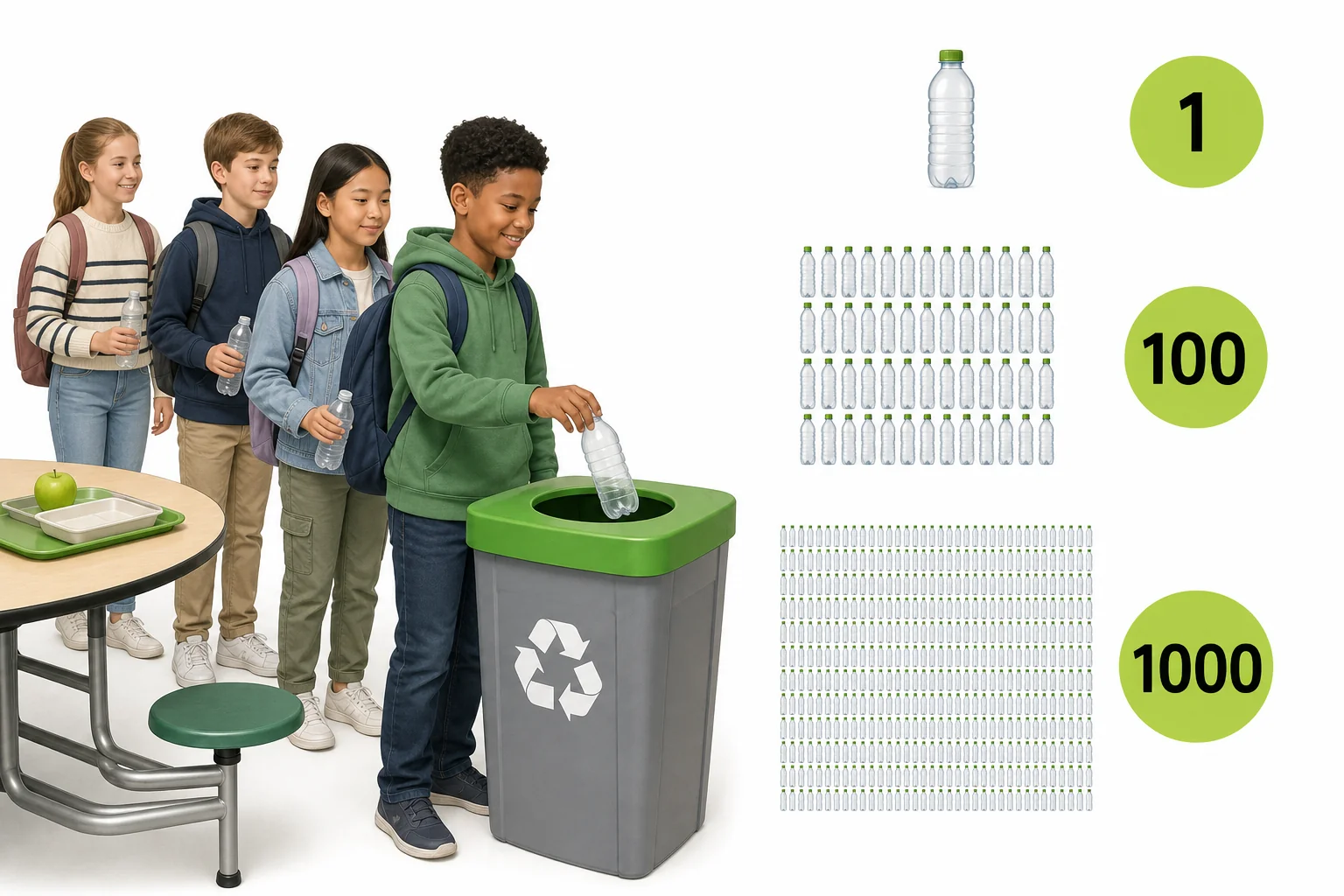
Rows of students adding plastic bottles to a school recycling bin and a simple count growing from one bottle to many
Small counts can become large totals
One recycled bottle saves only a little material. That does not make it pointless. Many environmental actions work by adding small pieces together. If every student in a school recycles one bottle after lunch, the total can fill bags or bins. If that happens every week, the amount becomes much larger. This is called aggregate impact. It means the total effect made by many actions. Students can model this with multiplication. If 300 students recycle one bottle each week, that is 300 bottles per week. Over 10 weeks, that is 3,000 bottles. The exact weight depends on the bottle size and design, but the pattern is clear. One action is small. A shared routine can change how much plastic leaves the school as trash.

The biggest effect comes when many people repeat the action correctly.

Recycling is one tool, not the only tool
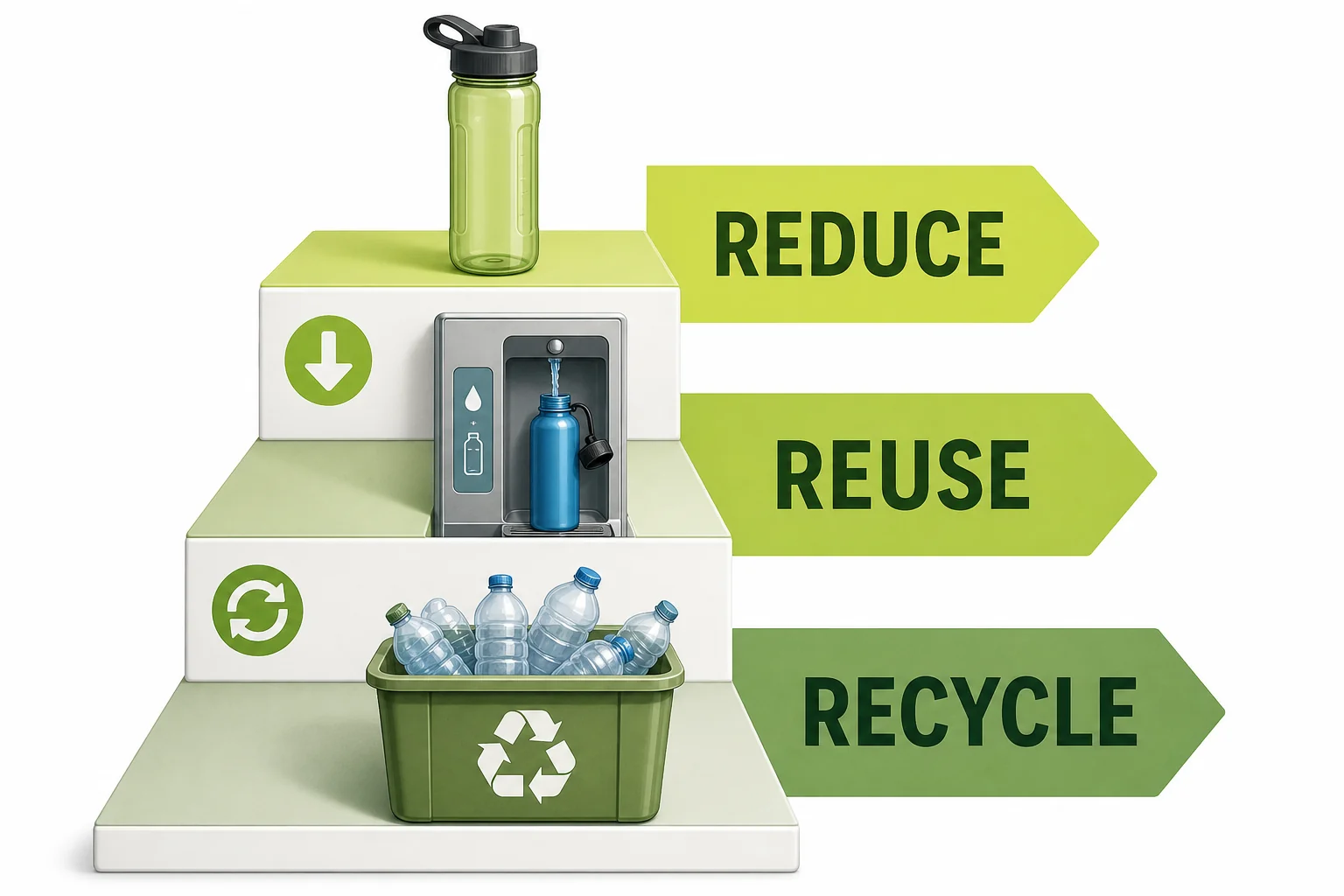
A decision ladder showing reduce, reuse, and recycle as waste choices for drink containers
Recycling fits into a larger plan
Recycling helps, but it is not the first step in reducing waste. It is usually better to use less material when we can. A reusable bottle can replace many single-use bottles if it is used again and again. Refilling from a safe water source can also reduce packaging. When single-use bottles are used, recycling is better than littering or throwing usable material away. Life-cycle thinking helps compare choices fairly. It asks what materials are used, how far things travel, how often an item is reused, and what happens at the end. For students, the lesson is practical. Reduce when you can. Reuse when it makes sense. Recycle accepted items the right way. One recycled bottle is a small part of a bigger plan to care for Earth systems.

The best waste choice is often the one that prevents extra waste first.

Vocabulary

Recyclable
Able to be recycled in the right system, but not guaranteed to become new material.
Recycled
Collected, sorted, processed, and made into a new material or product.
PET plastic
A common plastic used for many clear drink bottles.
Life cycle
All the steps in a product's life, from raw materials to use and disposal.
Aggregate impact
The total effect that happens when many small actions are added together.

In the Classroom

Bottle Count Model

20 minutes | Grades 3-5

Students count how many bottles one class might recycle in a week. They multiply that number by the number of classes in a school and then by several weeks.

Recyclable or Recycled Sort

30 minutes | Grades 4-5

Students sort clean sample packages into groups based on local recycling rules. Then they explain why a recyclable item may still fail to become recycled material.

Life-Cycle Chain

35 minutes | Grades 4-5

Students arrange cards that show raw materials, factories, stores, use, recycling, landfill, and new products. They compare a single-use path with a reuse or recycling path.

Key Takeaways

  • One recycled bottle saves a small amount of material and energy.
  • The impact grows when many people recycle many bottles correctly.
  • Recyclable means an item can be recycled, while recycled means it actually became new material.
  • Recycling still uses energy, but it can reduce the need for new plastic.
  • Reducing and reusing usually prevent more waste than recycling alone.