Practice identifying common sources of water pollution and choosing actions that help keep rivers, lakes, oceans, and groundwater clean.
Read each problem carefully. Use complete sentences when explaining your thinking.
Identifying pollution sources and ways to protect clean water
Environmental Science - Grade 4-5
- 1
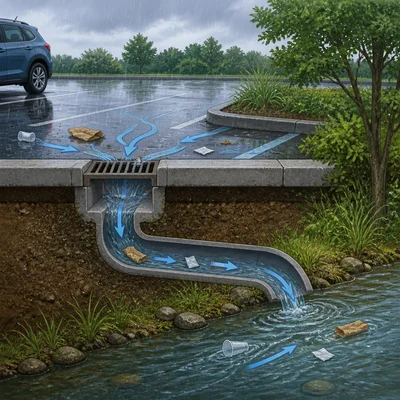
A storm washes litter from a parking lot into a storm drain that leads to a nearby creek. Explain how the litter can become water pollution.
- 2
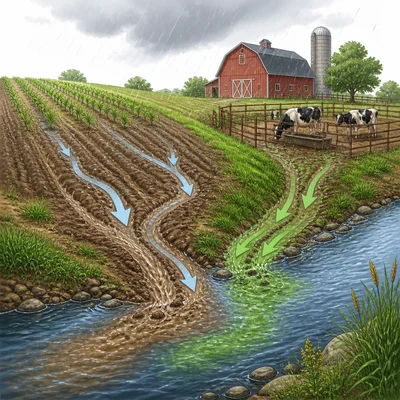
Name two possible sources of water pollution from a farm.
- 3
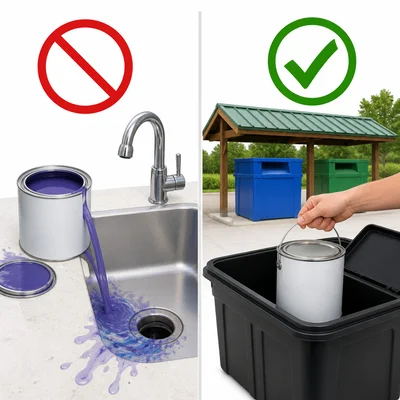
A family pours old paint down a sink drain. Describe why this is harmful and what they should do instead.
- 4
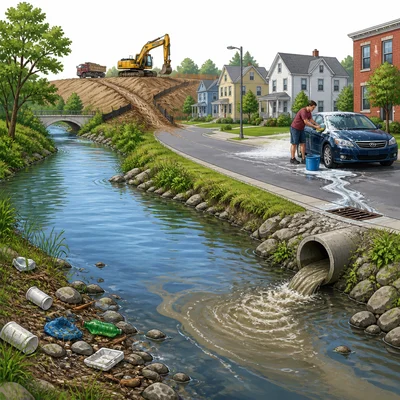
Look at the scene of a river near a town. List three things in the scene that could pollute the river.
- 5
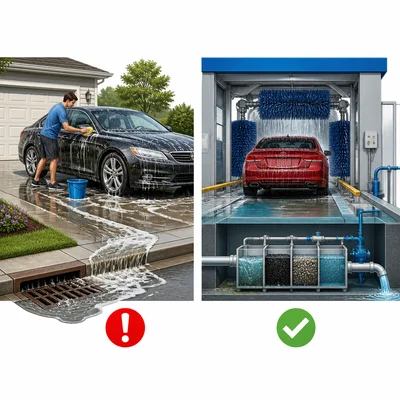
Choose the better action: washing a car in a driveway or washing a car at a car wash that treats its wastewater. Explain your choice.
- 6
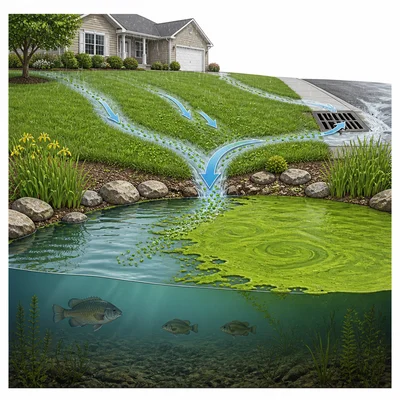
A pond has too much algae after heavy rain washes lawn fertilizer into it. Explain how fertilizer can cause this problem.
- 7
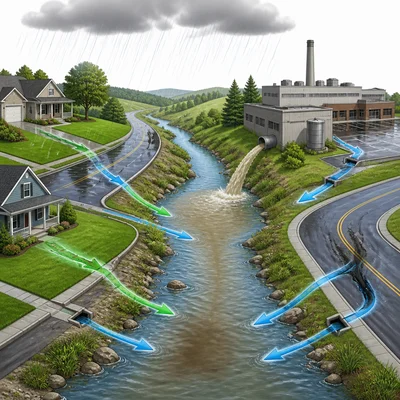
Sort each item as a point source or nonpoint source of pollution: a pipe releasing dirty water from one factory, oil washing off many roads after rain, and fertilizer running off many lawns.
- 8
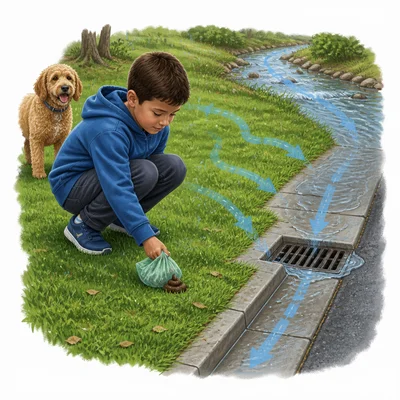
Explain why picking up pet waste helps protect water quality.
- 9
A student sees someone throwing a plastic bag near a stream. Write one polite sentence the student could say to encourage a better choice.
- 10
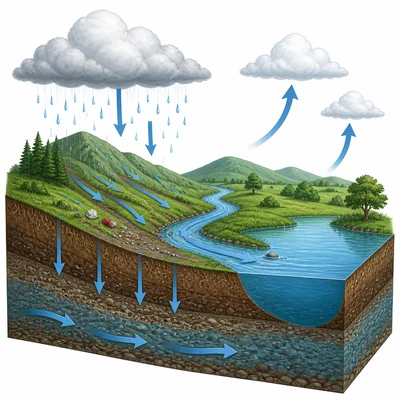
Study a simple diagram of the water cycle with clouds, rain, land, rivers, and groundwater. Explain one way pollution on land can reach water.
- 11
A school wants to reduce water pollution. Choose two actions the school could take and explain how each one helps.
- 12
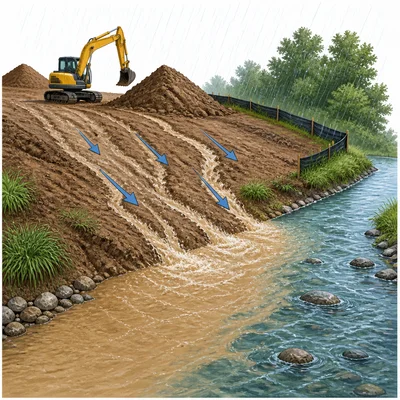
A construction site has bare soil near a stream. Explain why this can be a water pollution problem after a rainstorm.
- 13
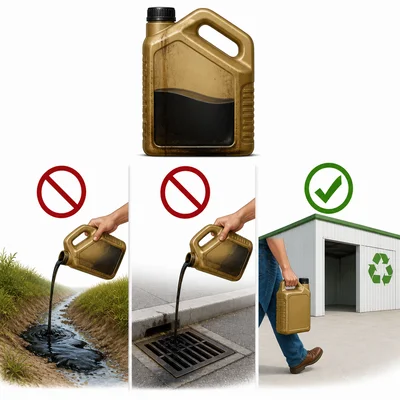
Which is the best way to dispose of used motor oil: pour it in a ditch, put it in a storm drain, or take it to a recycling center that accepts oil? Explain your answer.
- 14
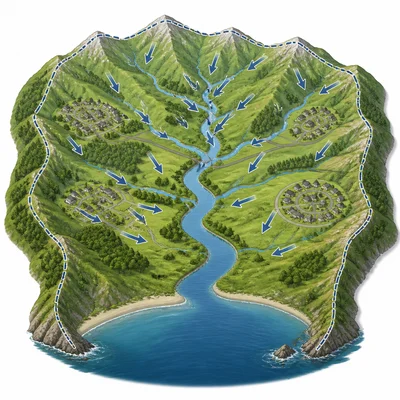
In a watershed, all water drains to the same river, lake, or ocean. Explain why people who live far from a river can still affect the river's water quality.
- 15
Write a short plan with three steps your family could follow to help prevent water pollution at home.