Sign in to save

Bookmark this page so you can find it later.

Sign in to save

Bookmark this page so you can find it later.

Physics elementary May 21, 2026

Why Do Echoes Happen?

Sound bouncing back to your ears
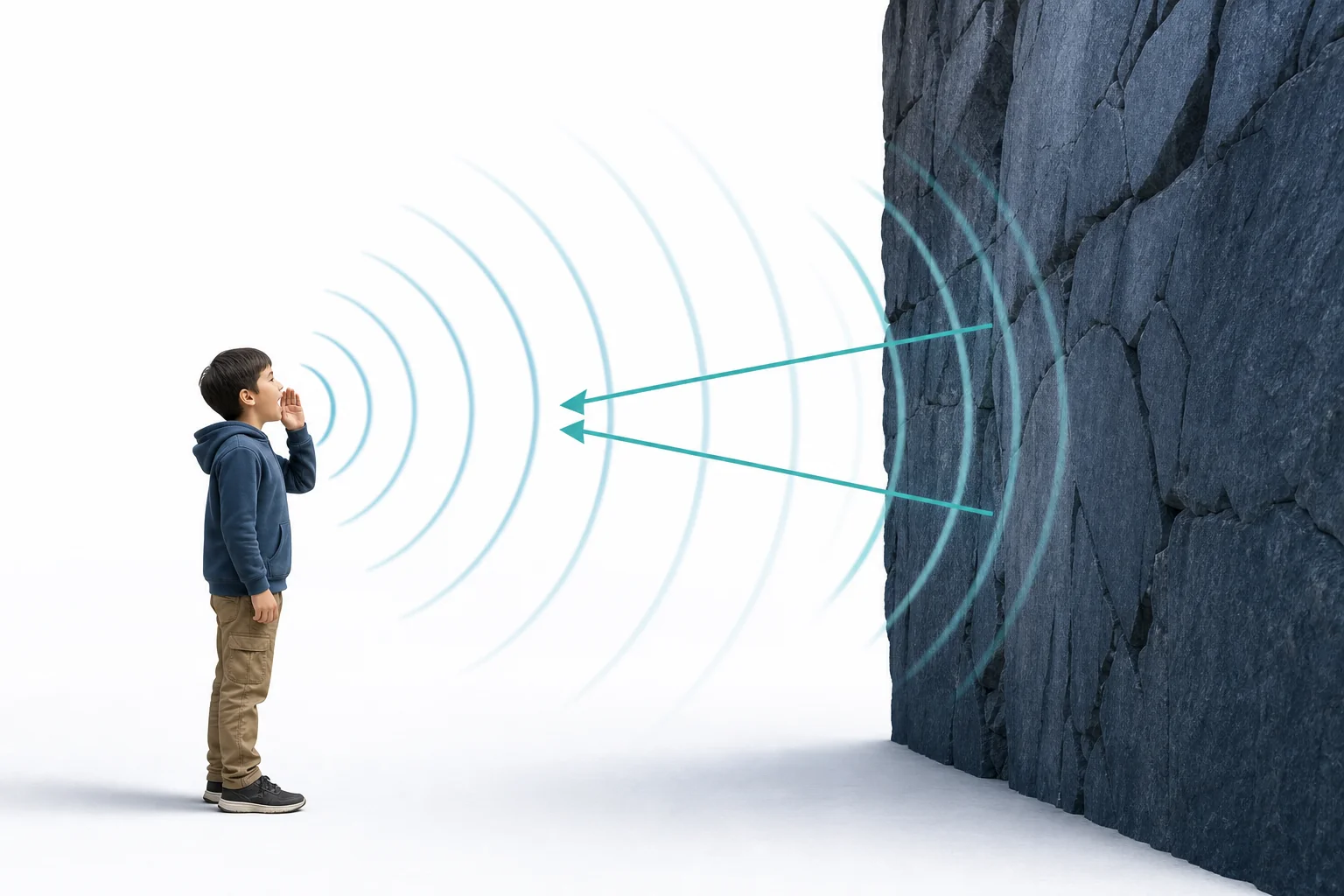
A child claps near a canyon wall while curved sound waves travel to the wall and back as an echo.

An echo happens when sound travels away from you, hits a hard surface, and bounces back. Your ears hear the bounced sound after the first sound. The delay tells you the sound traveled a longer path.

Big Idea. NGSS 4-PS4-1 connects echoes to the idea that waves can travel through materials and carry energy from place to place.

An echo is a clue that sound is moving. When you clap in a gym, shout near a canyon, or talk in an empty hallway, the sound does not just disappear. It spreads out from its source. Some of that sound reaches your ears right away. Some sound hits a wall, cliff, or other surface and comes back later. That returning sound is an echo. Echoes are easier to hear when the surface is hard and far away. A soft curtain or carpet soaks up more sound, so the echo is weaker. Scientists and engineers use echo timing to learn about distance. Some animals do this too. Bats and dolphins send out sounds and listen for the returning echoes. You can explore related wave ideas with the LivePhysics classroom tools as you compare sound, motion, and time.

Sound moves outward
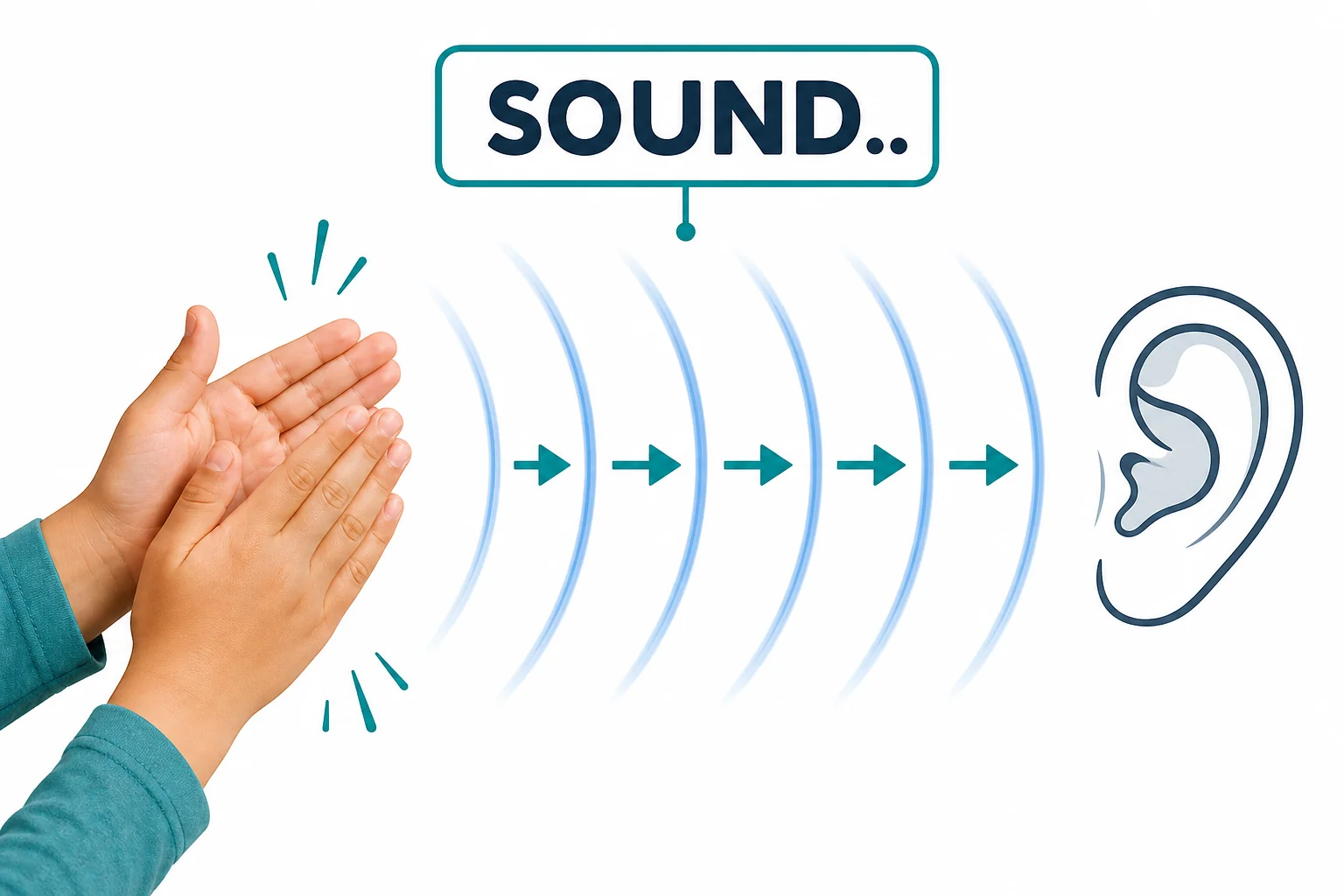
A pair of clapping hands sends circular sound wave rings outward through the air toward a nearby ear.
A clap sends sound waves through air
Sound begins when something vibrates. A clap makes nearby air move back and forth. That motion pushes on the next bit of air, then the next, and the sound travels away from your hands. The air does not fly across the room like a thrown ball. Instead, the vibration passes through the air as a wave. Your ears can sense those tiny pushes when they reach you. The same idea works for a drum, a whistle, a bell, or a voice. The louder the sound, the stronger the vibration. The sound spreads in many directions unless something blocks or reflects it. This is why people on different sides of a playground can hear the same whistle. The sound wave carries energy from the source to the listeners.

Sound is a vibration that travels through air.

Hard surfaces bounce sound
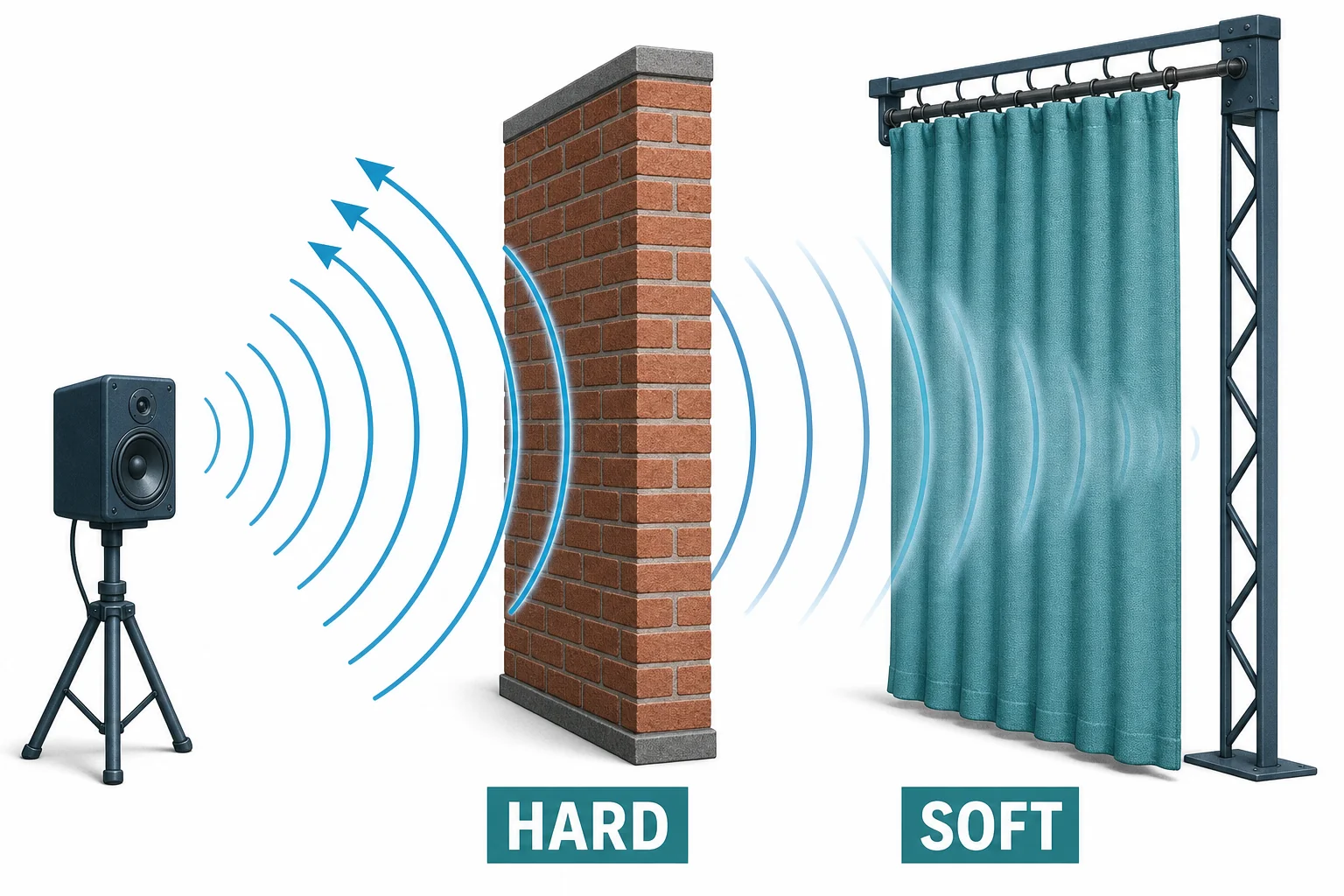
Sound waves from a speaker bounce off a brick wall, while fewer waves return from a curtain nearby.
Hard surfaces reflect more sound
An echo needs a surface that sends sound back. Hard, smooth surfaces usually reflect sound well. A rock wall, brick building, tile floor, or empty gym wall can make a clear echo. Soft surfaces are different. Curtains, rugs, grass, and coats trap some of the sound energy and turn it into tiny amounts of heat. That makes the returning sound much quieter. This is why a furnished room sounds calmer than an empty room. In an empty room, many hard surfaces reflect sound again and again. In a room with soft materials, fewer strong reflections reach your ears. Reflection does not mean the sound is perfect when it comes back. It can spread out, lose energy, and mix with other sounds along the way.

A harder surface usually makes a stronger echo.

The delay matters
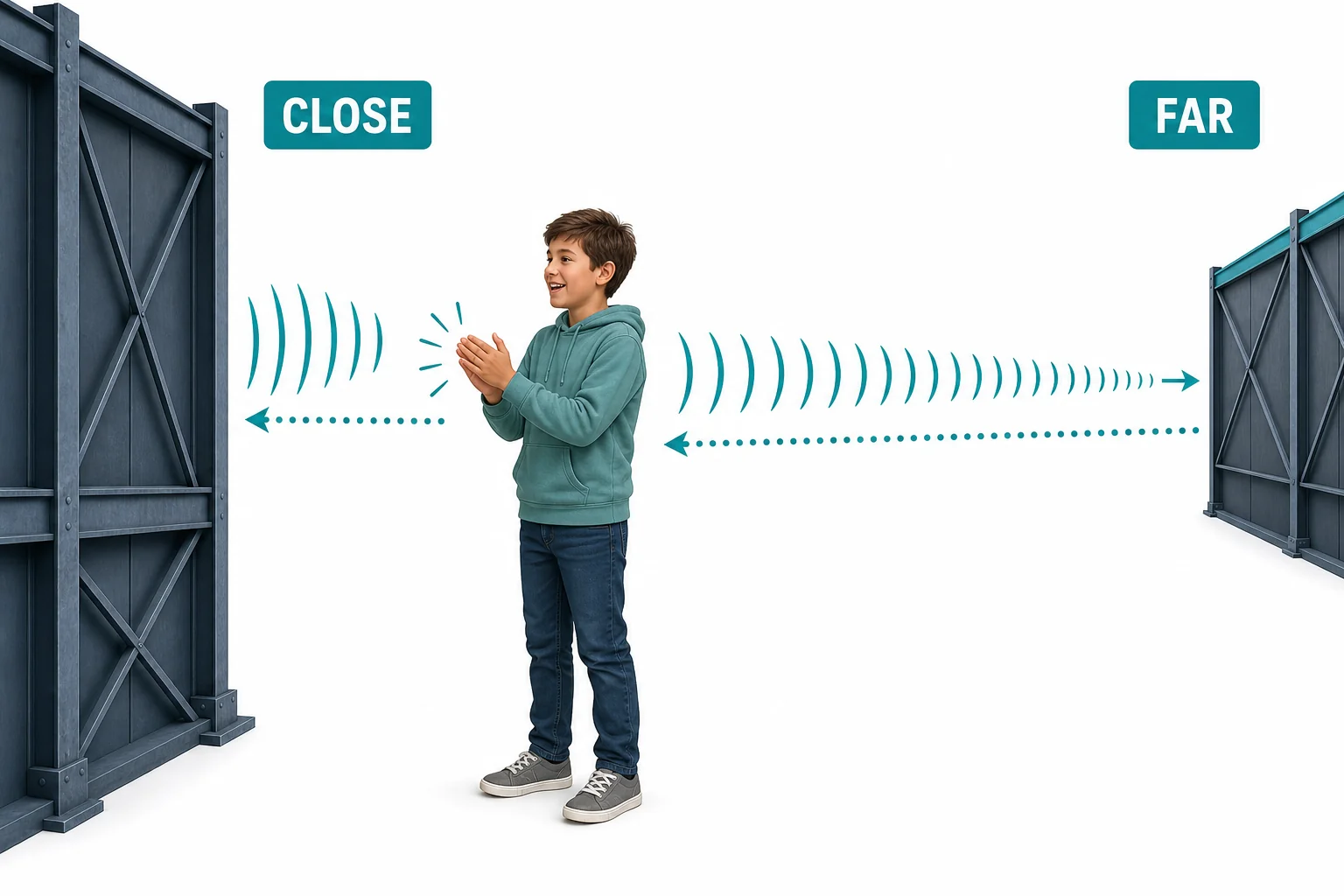
A child claps near a close wall and a far wall, showing that the far wall gives a longer path and a later echo.
A farther wall makes a later echo
You hear an echo only if the reflected sound comes back late enough. If the wall is close, the returning sound reaches your ears almost at the same time as the original sound. Your brain blends the two sounds together. This can make a room sound bright or noisy, but it may not sound like a separate echo. If the wall is farther away, the sound needs more time to travel out and back. Then your brain can notice two sounds. First you hear your clap. A moment later, you hear the echo. That delay is why echoes are common near cliffs, canyons, and large empty spaces. Distance gives the sound wave enough travel time for your ears and brain to separate the sounds.

A longer sound path makes a longer wait.

Echoes can measure distance
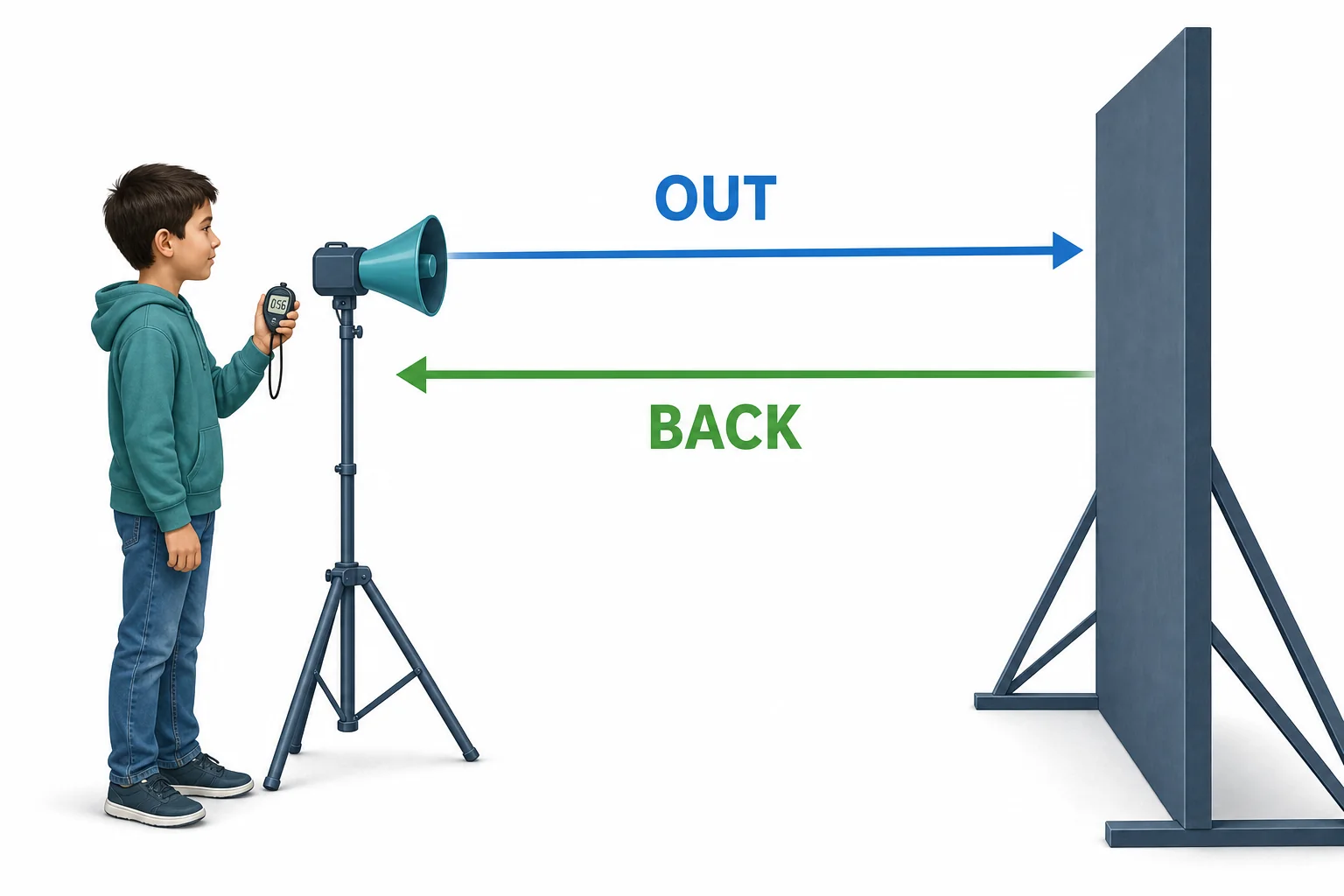
A sound pulse travels from a person to a wall and back, with the round trip path marked to show how distance can be estimated.
Echo time gives a distance clue
Echo timing can help estimate distance. Sound travels through air at about 343 meters each second at room temperature. If you make a sharp sound and hear the echo after 2 seconds, the sound traveled to the wall and back in that time. The one-way distance is half of the whole trip. A simple estimate is distance equals sound speed times time, then divided by 2. In symbols, $d=\frac{vt}{2}$. This is the same idea behind many tools that use sound pulses. A device sends out a sound, waits for the echo, and uses the time delay to estimate how far away something is. In class, students can clap near a large wall and compare the delay from different distances.

The echo time includes the trip out and the trip back.

Animals use echoes
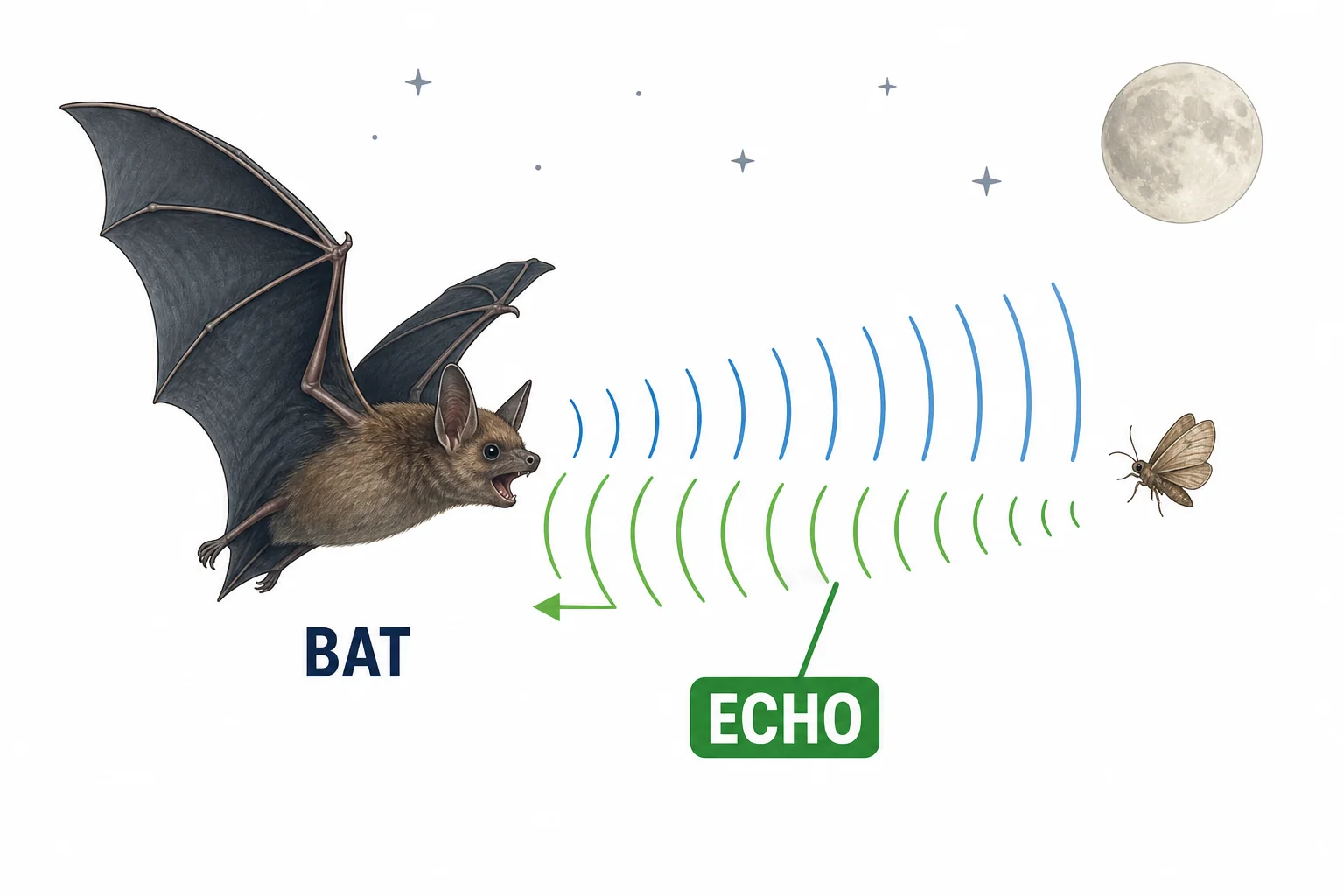
A bat sends sound waves toward an insect and receives returning echoes that help locate the insect.
Bats locate insects with echoes
Some animals use echoes to find food and move safely. A bat makes high sounds that humans usually cannot hear. Those sounds spread out, hit insects and nearby objects, and reflect back to the bat. The bat listens for the returning echoes. A short delay means an object is close. A longer delay means it is farther away. Changes in the echo can also give clues about size, shape, and motion. Dolphins use a similar idea underwater. Sound travels well through water, so echoes can help dolphins find fish and avoid obstacles. This use of echoes is called echolocation. It is a real-world example of wave energy carrying information from one place to another.

Echoes can carry information about where objects are.

Vocabulary

Sound wave
A vibration that travels through a material such as air, water, or a solid.
Echo
A sound that bounces off a surface and returns to the listener after a delay.
Reflection
The bouncing back of a wave when it reaches a surface.
Absorption
The taking in of sound energy by a material, which makes the reflected sound weaker.
Time delay
The wait between the original sound and the returning echo.
Echolocation
A way some animals use echoes to find objects and judge distance.

In the Classroom

Clap and listen

20 minutes | Grades 3-5

Students clap once in different spaces, such as a classroom, hallway, gym, or outdoor wall area. They describe which places make stronger echoes and connect the results to hard and soft surfaces.

Soft versus hard test

25 minutes | Grades 3-5

Students place a phone or buzzer in a box and compare the sound with the box empty, lined with paper, and lined with cloth. They observe that soft materials reduce reflected sound more than hard materials.

Echo distance model

15 minutes | Grades 4-5

Students use string or tape on the floor to model the sound path from a person to a wall and back. They practice the idea that the echo path is twice the one-way distance.

Key Takeaways

  • An echo is reflected sound that returns to your ears.
  • Hard surfaces usually make stronger echoes than soft surfaces.
  • A far surface creates a longer time delay than a nearby surface.
  • Echo timing can be used to estimate distance.
  • Bats and dolphins use echoes to learn about their surroundings.