How Roller Coasters Turn Gravity Into Energy
Energy changes shape on every hill
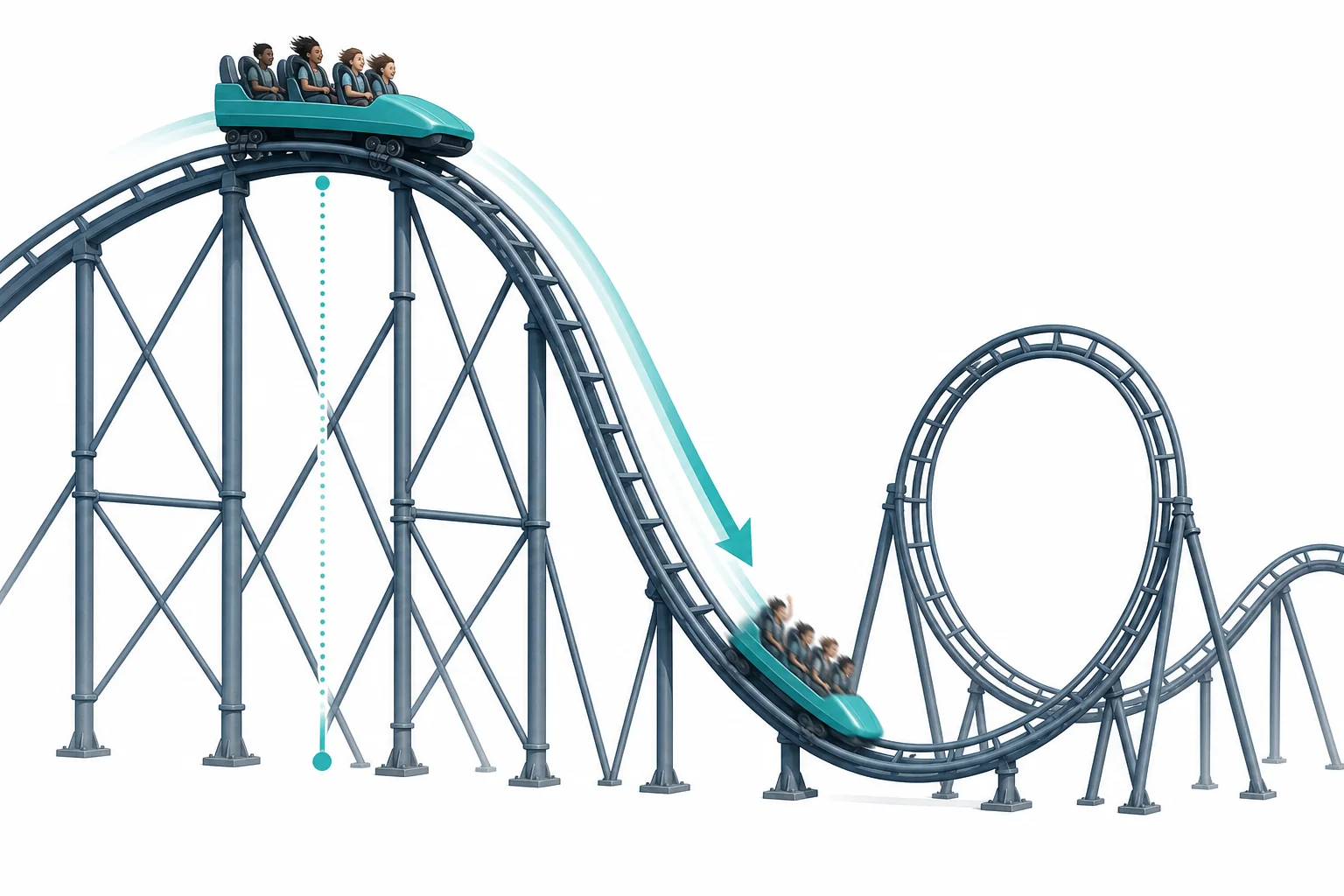
A roller coaster gains stored energy when it is pulled up a tall hill. As it rolls downhill, that stored energy changes into motion. Some energy also becomes heat and sound because of rubbing and air pushing on the car.
A roller coaster looks like a machine built for speed, but it is also a clear physics lesson. The first big hill matters most. A motor or chain pulls the cars upward, doing work on the train. That work gives the train energy because it is now high above the ground. Once the train crests the hill, gravity takes over. The cars speed up on the way down, slow down on the way up, and keep trading height for motion along the track. The train does not create energy from nowhere. It changes energy from one form to another. Engineers use this idea to choose hill heights, loop sizes, and braking zones. Middle school physics calls this conservation of energy. In real coasters, friction and air resistance also matter. They turn some of the train’s energy into heat and sound, so each later hill must usually be lower than the first.
The first hill stores energy
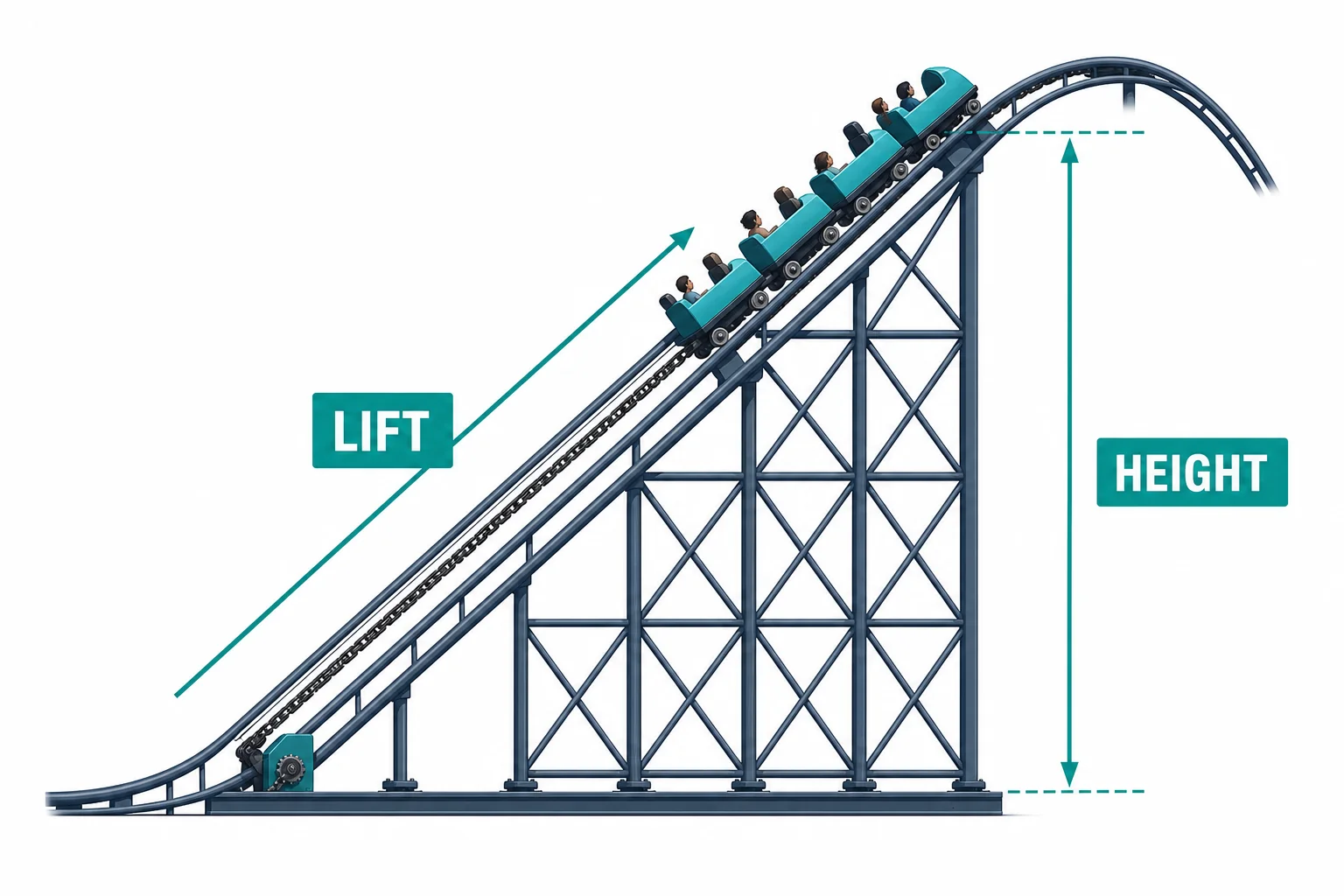
More height means more stored energy for the rest of the ride.
Downhill turns height into speed
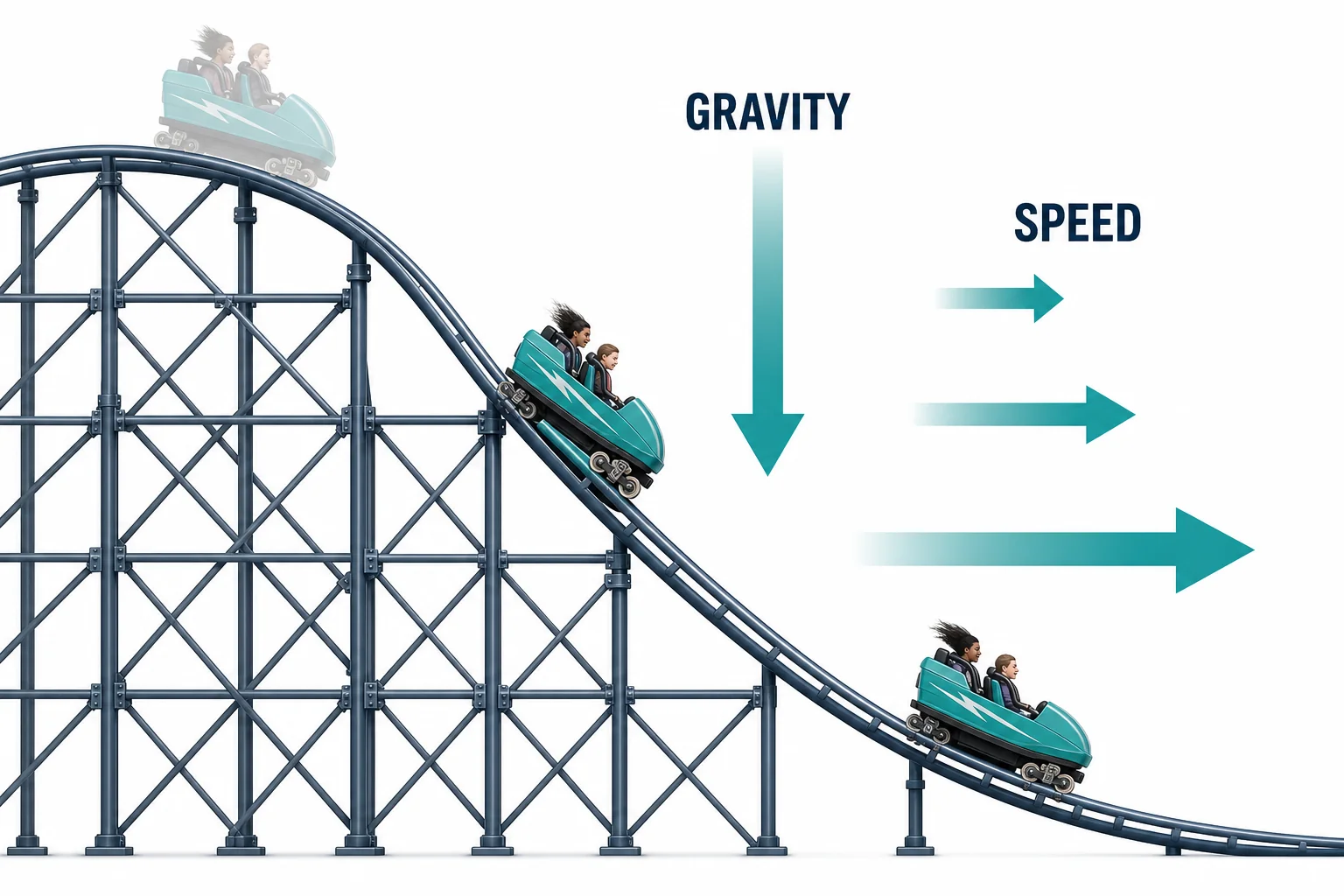
The bottom of a drop is where stored energy has become motion.
Energy keeps changing forms
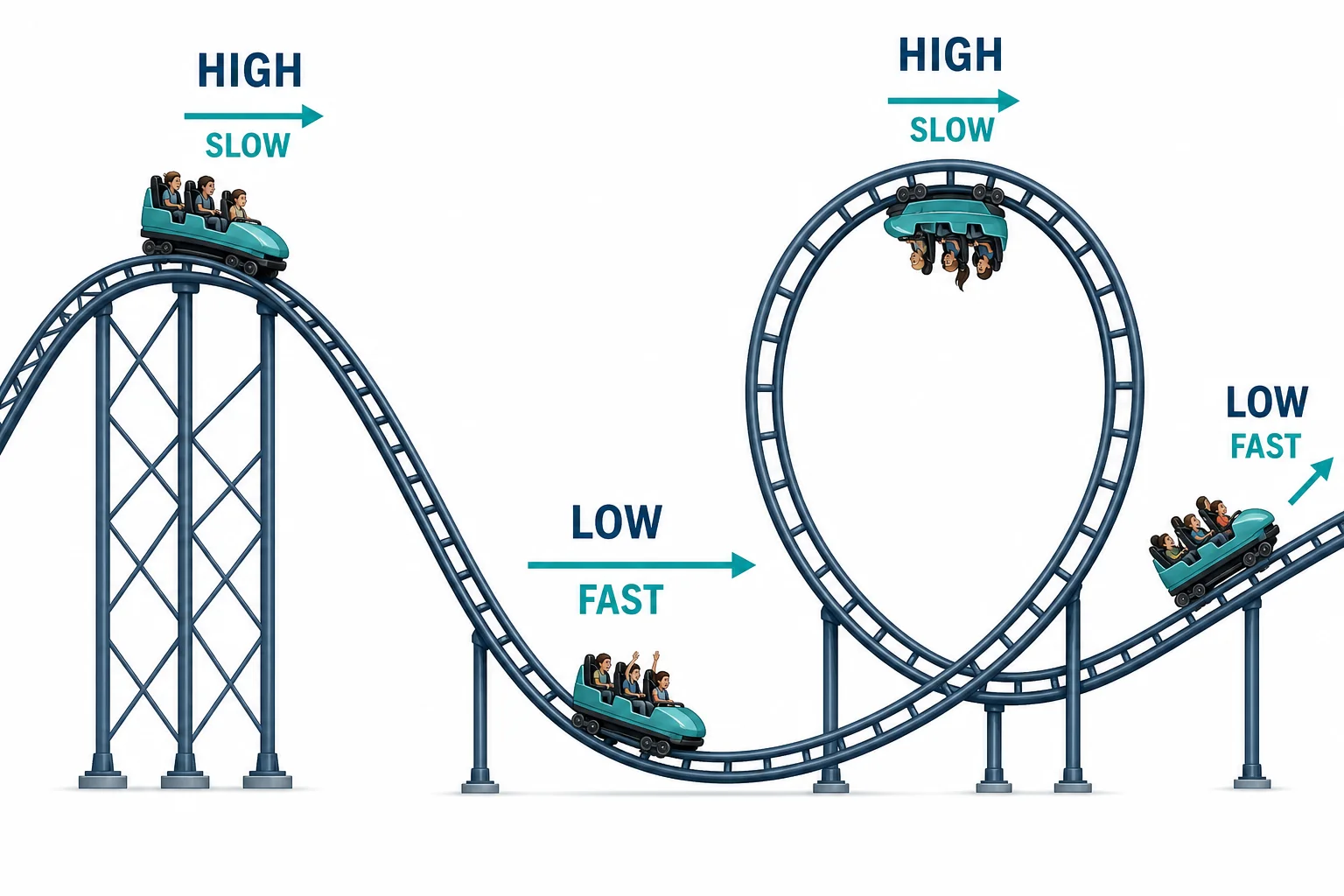
Height and speed trade back and forth during the ride.
Friction changes the total
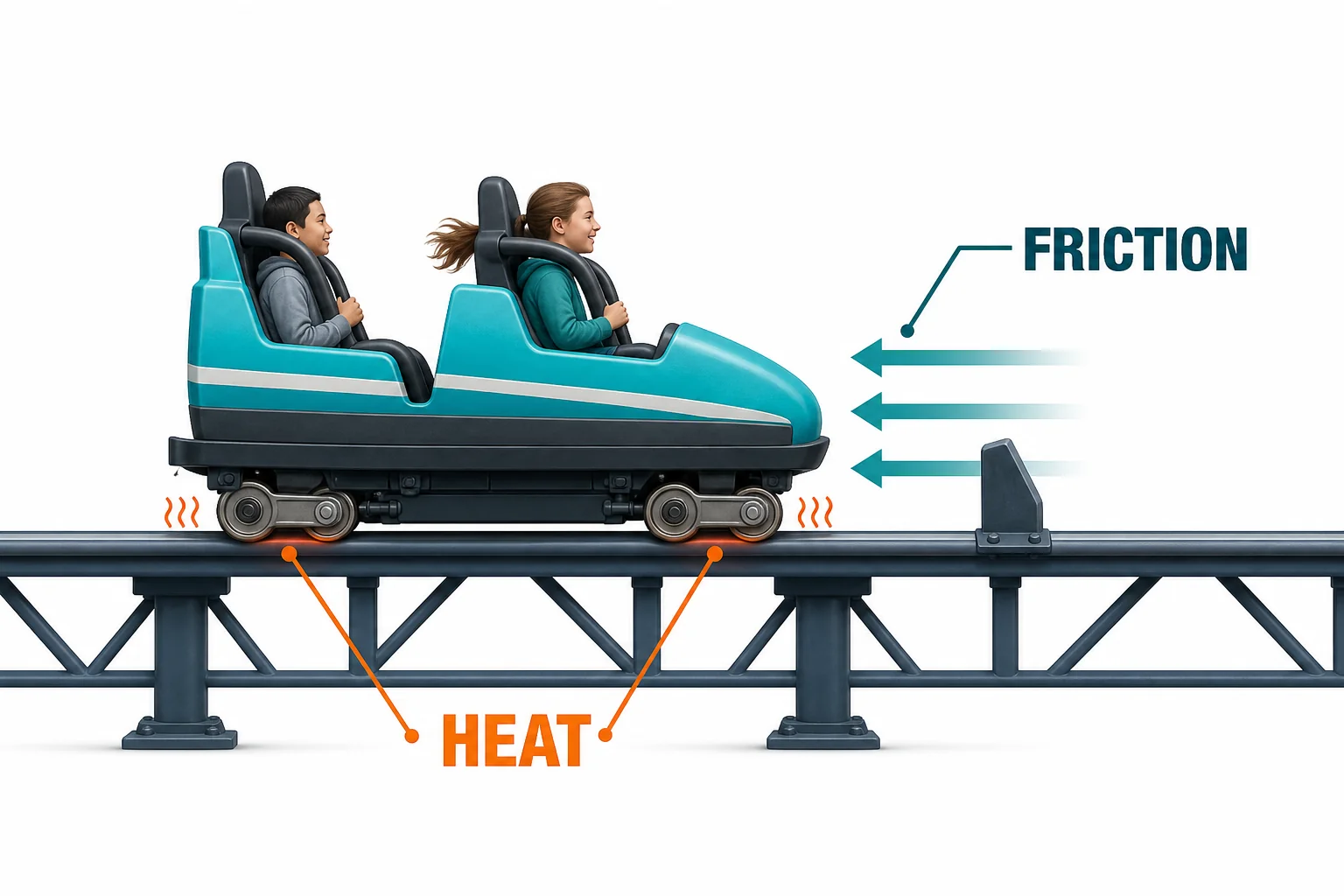
Real rides lose useful motion energy to heat, sound, and air resistance.
Designing a safe energy path
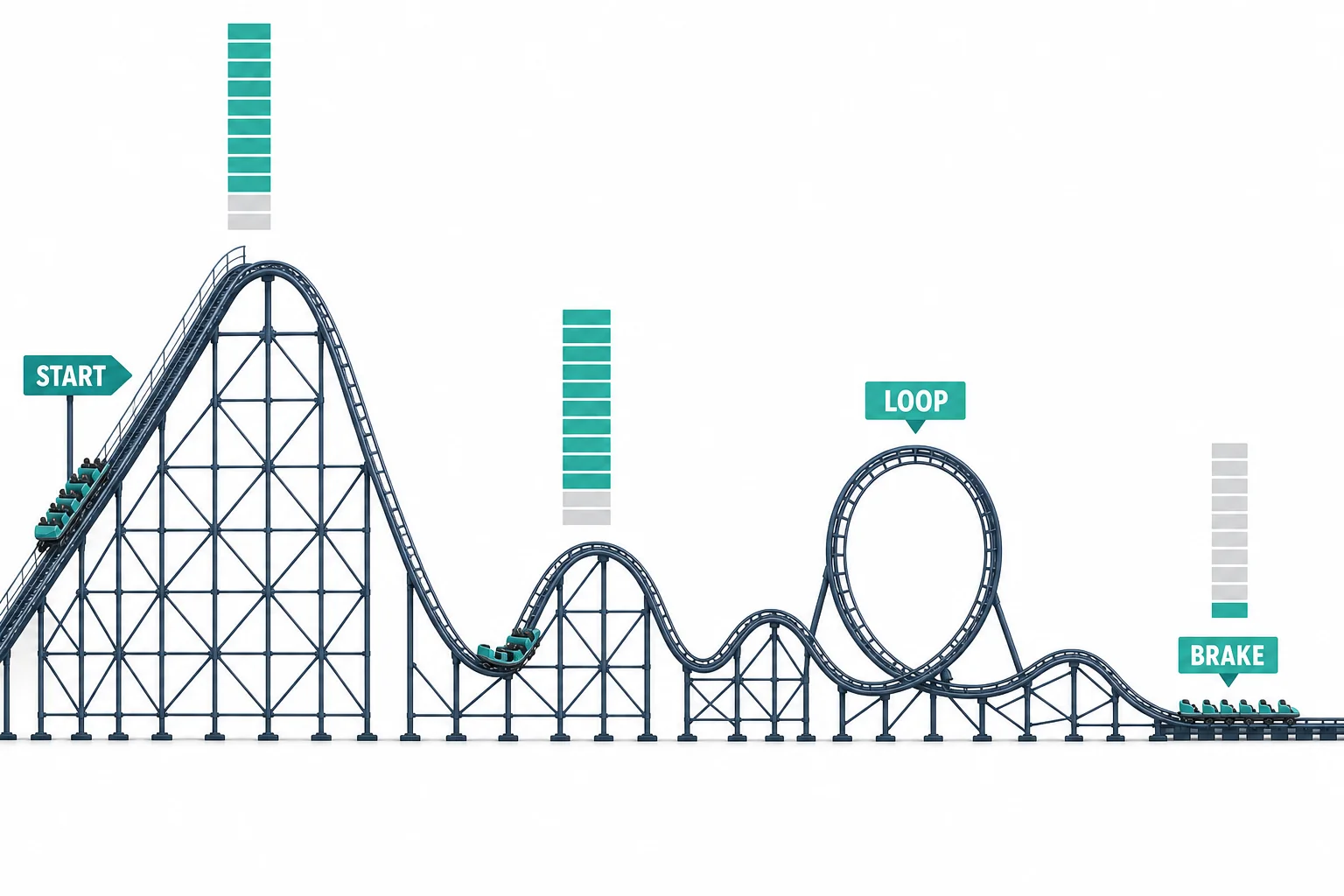
A coaster layout is built around where energy goes next.
Vocabulary
- Gravitational potential energy
- Stored energy an object has because of its height in a gravitational field.
- Kinetic energy
- Energy an object has because it is moving.
- Conservation of energy
- The idea that energy is not created or destroyed, but it can transfer or change form.
- Friction
- A force that resists motion when surfaces rub or when an object moves through air.
- Thermal energy
- Energy related to the motion of tiny particles in matter, often noticed as heat.
In the Classroom
Marble coaster energy map
30 minutes | Grades 6-8
Students build a small track from foam tubing and roll a marble from different starting heights. They mark where the marble is high, low, fast, and slow, then connect each point to potential or kinetic energy.
Hill height investigation
25 minutes | Grades 6-8
Students release a toy car from several ramp heights and measure how far it travels on a flat surface. They use the data to explain how starting height affects motion after the drop.
Friction brake challenge
20 minutes | Grades 6-8
Students design a safe stopping zone for a rolling marble using paper, felt, cardboard, or sandpaper. They compare stopping distance and explain where the marble’s kinetic energy went.
Key Takeaways
- • The lift hill gives a coaster train stored energy by raising it higher above the ground.
- • Gravity changes stored energy into motion as the train rolls downhill.
- • The train slows when it climbs because motion energy changes back into stored energy.
- • Friction and air resistance transfer some useful mechanical energy into heat and sound.
- • Engineers design coaster tracks by planning how energy changes from start to finish.