Understanding Simple Circuits Lab
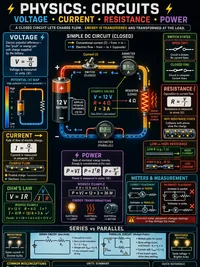
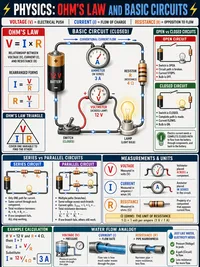
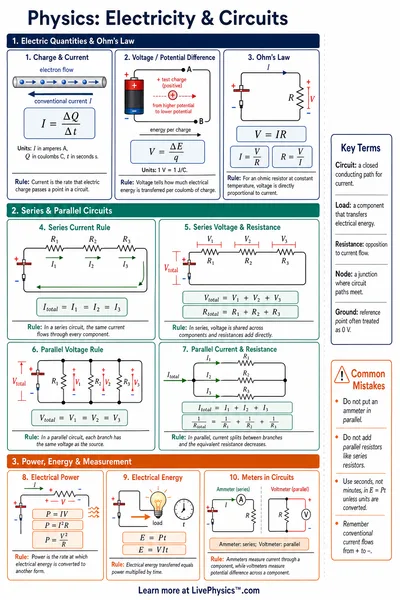
Electric current is a rate of charge flow through a complete conducting path. A switch matters because an open gap stops the loop, even when a battery is connected nearby. In metal wires, mobile electrons move slowly, while the electrical effect that sets them moving spreads through the circuit very quickly.
Circuit diagrams use conventional current, drawn from the battery’s positive terminal toward its negative terminal. This convention remains useful even though electrons move in the opposite direction.
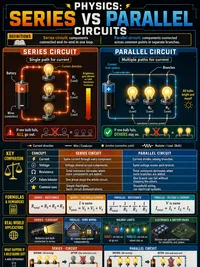
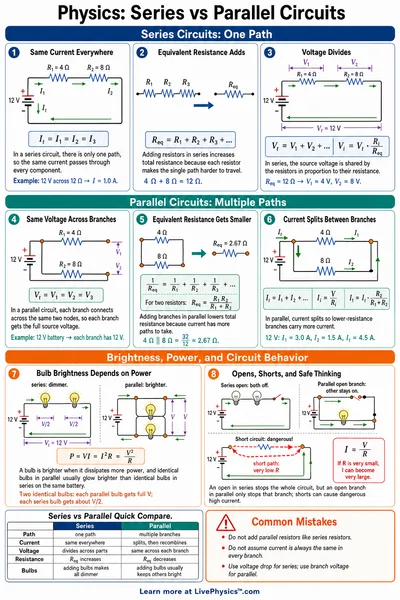
When bulbs share one route, each bulb affects every other bulb because the same current must pass through each part. The battery voltage is divided among the components, with larger resistance taking a larger share for a given current. A filament changes resistance as it heats, so a real bulb does not behave exactly like a fixed classroom resistor.
This explains why brightness changes can be less perfectly proportional than a simple calculation predicts. A loose connection can act like extra resistance and reduce the light from every bulb on that route.
Branches that join at the same two connection points have the same voltage across them. Each branch draws an amount of current set by its own resistance, and the source supplies the total of those branch currents. This is why adding another parallel appliance can increase the current from a battery without changing the voltage across the original appliance.
Household wiring uses parallel branches so one lamp failing does not shut off the others. Too many high power devices on one circuit can still overload its wiring.
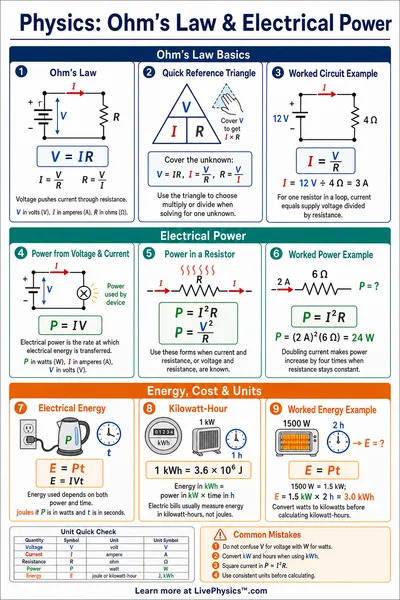
A resistor limits current by making it harder for charge to move through its material. Electrical energy transferred in the resistor becomes thermal energy, which is why resistors can become warm. The power transferred equals voltage times current, and bulb brightness depends mainly on the power reaching its filament.
A resistor placed before a split can affect every branch, while one placed in only one branch mainly changes that branch. Resistors have power ratings because a small component can overheat if it is asked to transfer too much energy each second.
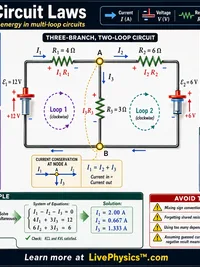
When using a circuit simulation or lab, change one setting at a time and record voltage, current, and observed brightness before making another change. Look for patterns at the battery terminals, across each component, and at junctions where branches meet. Measurements can test conservation ideas.
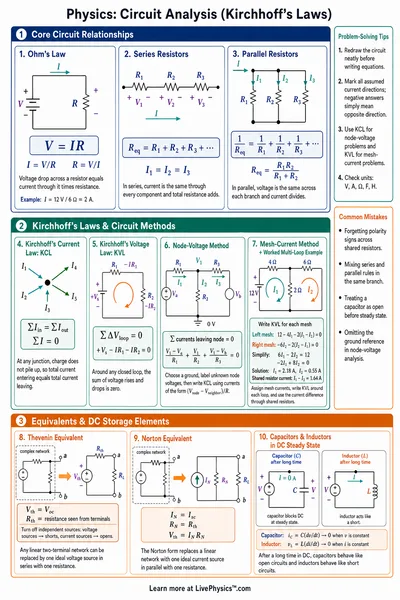
Current entering a junction equals current leaving it, while voltage changes around a complete loop balance the battery’s energy supply. Treat brightness as evidence rather than an exact meter because human eyes judge light unevenly. Real batteries have internal resistance, so their terminal voltage can fall when they deliver a large current.