Biology
Confusing Prokaryotic and Eukaryotic Cells
Students label any small or simple cell as prokaryotic and any large or complex cell as eukaryotic.
Quick check
Why students make it
This happens because students focus on size and complexity instead of the cell structures that define each group. The key difference is whether the cell has a nucleus and other membrane-bound organelles.
The rule done right
Prokaryotic cells do not have a nucleus or membrane-bound organelles. Eukaryotic cells have a nucleus and membrane-bound organelles such as mitochondria, chloroplasts, or the endoplasmic reticulum.
Related resources
-
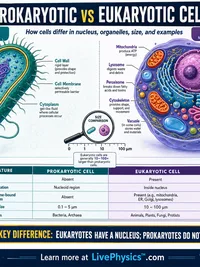 Biology, Prokaryotic vs Eukaryotic Cells Infographic
-
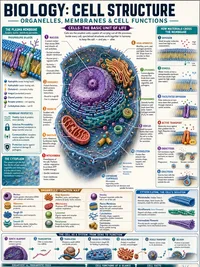 Cell Structure & Organelles Infographic
-
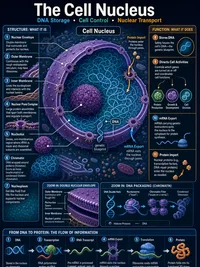 Biology, The Cell Nucleus Infographic
-
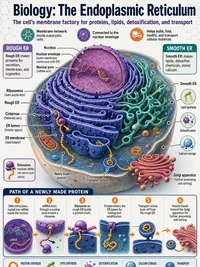 Biology, The Endoplasmic Reticulum Infographic
-
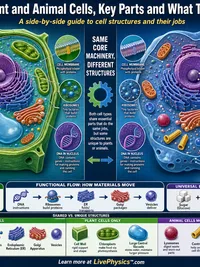 Plant and Animal Cells Infographic
- Plant vs Animal Cell Comparison Cheat Sheet
- Cell Structure & Function Cheat Sheet
- Microbiology & Bacteria Cheat Sheet
- Five Kingdoms & Three Domains Comparison Cheat Sheet
- Cell Biology Worksheet
- Biology, Cell Membrane Structure and Selective Permeability Worksheet
- Biology, Microbiology, Bacteria, Viruses, and Antibiotics Worksheet
- Cell Explorer, Animal, Plant & Bacterial Cells Tool
- Dichotomous Key & Classification Explorer Tool
- Plasmid & Selectable Marker Explorer Tool