Statistics
Ignoring Sample Size When Comparing Percentages
Students pick the larger percentage as the bigger result without checking how many people or items the percentage is based on.
Quick check
Why students make it
A percent feels like a complete comparison because both numbers are out of 100. This hides the original group sizes, so a small group can look bigger than a large group.
The rule done right
Always check the sample size before comparing percentages. To compare actual counts, use , and remember that percentages from very small samples are less reliable.
Related resources
-
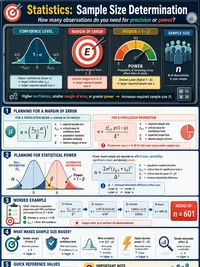 Statistics, Sample Size Determination Infographic
-
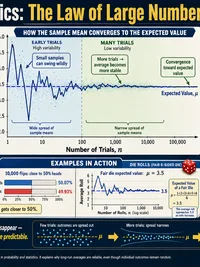 Statistics, The Law of Large Numbers Infographic
-
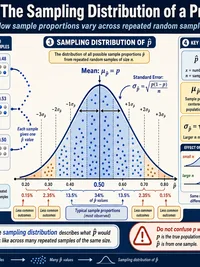 Statistics, The Sampling Distribution of a Proportion Infographic
-
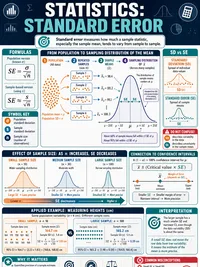 Standard Error Infographic
-
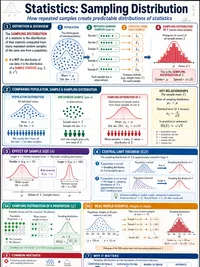 Sampling Distribution Infographic
- Power Analysis & Sample Size Reference Cheat Sheet
- Margin of Error Reference Cheat Sheet
- Sampling Methods & Survey Design Cheat Sheet
- Sampling Distribution & Standard Error Cheat Sheet
- Confidence Interval Master Reference Cheat Sheet
- Statistics, Sampling Worksheet
- Statistics, Types of Data and Sampling Methods Worksheet
- Statistics, Simulations and Sampling Worksheet
- Statistics, Designing a Survey, Question Bias and Sampling Worksheet
- Statistics, Confidence Intervals and Margin of Error Worksheet
- Sampling Distribution Visualizer Tool
- Central Limit Theorem Simulator Tool
- Power & Sample Size Planner Tool
- Confidence Interval Calculator Tool
- Sampling & Randomization Lab Lab
- Central Limit Theorem & Sampling Distributions Lab Lab
- Bootstrap & Confidence Interval Lab Lab
- Experimental Design & A/B Testing Lab Lab