Citizen Rights and Responsibilities Sorter
Tell apart the rights, duties, and responsibilities of US citizens. Rights are freedoms the Constitution guarantees. Duties are required by law. Responsibilities are expected of good citizens but stay voluntary. Sort each statement into the right bucket and reveal the explanation.
Choose a level
Pay your income taxes every year
Is this a freedom citizens are guaranteed, or something good citizens are expected to do?
Where does this belong?
Reference
Rights are freedoms guaranteed to citizens. Legal duties are required by law. Civic responsibilities are expected of good citizens but are not required.
Right
A freedom guaranteed to citizens by the Constitution.
- Speak freely and share your opinions in public
- Practice any religion you choose, or none at all
- Receive a fair and speedy trial if you are accused of a crime
- Cast a ballot in elections once you are eligible
- Read newspapers and websites that criticize the government
- Gather peacefully with others to protest
- Ask the government to fix a problem by signing a petition
- Keep and bear arms within the limits of the law
Legal Duty
Something the law requires citizens to do.
- Pay your income taxes every year
- Obey the laws of your community, state, and country
- Report for jury duty when you are summoned
- Register for Selective Service when a young man turns 18
- Appear in court when you receive a subpoena
- Attend school until you reach the legal age in your state
- Follow traffic laws while driving
Civic Responsibility
Something good citizens are expected to do, but it is not required by law.
- Vote in every election to make your voice heard
- Stay informed about issues in your community
- Volunteer to help others in your community
- Respect the rights and opinions of other people
- Respect other people's property
- Take part in your local community and government
- Learn about candidates before you vote
- Help your neighbors during an emergency
- Donate to causes you care about
Reference Guide
Rights of Citizens
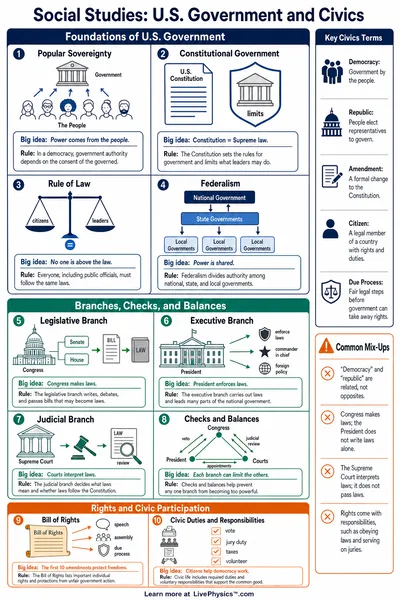
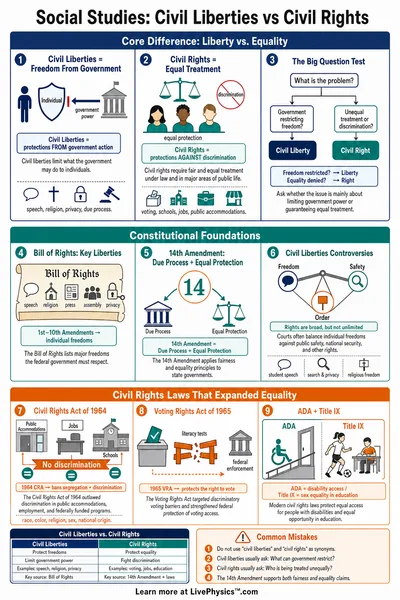
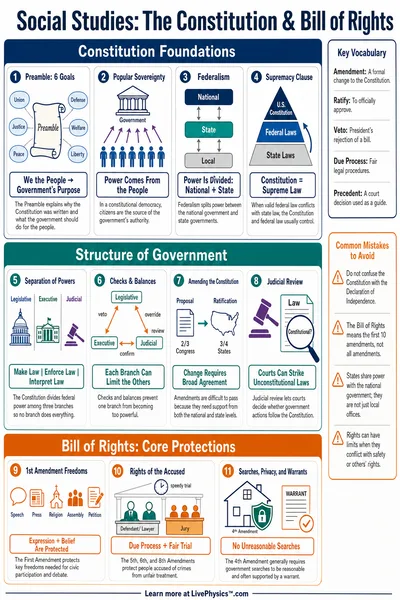
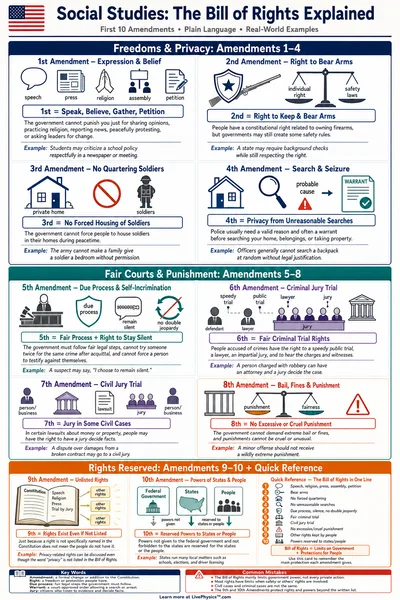
Rights are freedoms that the Constitution guarantees to citizens. The government cannot take these freedoms away without following careful legal steps. Many of them come from the Bill of Rights, the first ten amendments ratified in 1791.
The First Amendment protects freedom of speech, religion, the press, peaceful assembly, and the right to petition the government. These let citizens think, worship, and speak as they choose.
Other rights protect people accused of crimes. The Sixth Amendment guarantees a fair and speedy trial. Voting rights are protected by the 15th, 19th, 24th, and 26th Amendments, so no citizen can be denied a ballot based on race, sex, or age once they turn 18.
Legal Duties
Legal duties are actions the law requires of citizens. They are not optional. Skipping a duty can lead to fines, penalties, or other legal consequences.
Paying taxes, obeying all laws, and following traffic rules are duties everyone shares. Citizens must also serve on a jury when a court summons them, and they must answer a subpoena to appear in court.
Some duties apply to certain groups. Males age 18 to 25 must register for Selective Service. Children must attend school until they reach the age set by their state. These duties keep the courts, the schools, and the country running.
Civic Responsibilities
Civic responsibilities are things good citizens are expected to do, but no law forces them. They keep a free society healthy and depend on people choosing to take part.
Voting, staying informed about issues, and learning about candidates before an election are key responsibilities. Voting is a right that citizens are also encouraged to use as a civic duty.
Other responsibilities include volunteering, helping neighbors during an emergency, respecting other people and their property, and taking part in community life. None of these are required by law, but a strong community depends on them.
Duty or Responsibility
The trickiest part of civics is telling a legal duty from a civic responsibility. The test is simple. Ask whether the law can punish you for not doing it.
If skipping it brings a legal penalty, it is a duty. Not paying taxes, ignoring a jury summons, or failing to register for Selective Service can all bring penalties, so they are duties.
If it is expected but carries no legal penalty, it is a responsibility. No one is fined for choosing not to vote, not volunteering, or not staying informed. These are responsibilities that citizens take on by choice.