Practice explaining how Earth's rotation, tilt, and orbit create day, night, and the seasons.
Read each problem carefully. Use complete sentences and show your thinking in the space provided.
How Earth's tilt and orbit affect sunlight
Astronomy - Grade 4-5
- 1
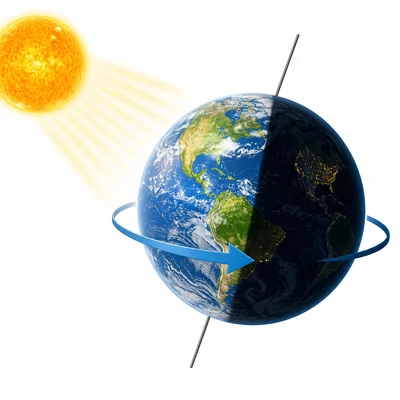
Earth spins once on its axis about every 24 hours. Explain how this spinning causes day and night.
- 2
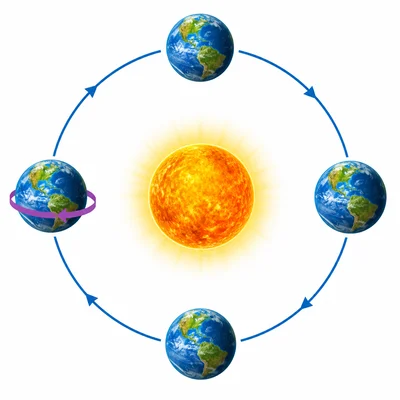
Which motion takes about one year: Earth's rotation on its axis or Earth's orbit around the Sun? Explain your answer.
- 3
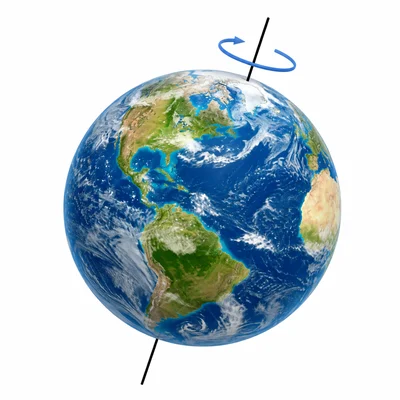
Earth's axis is tilted about 23.5 degrees. Describe what Earth's axis is.
- 4
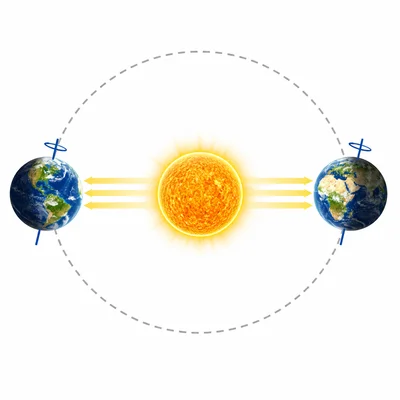
A student says, "Summer happens because Earth is closer to the Sun." Explain why this idea is not correct.
- 5
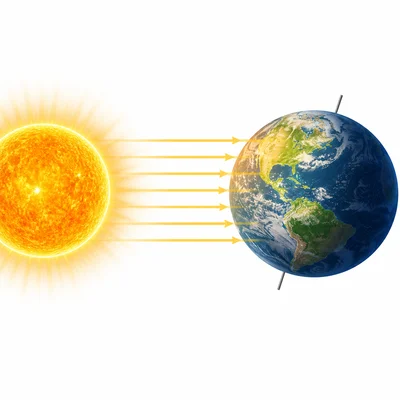
When the Northern Hemisphere is tilted toward the Sun, what season does it have? What season does the Southern Hemisphere have?
- 6
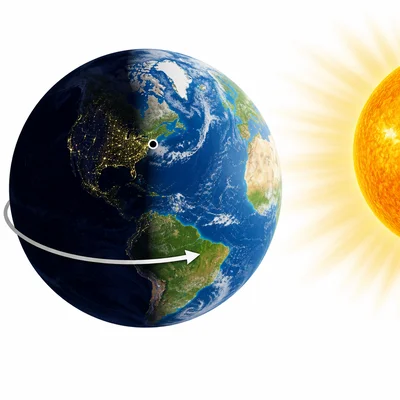
When a place on Earth rotates from the dark side into the lit side, what part of the day is beginning there?
- 7
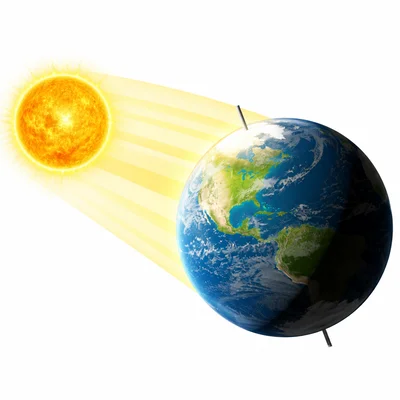
Explain why places near the poles can have very long days in summer and very long nights in winter.
- 8
Fill in the blanks: Earth rotates on its axis once every about ____ hours. Earth orbits the Sun once every about ____ days.
- 9
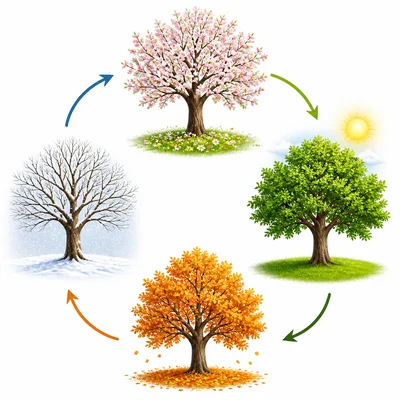
Look at the seasons in one hemisphere. Put them in the correct order starting with spring: winter, fall, summer, spring.
- 10
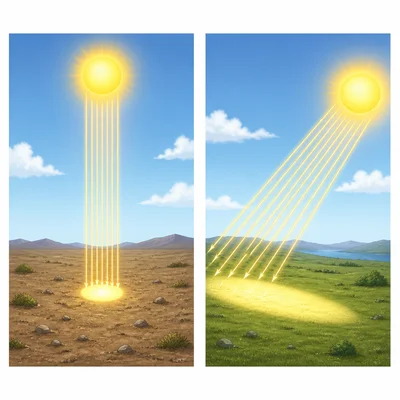
Explain how sunlight is different in summer compared with winter in a hemisphere.
- 11
A city has 15 hours of daylight in June and 9 hours of daylight in December. In which month is the city more likely to be having summer? Explain.
- 12
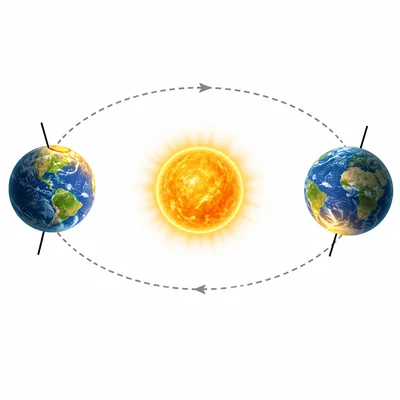
Why do the Northern Hemisphere and Southern Hemisphere have opposite seasons?
- 13
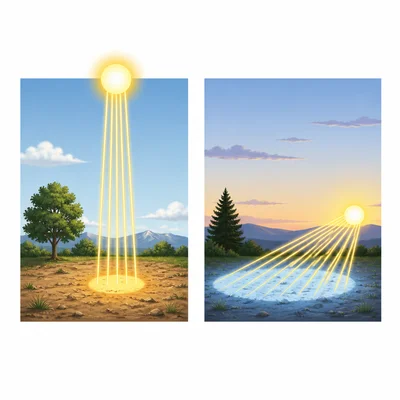
At noon, the Sun is usually higher in the sky in summer than in winter. How does this affect the temperature of a place?
- 14
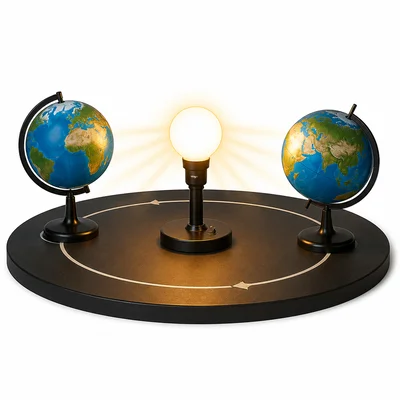
Two students make models with a lamp as the Sun and a globe as Earth. Student A keeps the globe straight up. Student B tilts the globe as it moves around the lamp. Which model better shows the cause of seasons? Explain.
- 15
Write one sentence explaining the difference between rotation and revolution in astronomy.