Practice interpreting the Hertzsprung-Russell diagram, comparing stellar properties, and explaining how stars evolve based on mass.
Read each problem carefully. Use complete sentences when explaining your reasoning. Show calculations where needed.
Classifying stars and tracing how they change over time
Astronomy - Grade 9-12
- 1
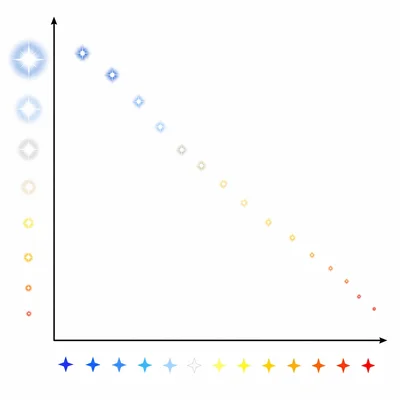
On an H-R diagram, what two main stellar properties are usually plotted on the horizontal and vertical axes?
- 2
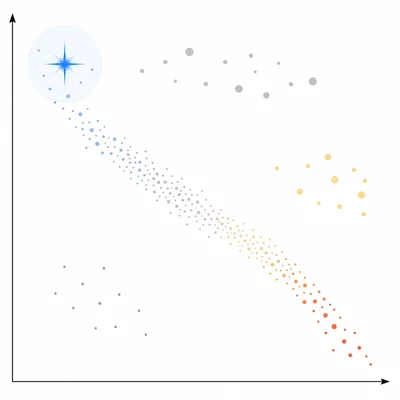
A star is very hot and very luminous. On what general region of the H-R diagram would it appear, and what type of star could it be?
- 3
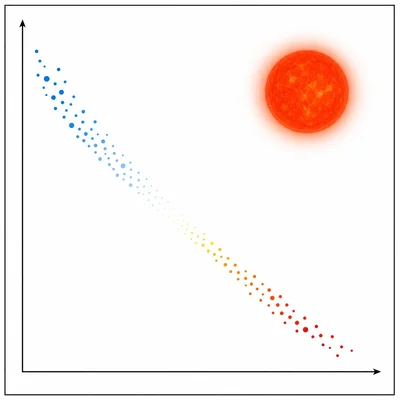
A star has a low surface temperature but very high luminosity. Explain why this star is likely a giant or supergiant rather than a main sequence star.
- 4
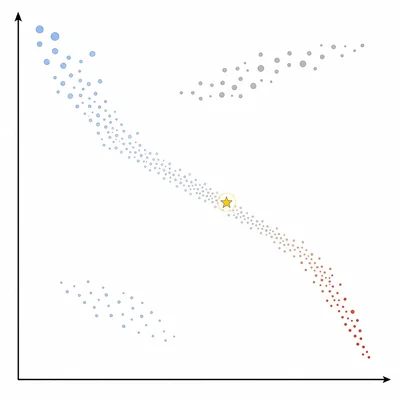
The Sun is a G-type main sequence star with a luminosity of 1 solar luminosity. Where is the Sun located on the H-R diagram?
- 5
Compare the lifetime of a massive blue main sequence star with the lifetime of a low-mass red main sequence star. Explain the reason for the difference.
- 6
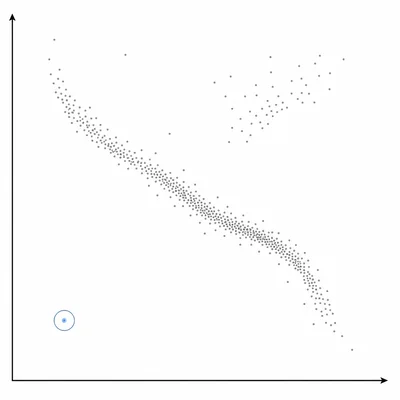
A star is plotted in the lower left region of an H-R diagram. It is hot but dim. What type of star is it most likely to be, and why?
- 7
Explain why the main sequence is called a sequence rather than a random scatter of stars.
- 8
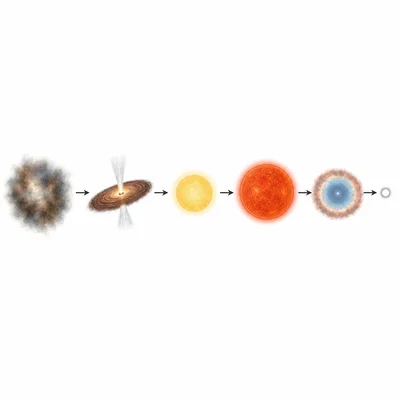
List the main life cycle stages of a low-mass star similar to the Sun, from birth to final remnant.
- 9
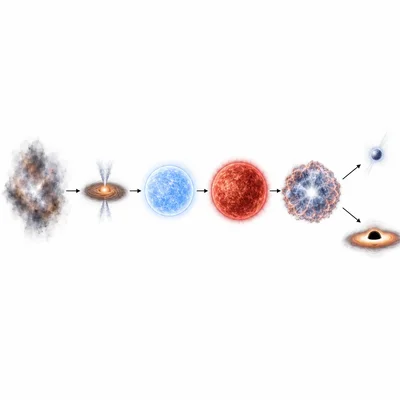
List the main life cycle stages of a high-mass star, from birth to final remnant.
- 10
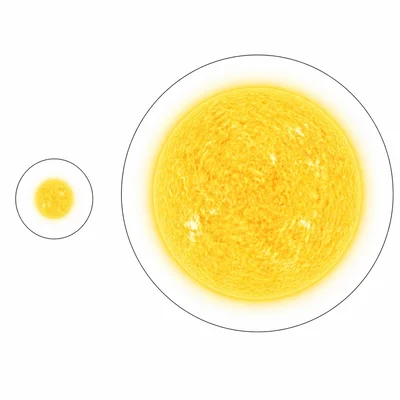
A star has a luminosity of 100 solar luminosities and a surface temperature similar to the Sun. Compared with the Sun, what must be true about its radius?
- 11
Use this simplified main sequence lifetime relationship: lifetime is approximately 10 billion years divided by mass squared, where mass is measured in solar masses. Estimate the main sequence lifetime of a star with 2 solar masses.
- 12
A star cluster contains many blue main sequence stars and no red giants. Is this cluster likely to be young or old? Explain your reasoning.
- 13
A different star cluster has no blue main sequence stars, but it has many red giants and white dwarfs. Is this cluster likely to be young or old? Explain your reasoning.
- 14
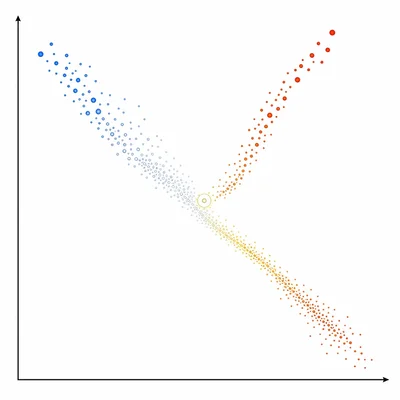
Explain how astronomers can use the main sequence turnoff point of a star cluster to estimate the cluster's age.
- 15
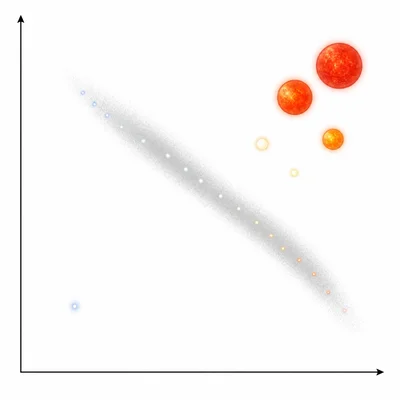
A student says, "White dwarfs are dim because they are cold." Correct this statement using evidence from the H-R diagram.