Investigate the human microbiome, including where microbes live in the body, how they support health, and how changes in microbial communities can affect disease risk.
Read each problem carefully. Use complete sentences when explaining your reasoning. Show your work or evidence in the space provided.
Exploring how microbial communities affect the body
Biology - Grade 9-12
- 1
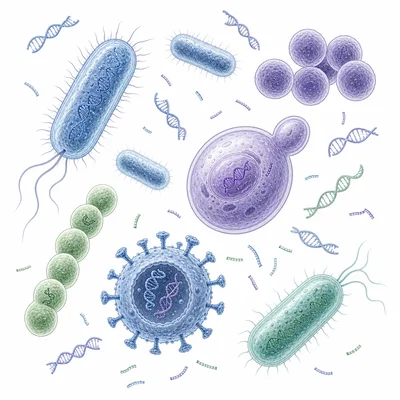
Define the human microbiome. Include both the organisms and the genetic material involved in your answer.
- 2
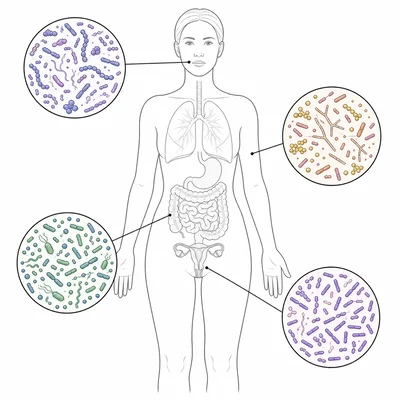
The gut, skin, mouth, and vagina each have distinct microbial communities. Explain why different body sites tend to have different microbiomes.
- 3
A student says, "All bacteria in the human body are harmful." Explain why this statement is incorrect.
- 4
Describe two ways that gut bacteria can contribute to human digestion and nutrition.
- 5
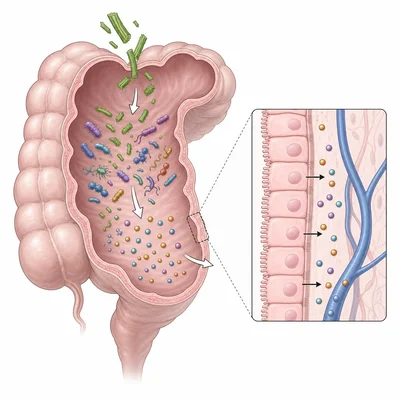
Short-chain fatty acids are produced when certain gut bacteria ferment dietary fiber. Explain one way short-chain fatty acids can support human health.
- 6
Compare a diverse gut microbiome with a low-diversity gut microbiome. Why is microbial diversity often considered beneficial?
- 7
Explain what dysbiosis means and give one example of a factor that can contribute to it.
- 8
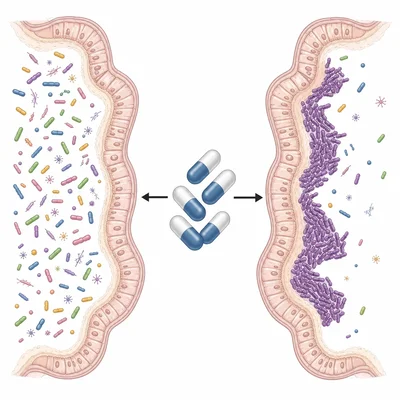
Antibiotics can be life-saving, but they may also affect the microbiome. Explain how antibiotic treatment can increase the risk of an opportunistic infection such as Clostridioides difficile.
- 9
A researcher collects microbiome samples from students before and after a 2-week high-fiber diet. Identify the independent variable and one possible dependent variable in this study.
- 10

The table shows the relative abundance of three bacterial groups in a person's gut before and after antibiotics. Before antibiotics: Group A 40%, Group B 35%, Group C 25%. After antibiotics: Group A 70%, Group B 10%, Group C 20%. Describe one major change and explain what it suggests about the microbiome.
- 11
Explain the difference between a probiotic and a prebiotic. Give one example of each.
- 12
Why should people be cautious about claims that one probiotic product can cure many unrelated diseases?
- 13
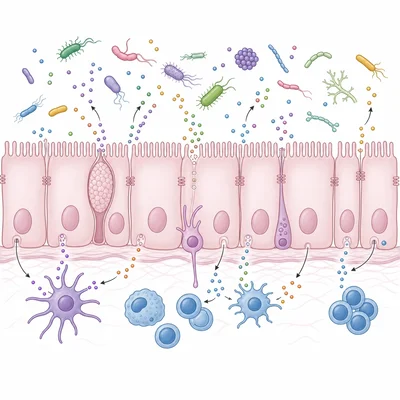
Describe how the microbiome can interact with the immune system.
- 14
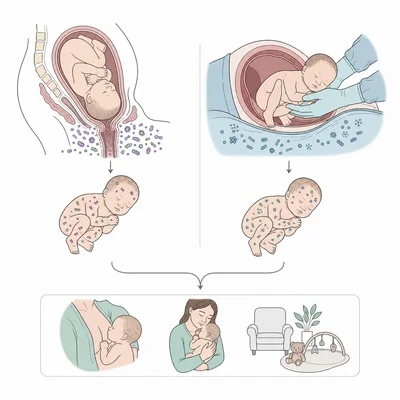
A newborn delivered vaginally is often exposed to different microbes than a newborn delivered by C-section. Explain how birth method might influence the early microbiome, and why later factors still matter.
- 15
Design a controlled experiment to test whether a specific prebiotic fiber increases the abundance of a beneficial gut bacterial group in high school volunteers. Include a control group, a variable to measure, and one ethical consideration.