Practice identifying radioactive decay types, balancing nuclear equations, comparing fission and fusion, and solving half-life problems.
Read each problem carefully. Show your work in the space provided. Use conservation of mass number and atomic number when balancing nuclear equations.
Balancing nuclear reactions and understanding radioactive processes
Chemistry - Grade 9-12
- 1
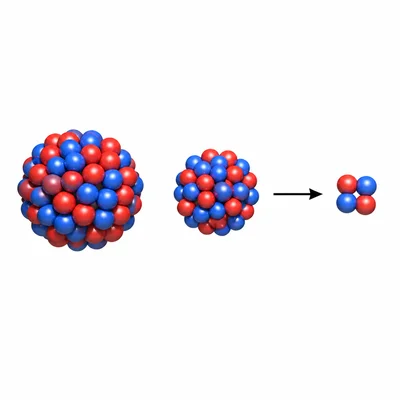
In alpha decay, uranium-238 becomes thorium-234 and releases an alpha particle. Write the balanced nuclear equation using isotope notation.
- 2
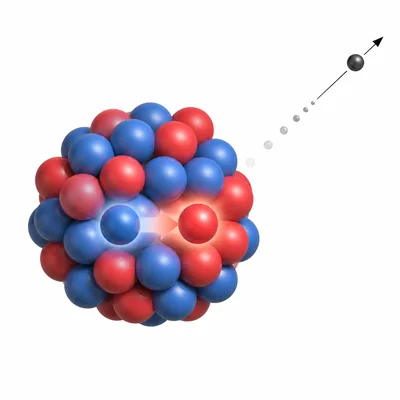
Carbon-14 undergoes beta-minus decay to form nitrogen-14. Write the balanced nuclear equation and explain what happens to the atomic number.
- 3
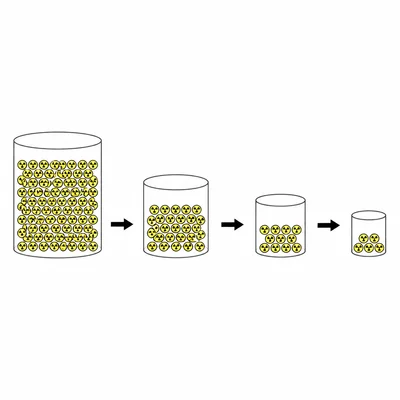
A radioactive isotope has a half-life of 8 days. If a sample starts with 80 grams, how many grams remain after 24 days?
- 4
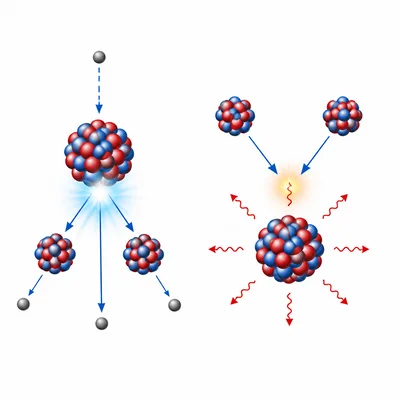
Compare nuclear fission and nuclear fusion in terms of what happens to atomic nuclei.
- 5
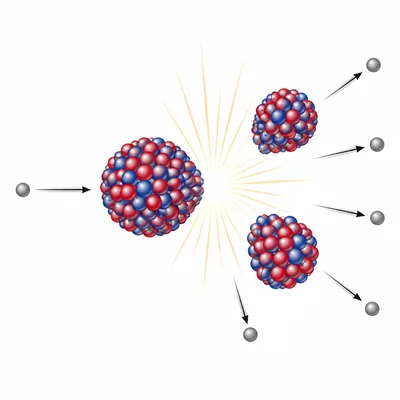
Complete and balance this nuclear equation: U-235 + n-1 -> Ba-141 + Kr-92 + ___ n-1.
- 6
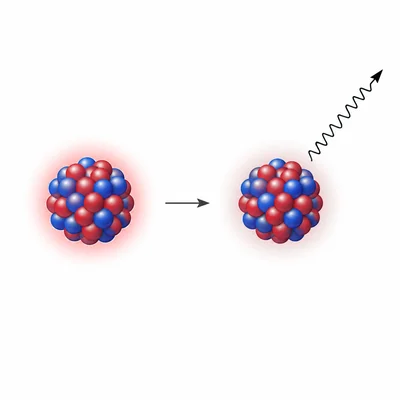
A nucleus emits a gamma ray. Describe how the mass number and atomic number of the nucleus change.
- 7
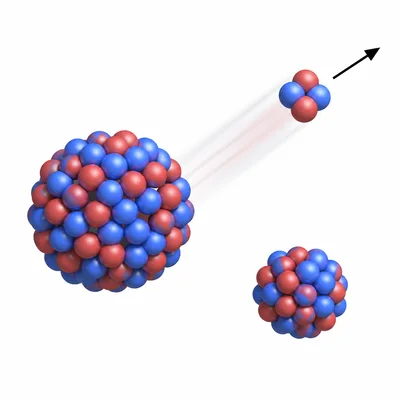
Radium-226 decays by alpha emission. Identify the daughter isotope by mass number and element name.
- 8
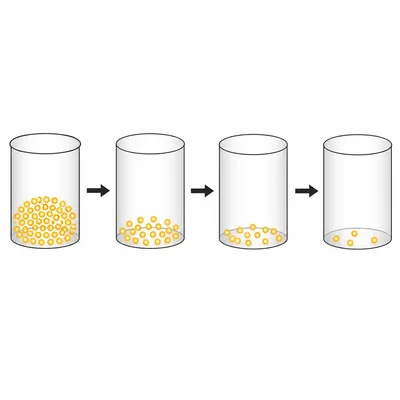
A 200 gram sample of iodine-131 decays to 25 grams in 24 days. How many half-lives have passed, and what is the half-life of iodine-131 in this situation?
- 9
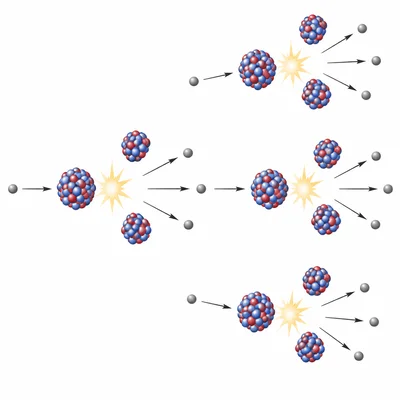
Explain why a nuclear chain reaction can occur during fission of uranium-235.
- 10
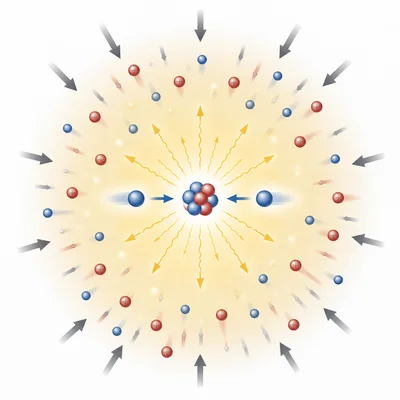
Hydrogen isotopes can fuse in stars to form helium. Explain why fusion requires extremely high temperature and pressure.
- 11
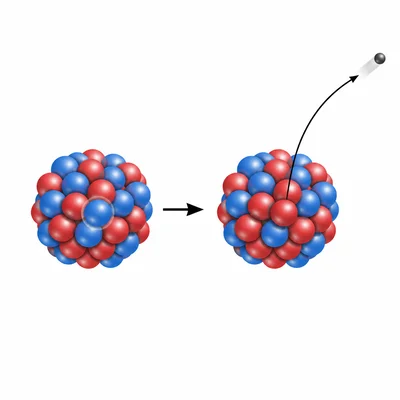
Identify the type of decay represented by this change: P-32 -> S-32 + beta particle.
- 12
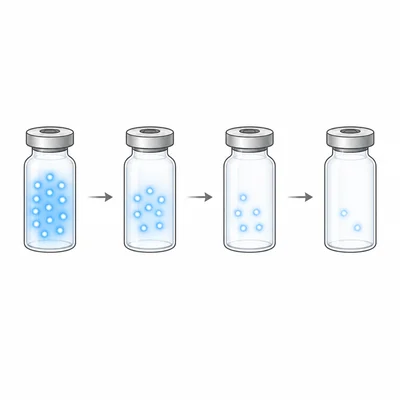
A medical tracer has a half-life of 6 hours. A patient receives a dose with an activity of 64 units. How much activity remains after 18 hours?