Practice identifying eons, eras, and periods on the geologic time scale and explaining how scientists use them to organize Earth's history.
Read each problem carefully. Use the geologic time scale information in each question. Show your work or explain your reasoning when needed.
Organizing Earth's long history into major units of time
Earth Science - Grade 6-8
- 1

The geologic time scale is organized from largest time unit to smaller time unit. Put these units in order from largest to smallest: period, eon, era.
- 2
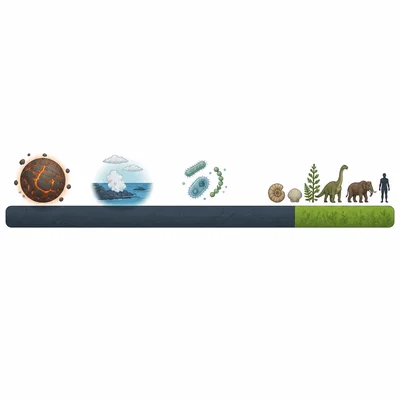
Earth is about 4.6 billion years old. The Phanerozoic Eon began about 541 million years ago. Which lasted longer, the time before the Phanerozoic Eon or the Phanerozoic Eon itself?
- 3
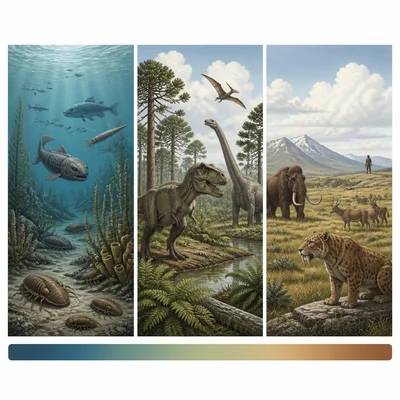
Name the three eras of the Phanerozoic Eon in order from oldest to youngest: Cenozoic, Paleozoic, Mesozoic.
- 4
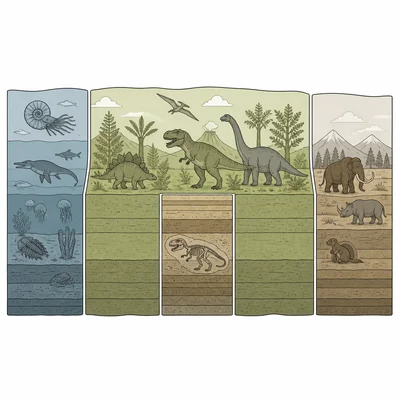
A fossil is found in rock layers from the Jurassic Period. Which era does the Jurassic Period belong to?
- 5
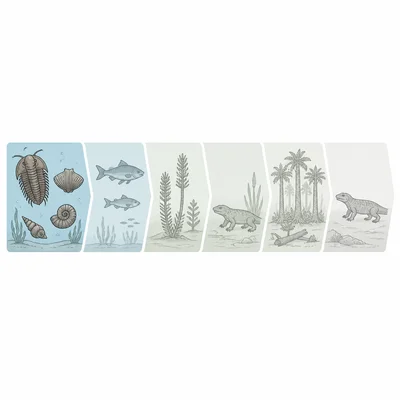
The Paleozoic Era includes several periods, such as the Cambrian, Ordovician, Silurian, Devonian, Carboniferous, and Permian. Which of these periods came first?
- 6
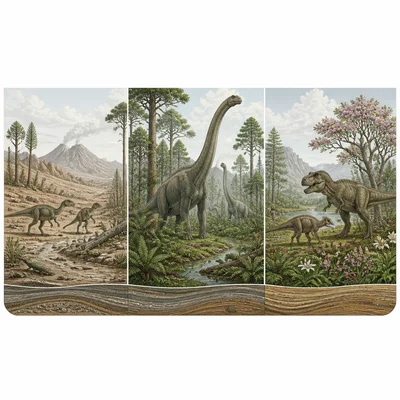
Look at this sequence: Triassic, Jurassic, Cretaceous. What do these three time units have in common?
- 7
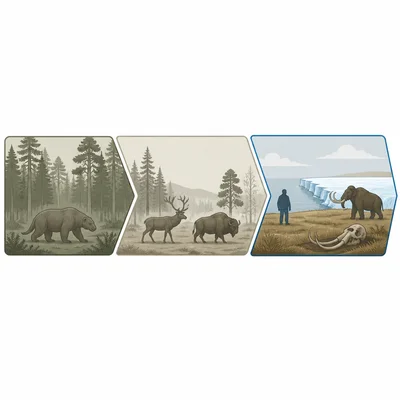
The Cenozoic Era includes the Paleogene, Neogene, and Quaternary Periods. Which period are we living in now?
- 8
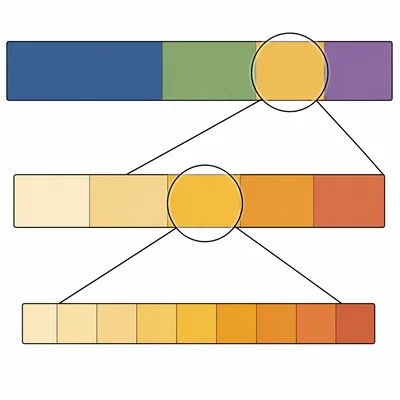
Explain why scientists divide Earth's history into eons, eras, and periods instead of using one long list of years.
- 9
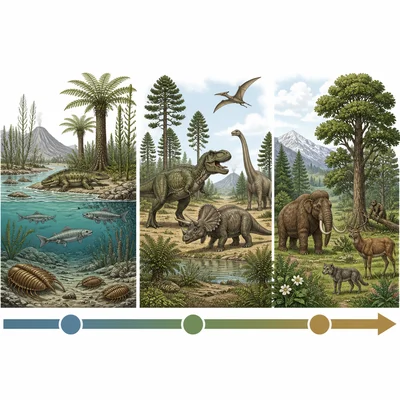
A student says, "The Mesozoic Era is older than the Paleozoic Era because dinosaurs lived a long time ago." Is the student correct? Explain.
- 10
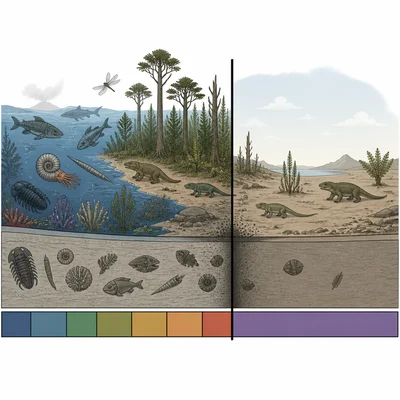
The end of the Permian Period marks a major mass extinction. Which era ended at the same time as the Permian Period?
- 11
Classify each item as an eon, era, or period: Phanerozoic, Mesozoic, Cretaceous.
- 12
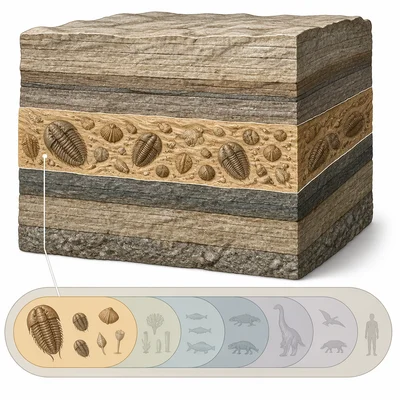
A rock layer contains many fossils of early marine animals from the Cambrian Period. Which eon and era does this rock layer belong to?
- 13
Use this time information: The Paleozoic Era lasted from about 541 million to 252 million years ago. About how long did the Paleozoic Era last?
- 14
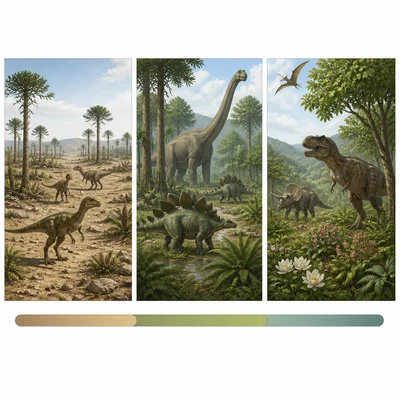
Put these periods in order from oldest to youngest: Cretaceous, Triassic, Jurassic.
- 15
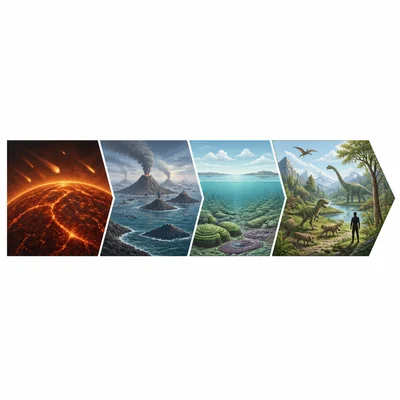
A simplified geologic time scale shows the Hadean, Archean, Proterozoic, and Phanerozoic Eons. Which eon is the most recent, and why?