Explore how farming, cities, roads, mining, logging, and conservation affect land, habitats, soil, water, and communities.
Read each problem carefully. Use evidence and complete sentences when explaining your thinking. Show calculations when needed.
How people change land and ecosystems
Environmental Science - Grade 6-8
- 1
Define land use in your own words. Then give two examples of land use in a community.
- 2
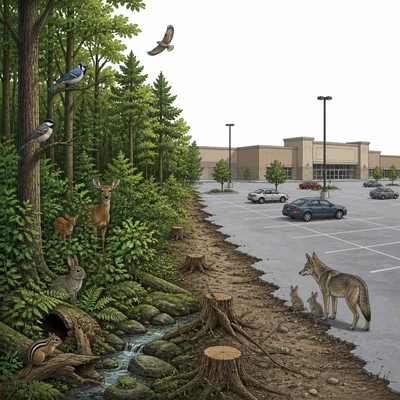
A forest is cleared to build a shopping center and parking lot. Describe two possible effects this change could have on local wildlife.
- 3
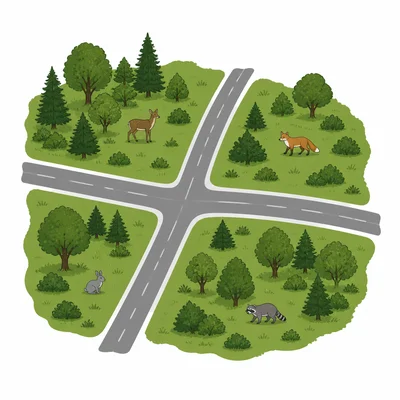
Explain how building roads can lead to habitat fragmentation.
- 4
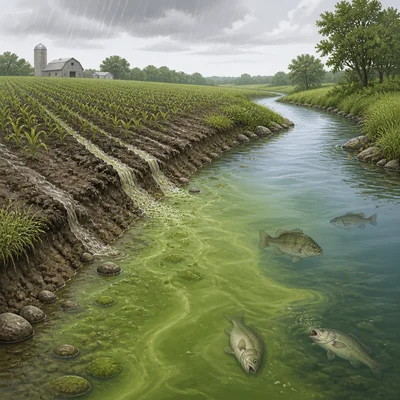
A farmer uses fertilizer on a field near a stream. Explain how too much fertilizer can affect the stream ecosystem.
- 5
A town grows from 10 square kilometers to 16 square kilometers over 20 years. How many square kilometers of additional land were developed?
- 6
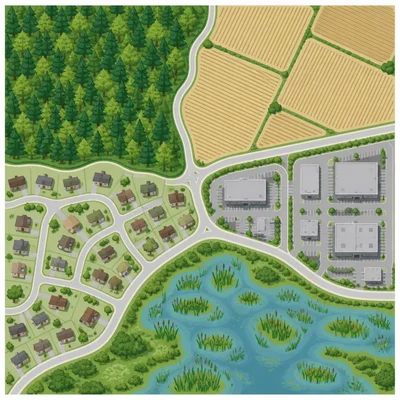
Look at a land-use map with areas labeled forest, farmland, residential, commercial, and wetland. Which land-use type would likely provide the most natural habitat for native animals, and why?
- 7
Describe one environmental benefit and one possible environmental cost of using land for agriculture.
- 8
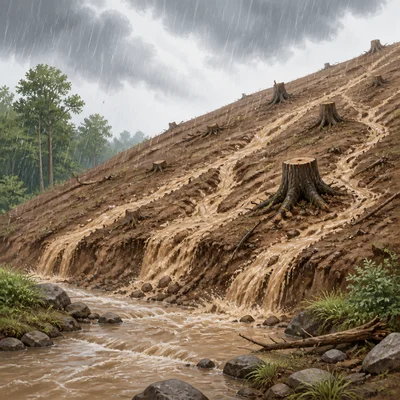
A hillside is cleared of trees for new homes. After heavy rain, muddy water flows into a nearby creek. Explain why tree removal can increase erosion.
- 9
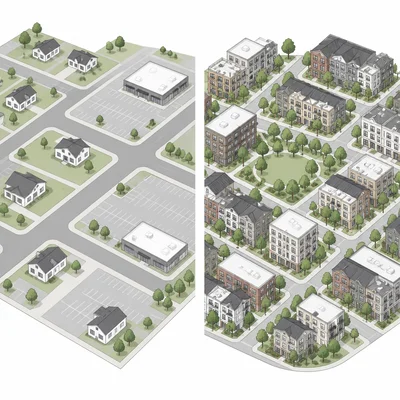
Compare urban sprawl and smart growth. Write one difference between them.
- 10
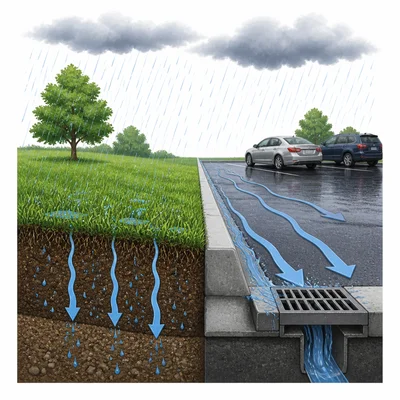
A city replaces a grassy field with asphalt parking lots. Explain how this change can affect stormwater runoff.
- 11
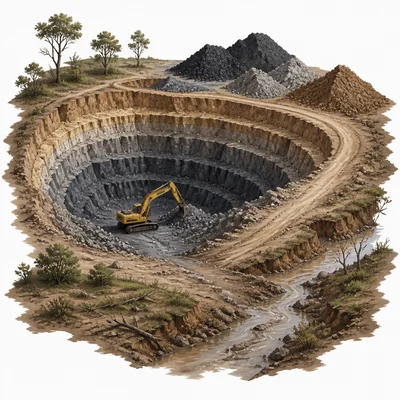
A mining company removes soil and rock to reach a mineral deposit. Name two land impacts that mining can cause.
- 12
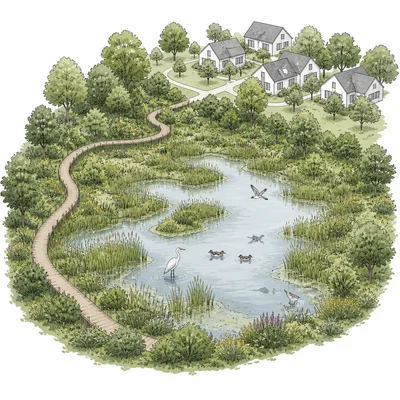
A community wants to build new housing but also protect a wetland. Suggest one solution that balances human needs and ecosystem protection.
- 13
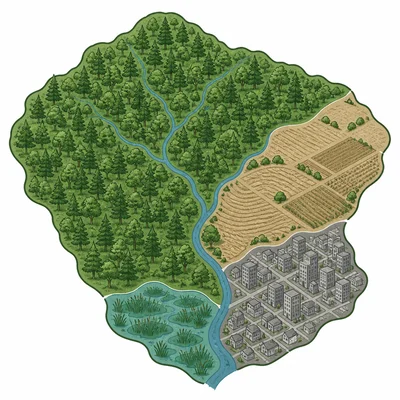
The table shows land cover in a watershed: forest 40 percent, farmland 30 percent, urban land 20 percent, wetland 10 percent. Which land cover takes up the largest area, and how do you know?
- 14
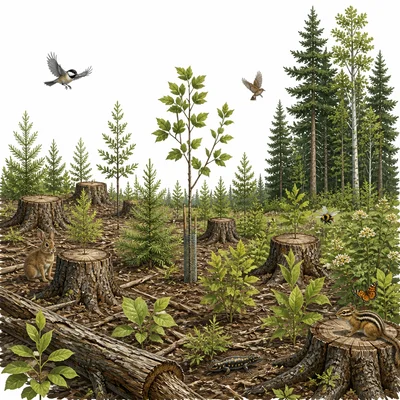
Explain why replanting native trees after logging can help restore an ecosystem.
- 15
Choose one land-use decision that people make, such as building a road, starting a farm, protecting a park, or expanding a city. Explain one positive impact and one negative impact of that decision.