Practice recognizing Latin noun declensions and using case endings to understand how nouns function in sentences.
Read each problem carefully. Identify the declension, case, number, or sentence function as requested. Show your reasoning when asked.
Identifying noun forms, cases, numbers, and declensions
World Languages - Grade 9-12
- 1
Identify the declension of the noun puella, puellae, f. Explain how you know.
- 2

Identify the case and number of puellam in the sentence: Agricola puellam videt.
- 3

Complete the sentence with the correct form of amicus, amici, m.: Puellae librum ______ dant. Translation: The girls give a book to the friend.
- 4
Match each Latin case to its most common sentence function: nominative, genitive, dative, accusative, ablative. Use these functions: direct object, subject, possession, indirect object, means or accompaniment.
- 5
Identify the case and number of servorum in the phrase villa servorum.
- 6
Give the nominative plural form of dominus, domini, m.
- 7
Identify the declension of rex, regis, m. Explain the clue in the dictionary entry.
- 8
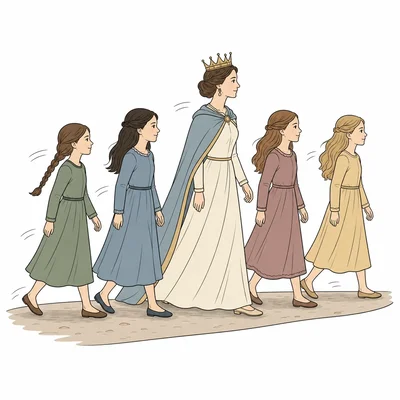
In the sentence Regina cum puellis ambulat, identify the case and number of puellis and explain why it has that form.
- 9
Complete the declension chart for porta, portae, f. by writing the singular forms for nominative, genitive, dative, accusative, and ablative.
- 10

Translate the noun phrase magno in horto and identify the case, number, and gender of magno and horto.
- 11
Choose the correct Latin form to complete the sentence: Nautae ______ audiunt. Translation: The sailors hear the voices. Options: vox, vocem, voces, vocum.
- 12

Analyze the sentence: Puer librum poetae dat. Identify the case and function of puer, librum, and poetae.