Practice applying ideas about fluid pressure, density, Pascal's principle, Archimedes' principle, and buoyancy in liquids and gases.
Read each problem carefully. Use complete sentences, correct units, and clear calculations when needed. Show your work in the space provided.
Exploring pressure in fluids and the forces that make objects float or sink
Physics - Grade 9-12
- 1
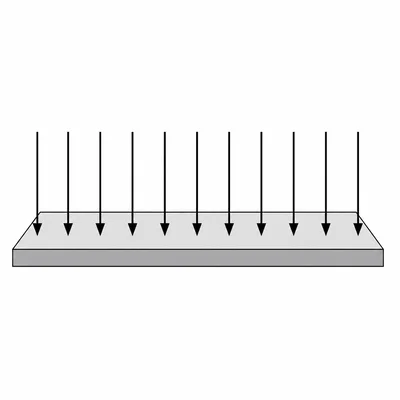
A force of 240 N is applied evenly over an area of 0.80 m^2. What pressure is produced?
- 2
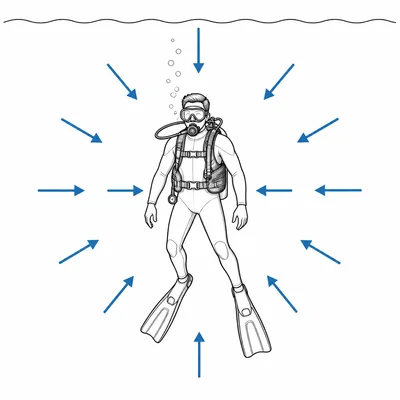
A diver is 15 m below the surface of fresh water. If the density of water is 1000 kg/m^3 and g = 9.8 m/s^2, what fluid pressure is due to the water alone at that depth?
- 3
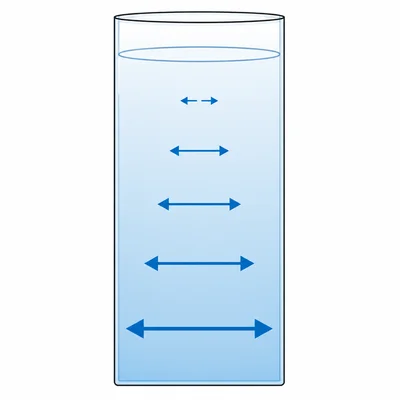
Explain why the pressure in a fluid increases with depth.
- 4
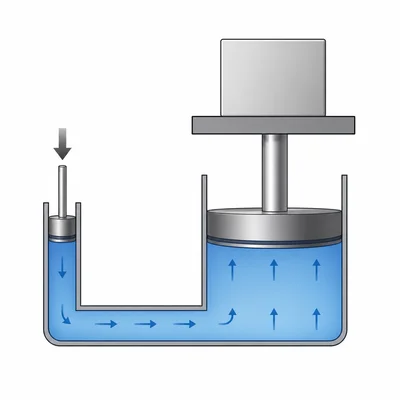
A hydraulic lift has a small piston with an area of 0.020 m^2 and a large piston with an area of 0.40 m^2. If a force of 150 N is applied to the small piston, what force is produced on the large piston?
- 5
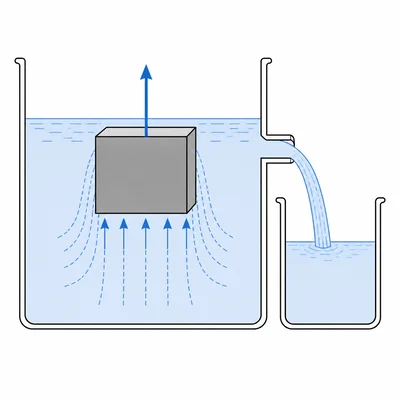
State Archimedes' principle in your own words.
- 6
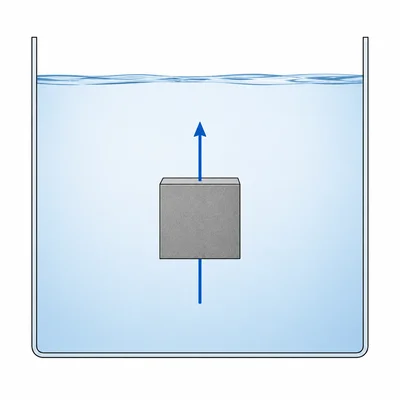
A block is fully submerged in water and displaces 0.025 m^3 of water. What buoyant force acts on the block? Use a water density of 1000 kg/m^3 and g = 9.8 m/s^2.
- 7
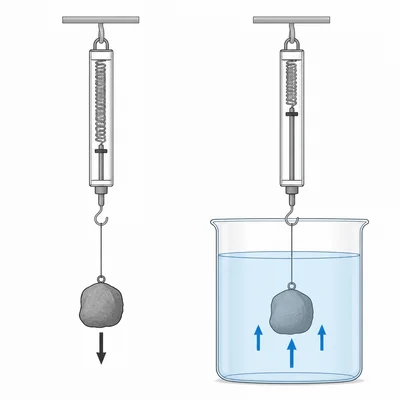
An object weighs 60 N in air and has an apparent weight of 45 N when submerged in water. What is the buoyant force on the object?
- 8
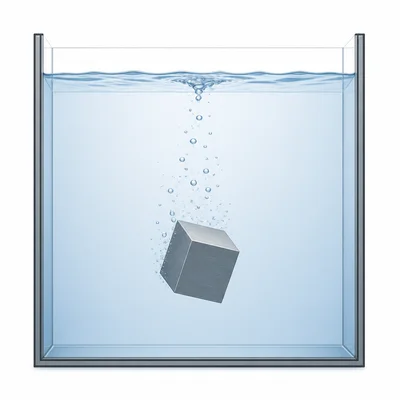
A metal cube has a density of 7800 kg/m^3. Will it float or sink in water? Explain your answer.
- 9
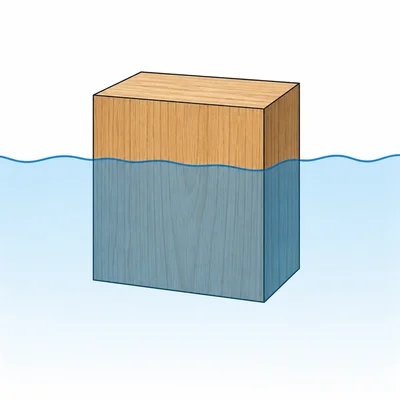
A piece of wood has a density of 600 kg/m^3 and is placed in water. What fraction of its volume will be submerged when it floats?
- 10
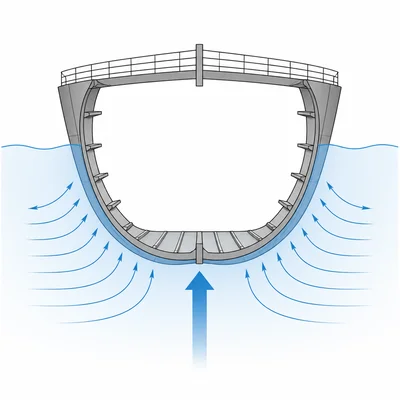
Why does a steel ship float even though steel is denser than water?
- 11
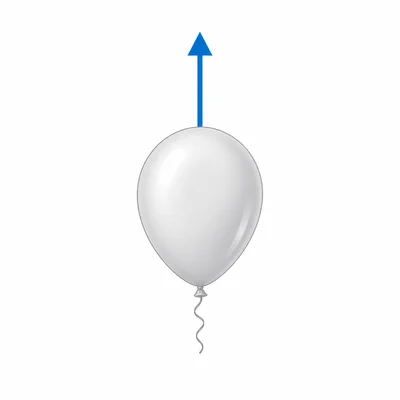
A balloon contains helium, which is less dense than air. Explain why the balloon rises.
- 12
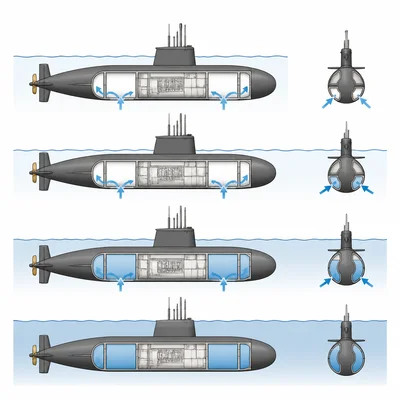
A submarine takes in water into its ballast tanks before diving. Explain how this changes its buoyancy.