Practice identifying independent variables, dependent variables, and controlled variables in scientific experiments.
Read each experiment carefully. Identify the variables and explain your thinking in complete sentences.
Independent, dependent, and controlled variables
Science - Grade 6-8
- 1
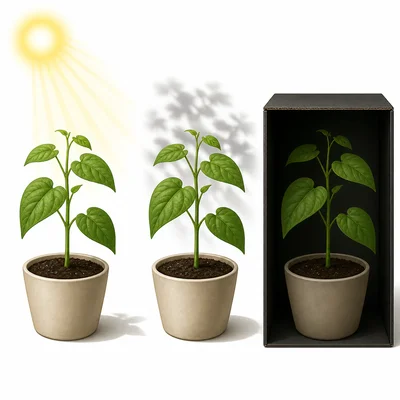
A student tests how the amount of sunlight affects the height of bean plants. She places one plant in full sunlight, one in partial sunlight, and one in darkness. She waters each plant with the same amount of water each day. What is the independent variable?
- 2
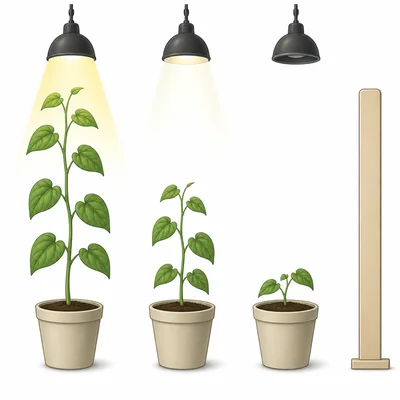
In the bean plant experiment, what is the dependent variable?
- 3
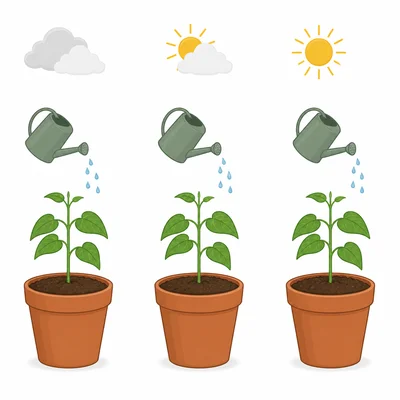
In the bean plant experiment, name two controlled variables.
- 4
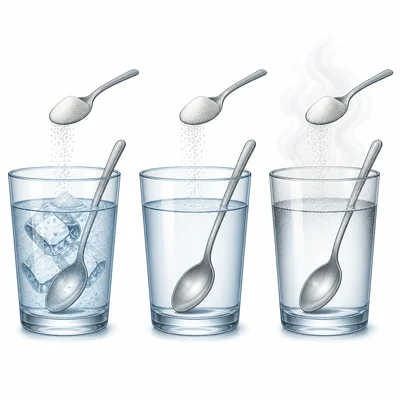
A class investigates whether water temperature affects how fast sugar dissolves. They use cold water, room temperature water, and hot water. They put 5 grams of sugar in each cup and stir each cup 10 times. Identify the independent variable, dependent variable, and one controlled variable.
- 5
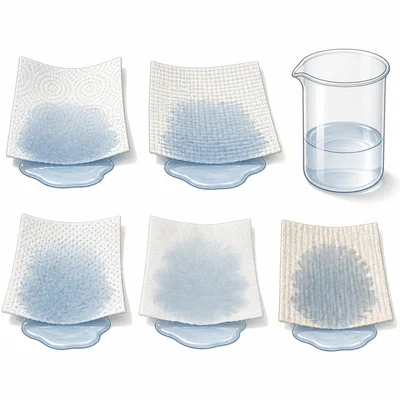
A student wants to know if different brands of paper towels absorb different amounts of water. What should the student measure as the dependent variable?
- 6
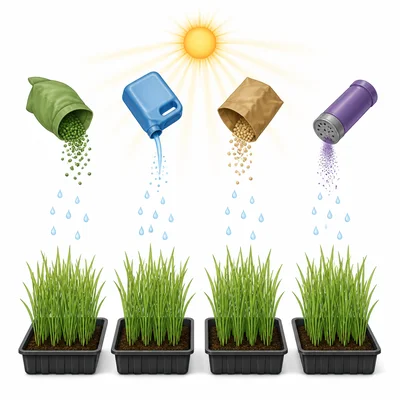
A student tests which type of fertilizer helps grass grow tallest. He uses the same kind of grass seed, the same soil, the same amount of water, and the same amount of light for all trays. What is the independent variable?
- 7
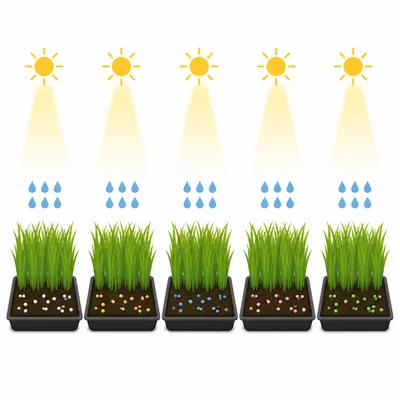
For the fertilizer and grass experiment, explain why the same soil, water, and light should be used for all trays.
- 8
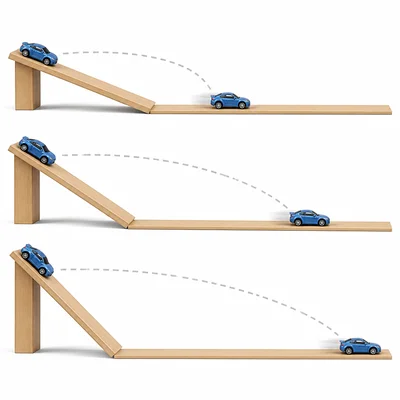
A science group records the following results for a ramp experiment: a toy car travels 40 cm from a low ramp, 70 cm from a medium ramp, and 110 cm from a high ramp. What is the dependent variable?
- 9
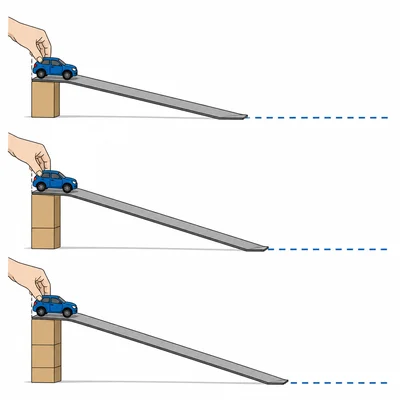
In the ramp experiment, name two variables that should be controlled.
- 10
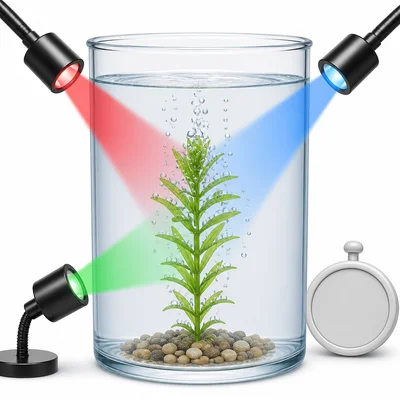
A student asks, 'Does the color of light affect the number of bubbles produced by an aquatic plant?' The student shines red, blue, and green light on the plant and counts bubbles for 5 minutes each time. Identify the independent and dependent variables.
- 11
A student wants to test whether music volume affects how well people remember a list of words. Write one controlled variable that should be kept the same for all participants.
- 12
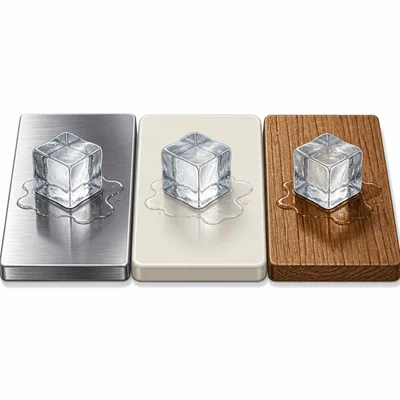
A group compares how quickly ice melts on different surfaces: metal, plastic, and wood. They use ice cubes of the same size and keep the room temperature the same. What is the independent variable?
- 13
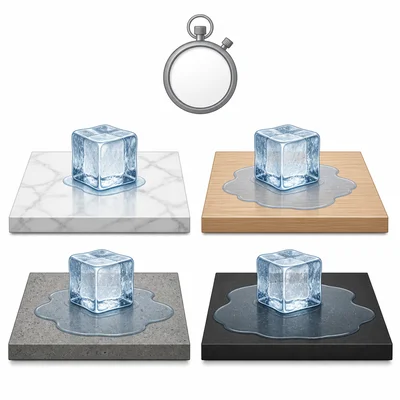
For the ice melting experiment, what is the dependent variable and why?
- 14
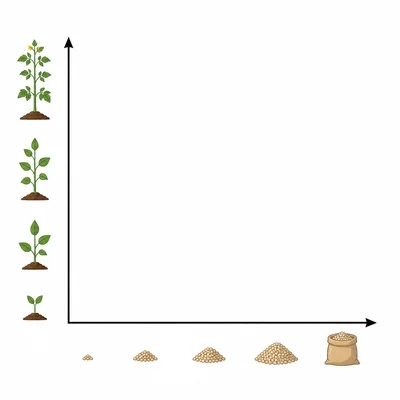
A graph shows plant growth after different amounts of fertilizer are added. The x-axis is labeled amount of fertilizer in grams, and the y-axis is labeled plant height in centimeters. Which axis shows the independent variable, and which axis shows the dependent variable?
- 15
A student says, 'My experiment has two independent variables: amount of water and amount of sunlight.' Explain why this could make the experiment hard to interpret.